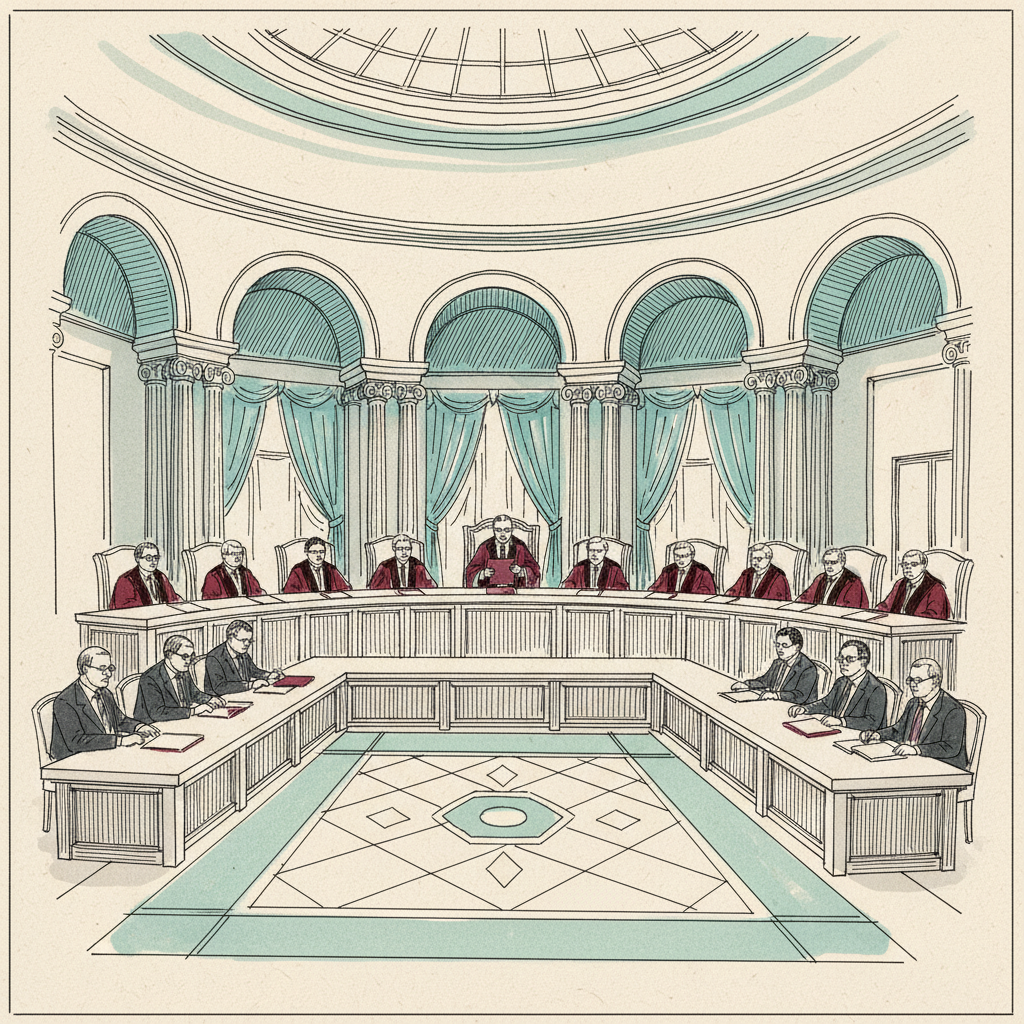
Constitutional Court of Türkiye
Türkiye's highest constitutional court; annulled CHP leadership election on 21 May 2026.
Last refreshed: 22 May 2026
Why did the Turkish court annul the CHP election on the same day a Turkish citizen faced execution in Iran?
Timeline for Constitutional Court of Türkiye
Annulled the CHP leadership election on 21 May 2026
Iran Conflict 2026: Turkish court annuls CHP leadership voteBackground
Türkiye's Constitutional Court (Anayasa Mahkemesi, AYM) annulled the CHP leadership election on 21 May 2026, triggering a domestic constitutional crisis that stripped Ankara of the political bandwidth normally deployed when a Turkish national faces execution abroad. Gholamreza Khani Shakarab, a Turkish citizen held at Ghezel Hesar Prison on espionage charges, remains at imminent execution risk while the government that would ordinarily mount a formal demarche is consumed by opposition collapse.
Founded in 1962 under the Second Republic constitution, the AYM exercises judicial review of legislation and has the power to dissolve political parties. It has used that power consequentially: it dissolved the Islamist Refah Partisi in 1998, attempted closure of the HDP in recent years, and ruled on CHP's own institutional controversies in the 1960s. Its 15 judges are appointed by the President, the Grand national assembly, and the Supreme Court of Appeals, giving the ruling AKP-aligned executive substantial structural influence over its composition.
The AYM's annulment of the CHP leadership result on 21 May is the proximate context for Lowdown's coverage: it demonstrates how Erdogan-era judicial-political compression of the opposition intersects with the Iran-Hormuz Mediation arc. A functioning CHP leadership would have provided pressure on the government to act more visibly on Khani Shakarab's case; the annulment removes that vector at exactly the moment it was most needed.
Did Türkiye's Constitutional Court annul the CHP leadership election?
What powers does the Constitutional Court of Türkiye have?
Why is Türkiye's constitutional crisis relevant to the Iran conflict?
When was the Turkish Constitutional Court founded?

