Skip to content
You can now search across every topic, entity and event.What's new
Iran Conflict 2026
23JUL

Tankers self-impose Hormuz blockade

1 min read
19:27UTC

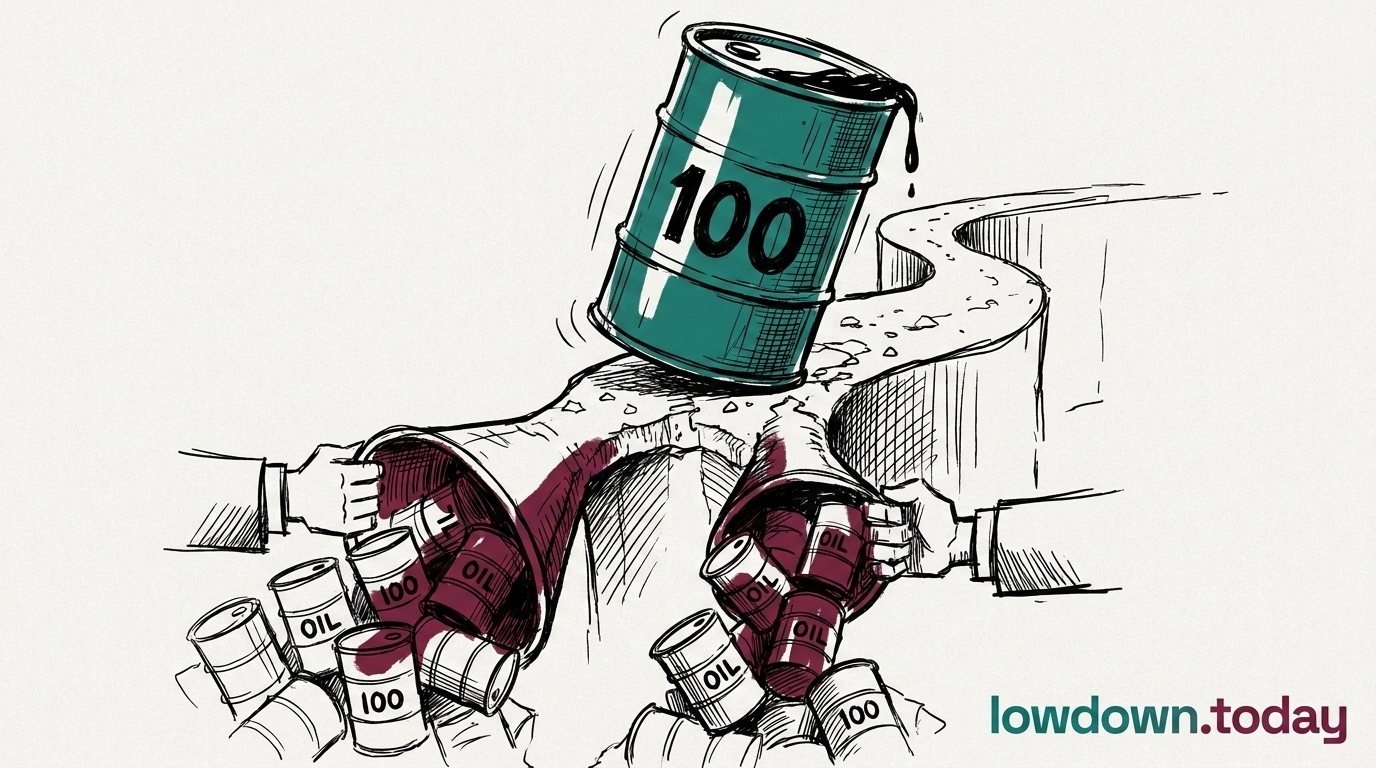
Oil tankers began voluntarily avoiding the Strait of Hormuz following the 28 February 2026 strikes on Iran, achieving a partial chokepoint effect through commercial risk calculation rather than Iranian military interdiction.

ConflictDeveloping
Key takeaway

Commercial tanker avoidance of Hormuz achieves partial supply disruption without requiring Iranian military action, and will reverse rapidly once a credible de-escalation signal appears.

Voluntary avoidance of Hormuz by tanker operators achieves, in functional terms, some of the same supply-disruption effects as an Iranian blockade — without requiring Iran to take the naval action that would have constituted a direct casus belli for further US military response.

Approximately 20 million barrels per day transited Hormuz in 2025 — around 20% of global oil supply and 30% of global liquefied natural gas. Voluntary tanker avoidance does not halt all transit, but it reduces throughput and drives insurance premiums on vessels that do proceed to prohibitive levels. Lloyd's of London and other marine war-risk insurers will reclassify the Gulf as a war-risk zone within hours of the strikes, adding several hundred percentage points to insurance costs and making many voyages commercially unviable even if the physical route remains open.

The difference between voluntary avoidance and a formal Iranian blockade is reversibility. Commercial tanker operators are risk-averse but economically rational: if the military situation stabilises or a credible de-escalation signal emerges, traffic will resume within days. A formal Iranian blockade would require negotiated lifting and military verification, potentially taking weeks or months. Voluntary avoidance is therefore a more moderate and more reversible disruption than the worst-case scenario — which is precisely why markets are pricing $80–100 rather than $150–200.

What could happen next?
  • Meaning

    Short term · Assessed
  • Meaning

    Short term · Assessed
  • Meaning

    Short term · Assessed
First Reported In

Update #2 · Five cities struck on opening night

Reuters· 28 Feb 2026
Read original
Causes and effects
This Event
Tankers self-impose Hormuz blockade
Tanker avoidance of Hormuz, through which approximately 20% of global oil transits, creates immediate supply disruption risks and freight cost spikes.
Different Perspectives
India
India
India buys more Saudi crude than any other country and has 2.5 million nationals working in the kingdom, so a $100 Brent and a live strike on Saudi tankers reach New Delhi through both fuel bills and remittance risk. Neither channel has an alternative route the way Saudi Arabia's own pipeline does.
Qatar
Qatar
Qatar co-authored the four-mediator ten-day ceasefire proposal alongside Egypt, Pakistan and Oman, centred on resuming Hormuz navigation, while separately pursuing its dated compensation claim against Iran at the UN Security Council filed on 21 July. Doha is mediating and litigating in the same week.
Israel
Israel
Israeli intelligence, reported by the Wall Street Journal, assesses Iran moved thousands of centrifuges and part of its roughly 440kg enriched-uranium stock into Pickaxe Mountain after the June 2025 strikes on its three main nuclear sites. Some of the US refuelling aircraft now deploying to the region are bound for Israeli bases and Ramon Airport.
Houthis
Houthis
Yahya Saree announced the missile and drone strikes on the Encelia and Layla on 22 July as enforcement of the embargo his forces had declared by radio warning alone two days earlier. Six vessels already turned back on the broadcast; the strike shows Houthi forces will use weapons once warnings stop working.
Saudi Arabia
Saudi Arabia
Saudi Arabia's state news agency confirmed only a fire on the Encelia's bow, with the crew safe; the Layla strike remains unconfirmed by Riyadh. The kingdom built its Petroline pipeline specifically to bypass Hormuz through the Red Sea, so the tanker fire lands on the route Riyadh had already spent billions escaping.
United States
United States
Washington is weighing both ten-day proposals but wants a longer truce than either offers, and moved F-16 and F-35 jets plus refuelling aircraft into the region while it decides. That deployment, not Trump's Pickaxe Mountain remarks, is the measurable US action, buying options for the day talks fail rather than betting on them.