Skip to content
You can now search across every topic, entity and event.What's new
Iran Conflict 2026
21JUL

US crude waiver lapses, no successor

2 min read
10:16UTC

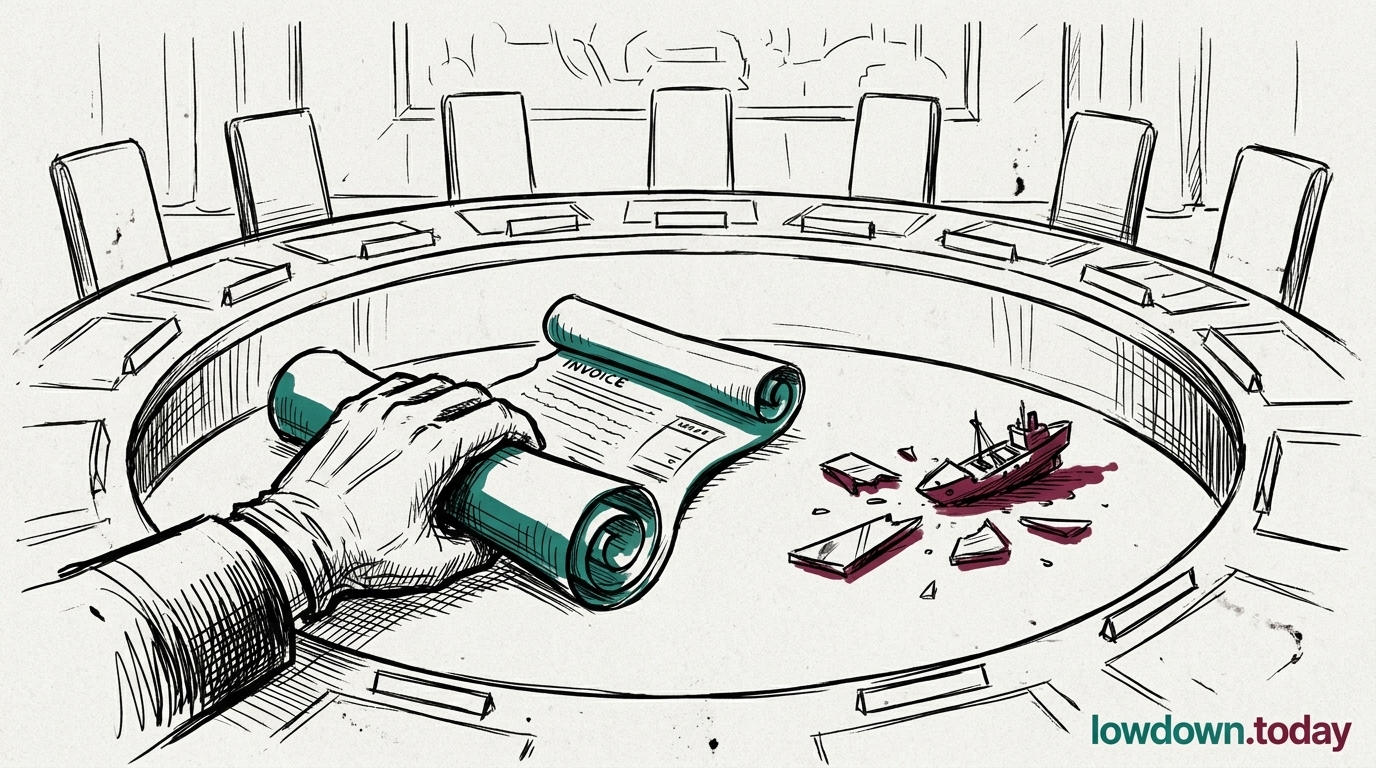
The US General License 134C crude waiver expired on 17 June with no successor issued, and the gap has now run 26 days, the longest of the war.

ConflictAssessed
Key takeaway

The US crude waiver lapsed on 17 June with no successor, the gap now 26 days and counting.

The US crude-oil waiver known as General License 134C expired on 17 June with no replacement issued since, according to S&P Global 1. The waiver ran as three consecutive thirty-day licences that softened the sanctions hit on buyers of Russian crude; as of 13 July the gap has reached 26 days, the longest of the war, against the fifteen-day gap recorded on 1 July .

OFAC, the US Treasury's Office of Foreign Assets Control, has announced nothing. The lapse is read from the absence of any new licence across OFAC's recent-actions listings and the specialist trackers that logged all three prior iterations within a day, not from any Treasury decision to let it fall 2. It should not be confused with the separate Lukoil retail-sale licence that expires on 25 July.

The crude cover fell away in the same fortnight the diesel export ban took effect, narrowing Russia's fiscal room just as the physical fuel squeeze turned hardest.

Deep Analysis

In plain English

OFAC is the part of the US Treasury that decides which sanctions exemptions apply to Russian oil. Three times this year it issued a short licence letting buyers keep purchasing Russian crude that was loaded before a cut-off date, each time renewing it within a day or two of the old one expiring. This time, the licence expired on 17 June and, as of 13 July, 26 days have passed with no replacement. This matters because that 26-day gap is far longer than any previous pause, and it has now gone unrenewed for longer than the licence itself normally lasts. Buyers who relied on that legal cover for Russian crude cargoes are operating without it.

Deep Analysis
Root Causes

OFAC administers the crude waiver as a discretionary licence renewed in short windows rather than a standing exemption, which means silence is itself an active policy outcome: without an affirmative renewal, the underlying sanctions apply in full by default.

The 30-day bridge structure was built for administrative flexibility, but it also means a single missed renewal cycle, if it becomes two, functions as a de facto termination without Treasury having to announce one.

Escalation

Direction: the gap has widened from 15 days (as of 1 July) to 26 days (as of 13 July) with no successor licence and no public Treasury statement of intent, consistent with a deliberate wind-down rather than an administrative delay.

What could happen next?
  • Consequence

    Buyers still routing Russian crude purchases through US-linked insurance or banking lose their legal cover for cargoes loaded after 17 June until a successor licence, if any, is issued.

First Reported In

Update #23 · Moscow rations diesel as US cover lapses

S&P Global· 13 Jul 2026
Read original
Different Perspectives
Jordan
Jordan
Jordan's armed forces downed three Iranian missiles on Tuesday with no casualties, a second successful interception since the 19 July strike on Muwaffaq Salti that killed three US service members. Amman has neither confirmed nor denied ISW's assessment that its intelligence sharing is a Russia-China cover story.
Operation Aspides
Operation Aspides
Operation Aspides has not needed to intervene against the Houthi Bab al-Mandab embargo: six vessels, including the Chinese VLCC Xin Long Yang, reversed course after radio hailing alone, with no vessel boarded, fired on or stopped by force.
Pete Hegseth, US Secretary of War
Hegseth told the Senate Appropriations Committee the campaign has cost $37.5 billion so far, without saying whether the figure is obligated, appropriated or incremental. It is the first cost Washington has put on the war, arriving as OMB seeks $87.6 billion for the wider supplemental.
Iran's IRGC and Artesh
Iran's IRGC and Artesh reported destroying radar and Patriot installations at four Gulf bases on Tuesday night, the fifth dated iteration of the same claim against the same sites since 13 July. Neither Kuwait nor Bahrain has named or confirmed a single base as destroyed.
Saudi Arabia
Saudi Arabia
Riyadh has pressed Washington to end the Hormuz blockade specifically to remove Tehran's incentive for the Houthis to escalate Bab al-Mandab beyond radio warnings. It treats the embargo as coordinated pressure on Saudi shipping tied to the Hormuz campaign, not an independent Yemeni action.
Kuwait's Ministry of Electricity, Water and Renewable Energy and defence ministry
Kuwait reported power and desalination stations struck for a fourth consecutive day and four cruise missiles plus 21 drones intercepted since dawn Wednesday, while its defence ministry statement used only the word interception, never destruction. Kuwait has confirmed no Iranian claim of a destroyed base.