Skip to content
You can now search across every topic, entity and event.What's new
Iran Conflict 2026
19JUL

EU 20th package would block Arc7 dry-dock servicing

4 min read
14:05UTC

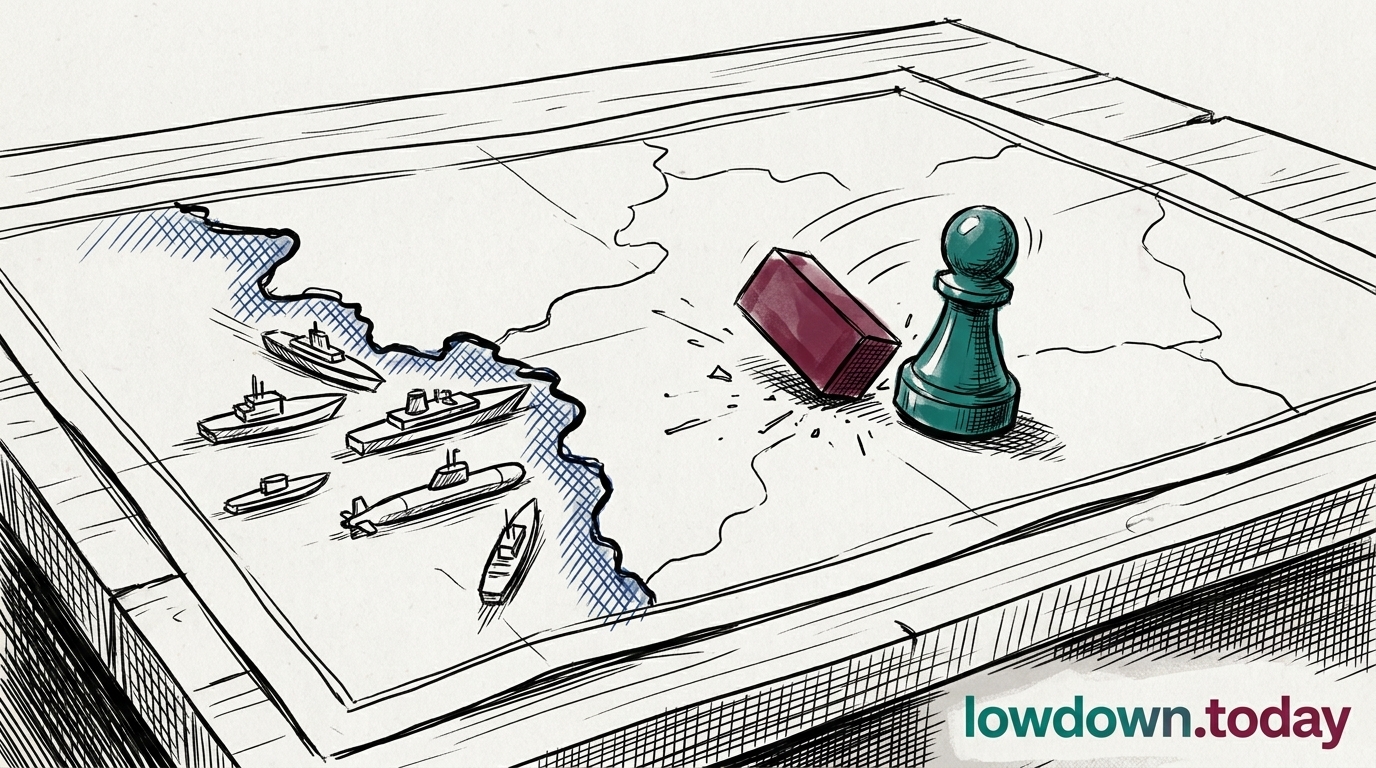
The EU 20th sanctions package would block Arc7 ice-class LNG tanker maintenance, with six vessels due European dry-dock servicing in summer 2026 after their last cycle in 2023.

ConflictDeveloping
Key takeaway

Six European-owned Arc7 carriers face summer 2026 dry-dock; the 20th package would close that engineering window.

The EU 20th sanctions package, currently in draft, would block Arc7 ice-class LNG tanker maintenance in European yards, with six vessels due European dry-dock servicing in summer 2026 after their last cycle in 2023 1. The proposal tightens the carve-out left unresolved when the Russian LNG spot ban entered force on 25 April . Russia delivered its first domestically assembled Arc7 carrier, Alexey Kosygin, in January 2026, signalling domestic replacement capacity is building.

The Arc7 class, the only LNG carriers rated for Yamal LNG Northern Sea Route operations, runs three-year dry-dock cycles for hull plating and propulsion checks; missing a cycle compounds operational risk in ice conditions. Of the existing 15-vessel Yamal fleet, 11 are European-owned (Seapeak Maritime, Dynagas) and have historically used Damen Shipyards in the Netherlands and Spanish facilities. The proposal's mechanism is service prohibition rather than asset freeze, which keeps the legal framing inside maritime services law and avoids the fund-flow constraints EU insurers already face under the existing carve-out.

The transmission channel runs through Yamal LNG's deliverable summer schedule. If summer 2026 dry-dock access closes, Novatek's ability to maintain throughput at the 17.4 mtpa Yamal complex tightens against fleet availability rather than against export demand. The Alexey Kosygin delivery is the leading indicator on Russian substitution capacity; Zvezda Shipyard's replacement cadence is the operative constraint on whether the 20th package bites or just delays. For desks tracking Russian LNG export volumes against the spot ban, the maintenance restriction is the supplementary mechanism that closes the carve-out Squire Patton Boggs flagged in their 25 April compliance guidance: rerouting and resale loopholes in the recast text are immaterial if the vessels themselves cannot be kept seaworthy.

Deep Analysis

In plain English

Arc7 tankers are specialised vessels designed to carry liquefied natural gas through Arctic ice. They are used primarily to ship Russian Arctic LNG from the Yamal Peninsula and Arctic LNG 2 projects to European and Asian buyers. The 'Arc7' classification means the vessel can break through ice up to 2.1 metres thick. The EU's proposed 20th sanctions package would ban these ships from using European shipyards for maintenance. Six Arc7 vessels are due for their mandatory periodic dry-dock service in summer 2026, and they were last serviced in European yards in 2023. Without European yards, they must find alternative facilities, and Russia's domestic shipbuilding capacity for this specialised maintenance is still limited, even after delivering its first domestically built Arc7 in January 2026.

Deep Analysis
Escalation

The Arc7 maintenance ban, if adopted in the 20th sanctions package, would force Russia to choose between operating ageing vessels without mandated maintenance (a safety risk) or building domestic dry-dock capability faster than Zvezda's current timeline. Neither option removes Arctic LNG from the market in the near term, but both reduce the fleet's operational availability over 2027-28.

What could happen next?
  • Consequence

    Six Arc7 vessels unable to dry-dock in European yards in summer 2026 face either deferred maintenance (MARPOL compliance risk) or unplanned diversion to Chinese yards, with 60-90 day voyage and service delays removing each vessel from Arctic LNG service for the equivalent of two or three additional cargo cycles.

  • Precedent

    Russia's January 2026 Alexey Kosygin delivery demonstrates domestic Arctic LNG shipbuilding capacity; the maintenance ban accelerates Russia's investment in domestic dry-dock infrastructure, reducing the long-term effectiveness of European sanctions on Arctic LNG logistics.

First Reported In

Update #5 · Ban day muted; Germany doubles injection rate

High North News· 26 Apr 2026
Read original
Different Perspectives
China's foreign ministry
Spokesman Lin Jian rejected Treasury Secretary Scott Bessent's 25 August warning that Iranian oil buyers face an "economic D-Day", saying sanctions do not help and that Beijing would safeguard its own rights and interests. China's Iranian crude imports had already halved for unrelated reasons.
Iraq's government and Erbil authorities
Erbil authorities said 10 explosive-laden drones were shot down over the city on 1-2 September with no casualties. Iraq's government condemned the attacks without naming Iran as their source, and neither Washington nor Baghdad confirmed the IRGC's claim to have hit US bases there.
Bahrain Defence Force
The General Command said air defences intercepted several Iranian missiles and drones on 1-2 September and called the use of such weapons against civilians and private property a flagrant violation of international humanitarian law.
Kuwait's Fire Force and foreign ministry
KUNA reported a hostile Iranian drone struck a residential complex in Kuwait City on 2 September; Fire Force spokesman Brigadier General Mohammad Al-Gharib said losses were confined to property. Kuwait's foreign ministry called the attack a clear breach of its sovereignty.
Jordan's Armed Forces
Petra carried a statement that air defences intercepted eight missiles violating Jordanian airspace early on 31 August and 10 of 13 fired on 1 September. The statement named no target and did not address the IRGC's claim to have struck Camp Titin and killed US personnel.
CENTCOM
CENTCOM
CENTCOM's 1 September target list named IRGC air defence, radar, maritime and mine-laying sites in Iran but no tanker, after Axios reported anonymous officials describing a Trump-approved "tanker for tanker" drone policy. A CENTCOM spokesman declined to confirm the policy and referred questions to policymakers.