Skip to content
You can now search across every topic, entity and event.What's new
Iran Conflict 2026
4JUN

Assembly of Experts HQ destroyed in Qom

3 min read
11:25UTC

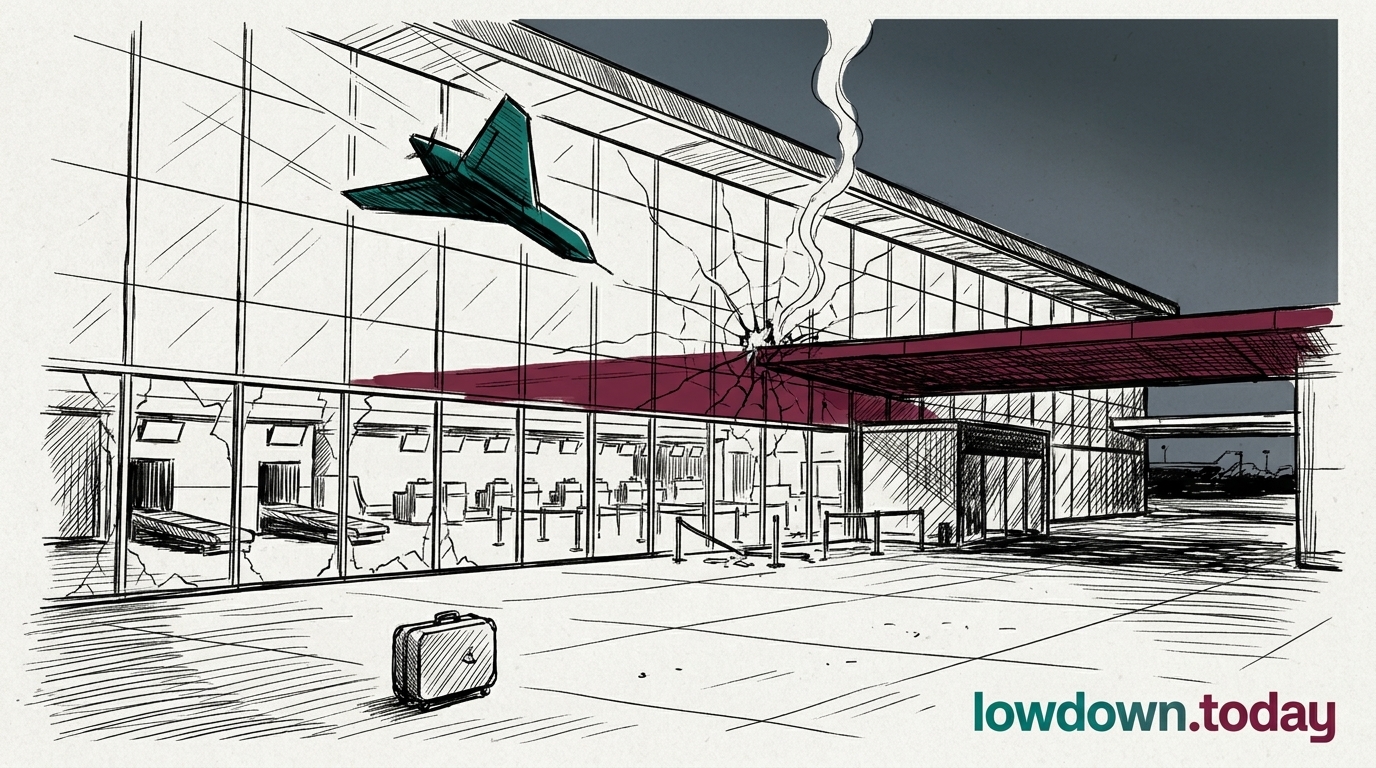
The 88-member clerical body constitutionally tasked with selecting Iran's next Supreme Leader cannot convene — its Qom headquarters was hit directly.

ConflictDeveloping
Key takeaway

The destruction of the Assembly of Experts eliminates Iran's only constitutional mechanism for selecting a new Supreme Leader, transforming a leadership vacancy into a systemic state crisis.

The Qom headquarters of the Assembly of ExpertsIran's 88-member clerical body constitutionally tasked with selecting and supervising The Supreme Leader — was struck directly in the US-Israeli operations. The building's destruction, combined with the confirmed deaths of senior officials, means the body cannot convene to fulfil its sole constitutionally mandated function: choosing Khamenei's successor.

Iran's 1979 constitution provides no alternative mechanism. No provision addresses the simultaneous loss of The Supreme Leader, the defence minister, the IRGC commander, and the selection body itself. Khomeini's constitutional architecture assumed institutional continuity — that the Assembly would outlive any individual leader and manage succession through deliberation among its clerical members. That architecture required the Assembly to exist as a functioning body.

The last Supreme Leader transition, from Khomeini to Khamenei in June 1989, took the Assembly two days to complete. Even that was a contested process. Khamenei was a compromise candidate — a mid-ranking cleric elevated because the originally designated successor, Hossein-Ali Montazeri, had been removed from the succession line months earlier after criticising the government's mass executions of political prisoners. Khamenei lacked the senior clerical credentials traditionally required for the role and spent years consolidating authority against more established ayatollahs.

The IRGC controls an estimated $100 billion economic empire spanning construction, telecommunications, energy, and financial services. Without the Assembly to provide constitutional legitimacy to a new leader, the question of who commands that empire — and the coercive apparatus of the state — will be resolved by power dynamics rather than legal procedure. Whether the IRGC consolidates under a single commander or fractures along factional lines — Quds Force against ground forces, hardliners against officers who recognise the need to accommodate the fourteen-month protest movement — will define Iran's political trajectory.


Deep Analysis

In plain English

Iran has a special body of 88 senior clerics whose only real job is to pick the Supreme Leader. Their headquarters in the holy city of Qom was hit in the strikes. Without this body, there is no legal way under Iran's constitution to choose a new leader. The last time a Supreme Leader died — in 1989 — this body met within hours and picked a replacement in two days. Now the body itself has been destroyed along with the leader. Iran's political future will be decided by whoever has the most power, most likely the Revolutionary Guards, rather than by any constitutional process.

Deep Analysis
Synthesis

The destruction of the Assembly of Experts is the structural complement to Khamenei's death. Killing the leader created a vacancy; destroying the selection body made the vacancy permanent under existing law. The Islamic Republic's 1979 constitution is now inoperable at its most fundamental level. This is not a succession crisis — it is the end of a constitutional system. Whatever political order emerges in Iran will not be a continuation of the Islamic Republic as Khomeini designed it.

Root Causes

The targeting of the Assembly building indicates that the US-Israeli operation was designed as a comprehensive decapitation campaign — eliminating not only individual leaders but the institutional mechanism for replacing them. This target selection implies a strategic intent to prevent the Islamic Republic from reconstituting itself under its existing constitutional framework. Whether this was intended to force a regime change or simply to maximise strategic disruption is a question of operational intent that has not been stated publicly.

Escalation

The destruction of the Assembly is an escalatory act beyond the killing of individual leaders because it forecloses the constitutional path to political reconstitution. A state with a dead leader can select a new one; a state with both a dead leader and a destroyed selection body has no lawful path forward. This raises the stakes of the power vacuum: any authority that emerges will be extra-constitutional, which makes it harder for external actors to negotiate with and harder for Iranian citizens to accept.

What could happen next?
  • Consequence

    No constitutional mechanism exists to select a new Supreme Leader, meaning any successor will derive authority from power rather than legal procedure.

    Immediate · Assessed
  • Risk

    The IRGC's $100 billion economic empire has no legitimate governance structure above it; control of these assets becomes a prize in any internal power struggle.

    Short term · Assessed
  • Opportunity

    For Iran's protest movement, the destruction of the theocratic succession mechanism removes the institutional pathway for restoring clerical rule, potentially opening space for a different political settlement.

    Medium term · Suggested
First Reported In

Update #3 · Khamenei killed; Iran fires on 7 countries

Middle East Forum· 1 Mar 2026
Read original
How this affects the world
  • Iran

    The constitutional order of the Islamic Republic is effectively dissolved. The IRGC is the only institution with the organisational capacity and coercive force to govern; its internal dynamics will determine whether Iran fragments or consolidates under military rule.

  • Shia religious world

    Qom is the centre of Shia clerical authority alongside Najaf in Iraq. The destruction of the Assembly building in Qom shifts the centre of gravity for Shia political-religious authority toward Najaf and Grand Ayatollah Sistani's establishment.

Causes and effects
This Event
Assembly of Experts HQ destroyed in Qom
The destruction of the Assembly eliminates the only constitutional mechanism for Supreme Leader succession, transforming a leadership crisis into a systemic constitutional collapse with no lawful path to reconstitution.
Different Perspectives
Jordan
Jordan
Jordan's armed forces downed three Iranian missiles on Tuesday with no casualties, a second successful interception since the 19 July strike on Muwaffaq Salti that killed three US service members. Amman has neither confirmed nor denied ISW's assessment that its intelligence sharing is a Russia-China cover story.
Operation Aspides
Operation Aspides
Operation Aspides has not needed to intervene against the Houthi Bab al-Mandab embargo: six vessels, including the Chinese VLCC Xin Long Yang, reversed course after radio hailing alone, with no vessel boarded, fired on or stopped by force.
Pete Hegseth, US Secretary of War
Hegseth told the Senate Appropriations Committee the campaign has cost $37.5 billion so far, without saying whether the figure is obligated, appropriated or incremental. It is the first cost Washington has put on the war, arriving as OMB seeks $87.6 billion for the wider supplemental.
Iran's IRGC and Artesh
Iran's IRGC and Artesh reported destroying radar and Patriot installations at four Gulf bases on Tuesday night, the fifth dated iteration of the same claim against the same sites since 13 July. Neither Kuwait nor Bahrain has named or confirmed a single base as destroyed.
Saudi Arabia
Saudi Arabia
Riyadh has pressed Washington to end the Hormuz blockade specifically to remove Tehran's incentive for the Houthis to escalate Bab al-Mandab beyond radio warnings. It treats the embargo as coordinated pressure on Saudi shipping tied to the Hormuz campaign, not an independent Yemeni action.
Kuwait's Ministry of Electricity, Water and Renewable Energy and defence ministry
Kuwait reported power and desalination stations struck for a fourth consecutive day and four cruise missiles plus 21 drones intercepted since dawn Wednesday, while its defence ministry statement used only the word interception, never destruction. Kuwait has confirmed no Iranian claim of a destroyed base.



