Skip to content
Briefings are running a touch slower this week while we rebuild the foundations.See roadmap
Iran Conflict 2026
3JUN

EU awards first sovereign cloud deal

3 min read
09:04UTC

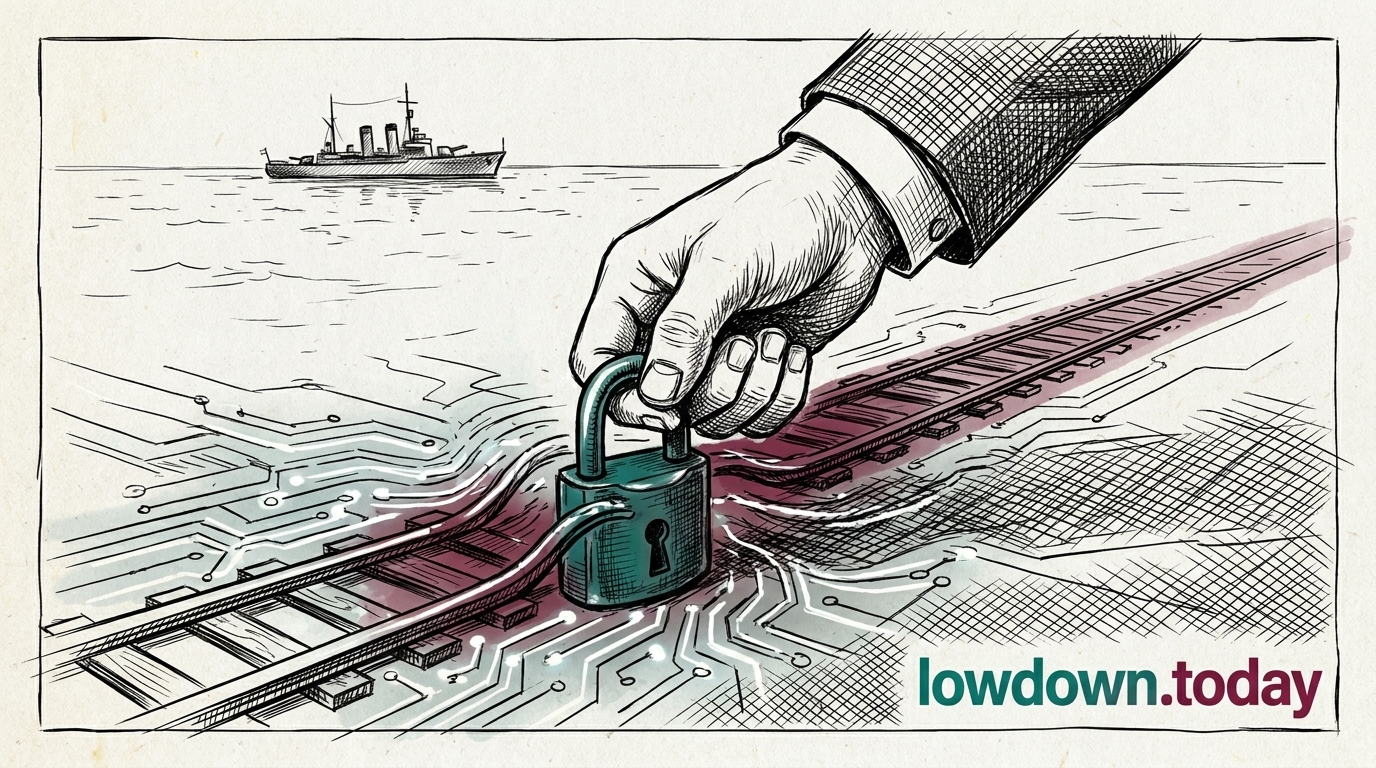
Brussels put €180m on paper for a six-year sovereign cloud framework, awarded exclusively to four European providers. The contract is the first pan-EU institutional procurement of its kind.

ConflictDeveloping
Key takeaway

€180m over six years is small money, but it is the first EU-institutional procurement template member states can copy.

The European Commission awarded a €180m, six-year sovereign cloud framework contract to four European providers on 17 April 2026 under reference IP_26_833, restricted to European suppliers for cloud services to EU institutions 1. The press corner page did not render the names of the winning vendors at the time of writing 1. DG CNECT, the Commission's digital-strategy directorate, administered the procurement.

The contract translates to roughly €30m a year, modest against a $23bn European sovereign cloud market forecast for 2027 , where EU-native providers still hold only a 15% regional share. Against AWS's roughly €8bn quarterly European revenue, €30m a year is a rounding error. Read as a procurement template, though, it matters: every member state now has a ready-made legal instrument to point to when justifying European-only awards, and Union entities can buy cloud capacity exclusively from European vendors under pre-approved terms, replacing ad-hoc purchases that repeatedly landed with AWS, Azure and Google Cloud.

Brussels can also cite the framework on its own side of the ledger while pursuing DMA cloud gatekeeper probes against Amazon and Microsoft . Until the four providers are named, European cloud investors cannot price the revenue allocation; DG CNECT has been asked to confirm.

Deep Analysis

In plain English

Cloud services are the computing infrastructure that organisations rent instead of owning: servers, storage, and software running in giant data centres. Most European governments and the EU itself have been buying these services from American companies like Amazon Web Services, Microsoft Azure, and Google Cloud. "Sovereign cloud" means cloud services where the data stays under European legal control, run by companies that cannot be ordered by a foreign government to hand over data. The EU's new contract commits it to buying exclusively from European providers for the next six years. The contract is small by market standards, but it creates a legal template that EU member states can now copy when running their own procurement processes. It also means the EU can no longer be accused of subsidising American tech companies with its own institutional spending while simultaneously trying to regulate them.

Deep Analysis
Root Causes

European cloud providers hold only 15% of the European market against US hyperscalers commanding roughly 70%, despite delivering 4 to 14 times the compute value per euro according to a February 2026 Callista benchmark. Enterprise switching costs, established managed services ecosystems, and vendor lock-in through proprietary data formats have created a structural inertia that price competition alone cannot overcome.

EU institutional procurement historically defaulted to US hyperscalers through lowest-cost or best-value frameworks that did not weight data jurisdiction or sovereignty as criteria. The new framework creates a procurement category where European data-jurisdiction requirements become mandatory eligibility conditions, not scoring factors. That category creation is the structural change, not the €180m contract value.

What could happen next?
  • Consequence

    The four unnamed winning providers gain a Commission reference contract they can cite in member-state and private-sector bids, improving their competitive position independent of the headline contract value.

    Short term · 0.82
  • Precedent

    If member states adopt equivalent frameworks, European sovereign cloud providers could see a structural revenue floor emerge across institutional markets in Germany, France, Italy, Spain, and Poland by 2028.

    Medium term · 0.65
  • Risk

    US hyperscalers may seek re-entry through European subsidiary structures or joint ventures that technically meet sovereignty criteria while routing commercial benefit back to US parent companies.

    Long term · 0.7
First Reported In

Update #2 · Brussels buys, Britain backs, Google unlocks

European Commission· 19 Apr 2026
Read original
Different Perspectives
Lloyd's of London underwriters
Lloyd's held its Hormuz war-risk rate at $10-14 million per voyage; underwriters need a UN Security Council resolution or formal PGSA de-listing before repricing, not a Senate testimony. The PGSA remains on the SDN list under EO 13224, so any vessel transiting a nominally reopened strait still deals with a sanctioned counterparty.
Saudi Arabia and Gulf states
Brent crude at $95-97 on 2-3 June reflects Gulf producers benefiting from the conflict premium; a genuine Hormuz deal would likely cut that premium by $10-15 per barrel. Riyadh's $87 per barrel budget breakeven means the current price is comfortable, reducing the Gulf's urgency to push for a rapid settlement.
China
China
OFAC's Nobitex designation leaves China's informal bilateral currency-swap lines with Iran as the CBI's remaining rial-defence mechanism; Chinese financial institutions face secondary-sanctions risk if they interact with successor wallets. Beijing's MOFCOM Blocking Rules protect mainland refineries from direct designation but do not shield informal swap-line counterparties.
Lebanon / Hezbollah
Lebanon / Hezbollah
Lebanon's Washington delegation demanded full Israeli withdrawal and the return of 1.2 million displaced; Hezbollah deployed an FPV drone that killed an Israeli soldier at Yohmor while talks ran, demonstrating it can impose costs even at Israel's deepest penetration point. Lebanon's government cannot deliver the Hezbollah disarmament guarantee Israel demands.
Israel / Benjamin Netanyahu
Israeli forces seized Beaufort Castle above the Litani on 1-2 June and advanced to within 10 km of the Zaharani river while ceasefire delegations sat in Washington; the advance ran entirely outside the Beirut-only truce Netanyahu accepted on 1 June. Each kilometre taken raises Israel's withdrawal price before any permanent text is signed.
Iran: Foreign Ministry and domestic population
Araghchi rang six capitals in 48 hours to reopen talks the SNSC had suspended, calling the IRGC line 'speculation'; at home, 37 political prisoners were executed since 19 March while students marched in Tehran, Mashhad and Hamadan. The diplomatic thaw has not eased the state's wartime repression tempo.