Skip to content
You can now search across every topic, entity and event.What's new
Iran Conflict 2026
24MAY

China halts big-four loans to refiners

3 min read
14:49UTC

China's banking regulator told ICBC, AgBank, CCB and Bank of China to stop new lending to five sanctioned refiners, Hengli among them. Existing credit lines stand. The order tightens the screw without cutting it.

ConflictDeveloping
Key takeaway

Beijing caps fresh state-bank lending to sanctioned refiners while leaving existing loans intact.

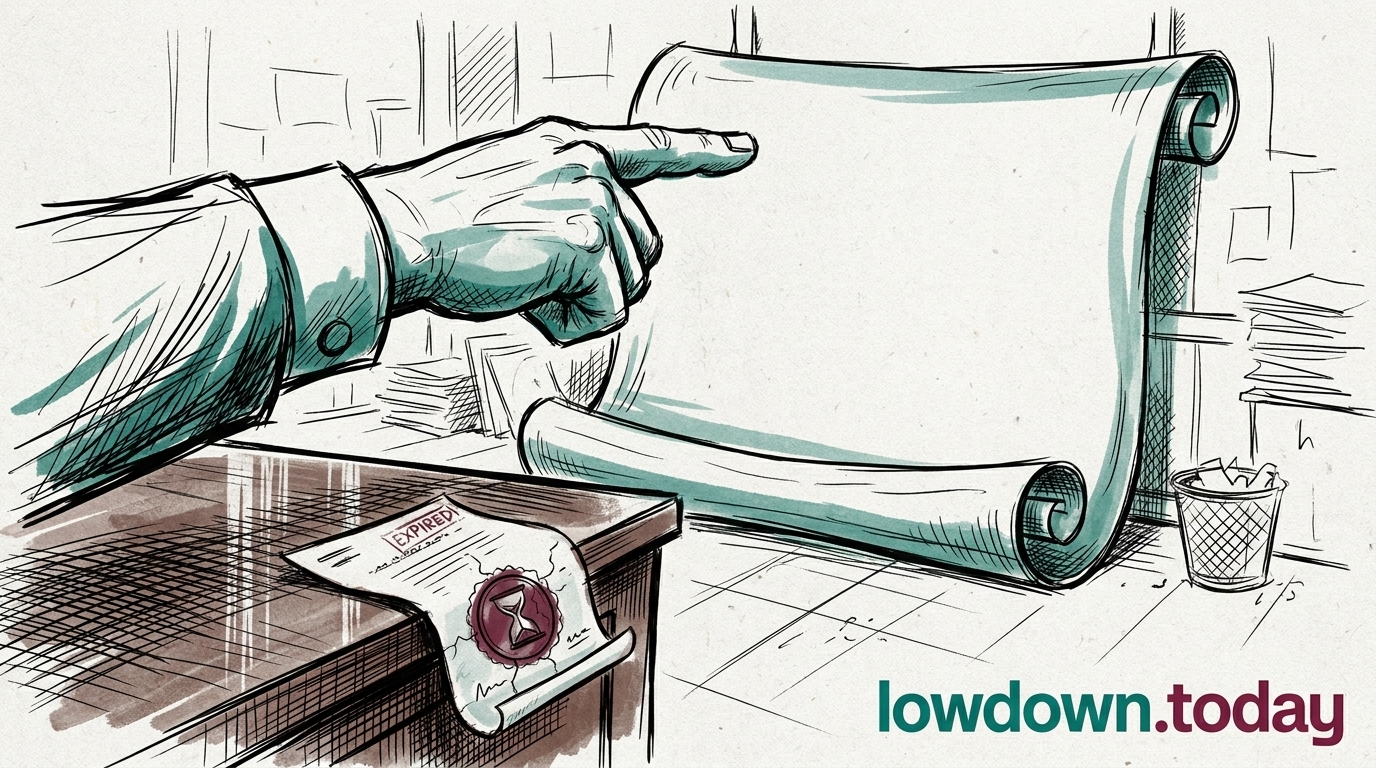
China's banking regulator, the National Financial Regulatory Administration (NFRA), instructed the country's four largest state banks, ICBC, Agricultural Bank of China, China Construction Bank and Bank of China, to halt new lending to five sanctioned refiners, Hengli among them 1. The NFRA is China's top banking and insurance supervisor, created in 2023 to consolidate financial oversight.

The NFRA order covers new lending only and leaves repayment of existing loans untouched, so the five refiners keep their current credit lines. The order constrains fresh exposure without forcing a default, which would ripple back through the state banks that made the loans.

The move mirrors the Commerce Ministry's earlier blocking list , extending the same restraint from the trade-policy track to the banking-regulation track. Read alongside the secondary-sanctions exposure Chinese banks already face on dollar-clearing for restructured trades , it shows Beijing managing the same risk from two directions: limiting how much state credit rides on entities that Washington could blacklist.

The timing sits awkwardly against the mediation gathering in the same city. China is hosting Pakistan's negotiators while quietly capping its banks' fresh lending to the refiners caught in the US sanctions net, protecting its own institutions whatever the talks produce. The instruction is a hedge, not a break: enough to limit downside, not enough to abandon the refiners that move sanctioned Iranian crude.

Deep Analysis

In plain English

China's banking regulator, the National Financial Regulatory Administration (NFRA), told the country's four biggest banks on 25 May to stop making new loans to five oil refineries that the United States has placed on its sanctions list. The four banks are ICBC, Agricultural Bank of China, China Construction Bank, and Bank of China. The order covers new loans only. The refineries can still repay old loans and keep using credit they already have. China did this partly to protect its own banks from US penalties. American financial sanctions work by threatening to cut off any bank that deals with companies on the blocked list from the dollar-clearing system, which is like the global plumbing that makes international payments work.

Deep Analysis
Root Causes

MOFCOM's Announcement No. 21 blocking statute, issued in May 2026, prohibits Chinese entities from complying with foreign sanctions that MOFCOM has not formally recognised.

The NFRA instruction mirrors the blocking list, covering the same five refiners, but operates on a different legal basis: NFRA can issue binding supervisory orders to state banks under its 2023 founding statute without triggering the MOFCOM anti-sanctions-compliance prohibition. The two tracks (NFRA lending halt and MOFCOM blocking statute) thus operate in parallel without legal contradiction.

The structural driver is the GL V expiry on 24 May: with OFAC's dollar-clearing exposure now live for Chinese state banks, NFRA's new-lending halt functions as a circuit-breaker, cutting balance-sheet exposure to refiners who may become OFAC-blocked counterparties within days.

What could happen next?
  • Consequence

    The five sanctioned refiners lose access to new bank credit for crude inventory purchases, compressing their ability to pre-buy dark-fleet Iranian cargoes 30-60 days forward.

  • Risk

    If OFAC determines the new-lending halt is insufficient and issues a secondary-sanctions determination against one of the four state banks over existing credit lines, China faces a direct confrontation between its NFRA compliance order and a live OFAC enforcement action.

First Reported In

Update #107 · Two markets, two prices on one Iran deal

OFAC / US Treasury· 25 May 2026
Read original
Different Perspectives
Oil market and P&I insurers
Brent cleared $87 intraday only once CENTCOM's blockade became physical rather than declared, even though P&I Clubs had already excluded Hormuz war risk a week earlier on 7 July: capital hedged ahead of enforcement, but prices moved only after it.
UAE reporting
UAE reporting
UAE reporting placed the Omani tanker deaths at one seafarer against the International Maritime Agency's count of two, the first time in this war that a Gulf state's casualty figures have diverged from an international monitor's.
Jordan
Jordan
Iranian strikes reached Jordan again on 14 July as part of the Gulf-wide retaliation for the Hormuz blockade, extending the conflict's geographic footprint to a state with no direct stake in the strait itself.
Bahrain
Bahrain
Bahrain sounded air-raid sirens on 14 July during Iran's Gulf-wide retaliation, the same day CENTCOM's blockade order and fourth night of strikes pushed the conflict's physical reach into the wider Gulf littoral.
Kuwait
Kuwait
Kuwait intercepted Iranian missiles and drones on 14 July as Tehran's blockade retaliation reached Gulf states beyond Iran's immediate shoreline, confirming Kuwaiti airspace now sits inside Iran's retaliatory envelope.
Oman
Oman
Oman absorbed the war's first tanker casualties in its own waters on 14 July, with two supertankers disabled and seafarers killed, putting the sultanate's shipping lanes directly in the path of the blockade fight for the first time.