Skip to content
You can now search across every topic, entity and event.What's new
Iran Conflict 2026
21MAY

Rial hits new low on Day 100

2 min read
09:55UTC

Iran's rial weakened to 1,762,000 per dollar on 7 June, down from 1,736,000 on 4 June, erasing every gain the market had priced in from deal optimism.

ConflictDeveloping
Key takeaway

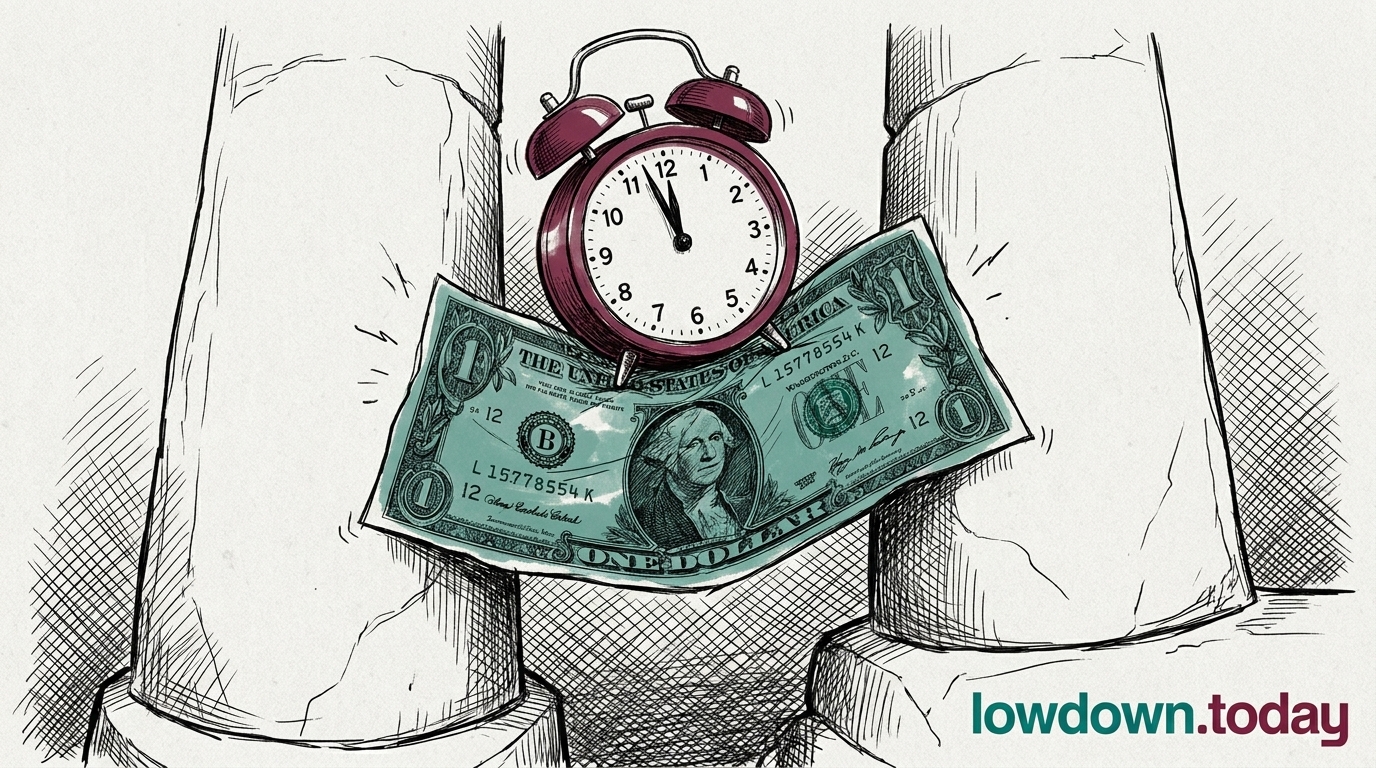
Iran's rial hit 1,762,000 per dollar on Day 100, erasing the recovery deal optimism had bought.

Iran's rial hit 1,762,000 per dollar on Day 100, 7 June 2026, weakening from 1,736,000 on 4 June, according to the tracking service AlanChand 1. The rial is the free-market exchange rate ordinary Iranians use, and it is the cleanest daily read on how the country's own people price the war and the prospect of a deal. The latest fall extends the retreat documented on 4 June , when the currency reversed an earlier bounce tied to US testimony.

The slide erases the recovery that diplomatic optimism had bought over the prior fortnight. Each signal of a possible agreement had nudged the rate back; the Day 100 low unwinds all of it, leaving the currency near its record weak point after touching 1,746,000 on 1 June . The market is treating the talks as producing nothing tradeable, and the depreciation compounds the cost of imported food and fuel for households already squeezed by sanctions.

Deep Analysis

In plain English

Iran's currency, the rial, is the money ordinary Iranians use to buy food, medicine, and household goods. Many of those goods are imported, so when the rial weakens against the US dollar, everything bought from abroad costs more in rial terms. On Day 100 of the conflict, 7 June 2026, one US dollar costs 1,762,000 rials on the open market. Three days earlier it cost 1,736,000. Before the war began the rial was already under pressure, but the conflict and sanctions have accelerated the fall dramatically. Iran's own central bank reported inflation of 77.2% in the year to May 2026, the worst since the Second World War occupation of 1942, with daily-needs goods up 113% {{EVREF:/t/iran-conflict-2026/119/iran-inflation-at-worst-since-1942/}}. Currency traders use the rial as a real-time signal of how close a deal feels. When Rubio said the deal was '95% done' on 2 June, the rial briefly strengthened. By Day 100 that gain had completely reversed. The market's message is that signed paper has not arrived and may not arrive soon.

Deep Analysis
Root Causes

Iran's rial depreciation rests on a dollar-scarcity structural condition that predates the 2026 war. Under the maximum-pressure sanctions of 2018-2021 the rial fell from roughly 40,000 to the dollar to over 300,000; the conflict has accelerated the same dynamic by an order of magnitude.

The central mechanism is that Iran cannot freely sell oil for dollars, so it cannot maintain foreign-exchange reserves at the level needed to defend the currency. With reserves depleted and oil exports near zero, the open market rate reflects genuine scarcity rather than speculative attack.

First Reported In

Update #120 · The deal's last 5% is uranium nobody can find

GlobalSecurity· 7 Jun 2026
Read original
Causes and effects
This Event
Rial hits new low on Day 100
The currency has unwound a fortnight of diplomatic hope, pricing the deal talk as worthless.
Different Perspectives
Oil market and P&I insurers
Brent cleared $87 intraday only once CENTCOM's blockade became physical rather than declared, even though P&I Clubs had already excluded Hormuz war risk a week earlier on 7 July: capital hedged ahead of enforcement, but prices moved only after it.
UAE reporting
UAE reporting
UAE reporting placed the Omani tanker deaths at one seafarer against the International Maritime Agency's count of two, the first time in this war that a Gulf state's casualty figures have diverged from an international monitor's.
Jordan
Jordan
Iranian strikes reached Jordan again on 14 July as part of the Gulf-wide retaliation for the Hormuz blockade, extending the conflict's geographic footprint to a state with no direct stake in the strait itself.
Bahrain
Bahrain
Bahrain sounded air-raid sirens on 14 July during Iran's Gulf-wide retaliation, the same day CENTCOM's blockade order and fourth night of strikes pushed the conflict's physical reach into the wider Gulf littoral.
Kuwait
Kuwait
Kuwait intercepted Iranian missiles and drones on 14 July as Tehran's blockade retaliation reached Gulf states beyond Iran's immediate shoreline, confirming Kuwaiti airspace now sits inside Iran's retaliatory envelope.
Oman
Oman
Oman absorbed the war's first tanker casualties in its own waters on 14 July, with two supertankers disabled and seafarers killed, putting the sultanate's shipping lanes directly in the path of the blockade fight for the first time.