Skip to content
Briefings are running a touch slower this week while we rebuild the foundations.See roadmap
Iran Conflict 2026
21MAY

DMA clock starts toward six-day AI Act collision

4 min read
09:55UTC

The European Commission opened its public consultation on Google's DMA Article 6(11) search-data obligation on 16 April 2026, setting a binding decision for 27 July and a collision with AI Act enforcement on 2 August.

ConflictDeveloping
Key takeaway

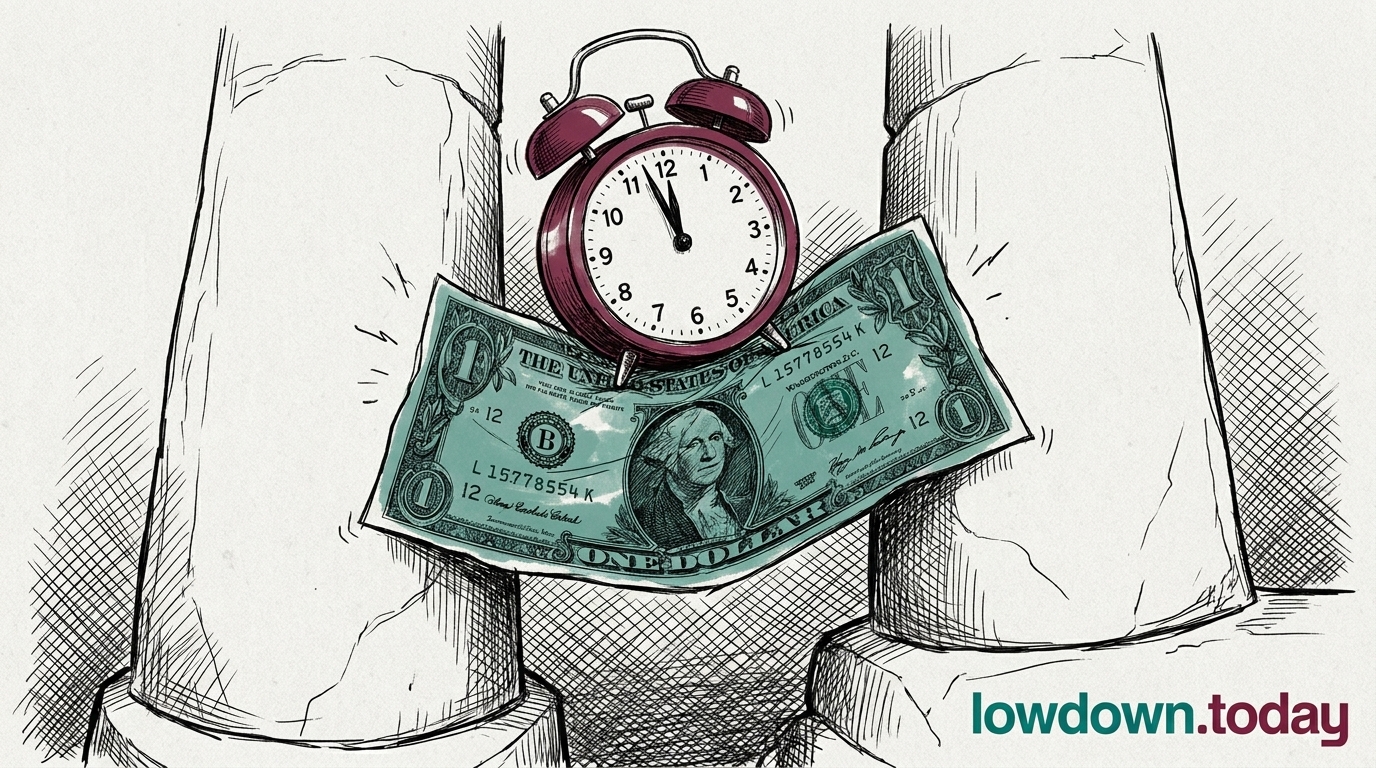
Two EU digital enforcement deadlines land six days apart with no published coordination between them.

The European Commission opened its public consultation on 16 April 2026, setting out proposed DMA measures requiring Alphabet to share anonymised search ranking, query, click and view data with rival search engines on FRAND (fair, reasonable and non-discriminatory) terms . The consultation is filed under reference DMA.100209 and closes on 1 May 2026, with a binding decision expected by 27 July 2026. A parallel consultation on Android interoperability with third-party AI services, filed as DMA.100220, runs alongside. The measures are drawn from DMA Article 6(11), the gatekeeper obligation on data portability for search services.

Six days after the 27 July binding decision, the EU AI Act AI Office gains full enforcement powers over GPAI model providers . DG COMP runs the DMA case; DG CNECT runs the AI Act; each deadline was set on its own procedural clock. The General Court appeal window on any DMA remedy, if Alphabet appeals, would open after GPAI enforcement is already live. That creates a fortnight in which a gatekeeper remedy, a first-instance enforcement activation and a likely appeals filing land against each other with no published Commission-level pipeline.

Google holds around 90 per cent of EU search market share, and rivals have had no access to its ranking signals under a binding order until now. Qwant, Ecosia, Bing and AI search products stand to receive the first pan-EU FRAND access to anonymised ranking data if the 27 July decision lands as consulted. The architectural effect on AI search, in particular, depends on how "anonymised" is defined in the binding text: granular enough to train competitive retrieval systems, or aggregated enough to preserve Alphabet's ranking moat. That definition is what the 1 May consultation close will determine.

On the AI Act side, no pre-enforcement guidance letters from the AI Office to GPAI providers before the 2 August activation date have surfaced in public sources. Public absence does not rule out internal guidance; Commission staff correspondence may exist without a press trail. What is on record is that the Commission has not published a framework connecting the DMA remedy to GPAI enforcement, and providers are preparing for a fine ceiling of 3 per cent of global turnover without procedural clarity on voluntary compliance. Pre-enforcement complaints are the likeliest route by which the coordination gap becomes visible between 1 May and 2 August.

Deep Analysis

In plain English

Google controls roughly 90 per cent of European internet searches. The EU has ordered Google to share some of the data behind how it ranks search results with competing search engines, such as Qwant and Ecosia, on fair terms. The idea is that if rival search engines can see how Google decides what appears at the top of search results, they can improve their own algorithms and compete more fairly. The tricky part is making the shared data anonymous enough to protect users' privacy while still being useful enough for competitors to actually learn from it. A final decision is expected on 27 July 2026, just six days before separate EU rules about AI models also take effect.

Deep Analysis
Root Causes

Google's ability to maintain approximately 90 per cent EU search market share despite fourteen years of Commission investigation reflects a search quality feedback loop that rivals cannot replicate without the data. Google's ranking signal incorporates billions of daily user interactions, clicks, dwell time, reformulations and zero-result queries, that collectively constitute a training dataset for the ranking algorithm that no rival has been able to assemble at comparable scale.

DMA Article 6(11) is the first binding legal instrument that attempts to share that dataset; its structural challenge is that sharing past data gives rivals a static snapshot while Google continues to compound its advantage in real time. The data-sharing remedy addresses the symptom rather than the underlying network-effect accumulation dynamic.

What could happen next?
  • Meaning

    If the 27 July decision lands as consulted and Alphabet does not immediately appeal, Qwant and Ecosia receive the first binding access to Google's anonymised ranking signals. The more significant downstream effect is for AI search products: anonymised click and query data from Google's index is a training resource for retrieval-augmented generation systems, creating a competitive input for European AI search companies that currently have no equivalent. The six-day collision with AI Act GPAI enforcement activation means Alphabet will face its first DMA data-sharing compliance audit and its first GPAI classification assessment within a fortnight of each other, creating the first real test of whether DG COMP and the AI Office coordinate enforcement against the same gatekeeper.

First Reported In

Update #3 · Sovereignty summit, minus the sovereigns

European Commission DMA Portal· 23 Apr 2026
Read original
Different Perspectives
Turkey (Shakarab consideration)
Ankara serves as one of two Western-adjacent Iran back-channels while Turkish national Gholamreza Khani Shakarab faces imminent execution on espionage charges in Iran. President Erdogan cannot deflect the domestic political crisis that a Turkish execution would trigger, which would force suspension of the mediating role.
Germany (Bundestag gap)
Belgium, Germany, Australia, and France committed Hormuz coalition hardware on 18 May. Germany's Bundestag authorisation for the coalition deployment remains pending, creating a constitutional gap between the commitment announced and the parliamentary mandate required to operationalise it.
IEA and oil market analysts
The IEA's $106 May Brent projection met the market in one session on 20 May as Brent fell 5.16% on diplomatic optimism. Goldman Sachs and Morgan Stanley's two-layer premium framework holds: the kinetic component compressed; the structural insurance component tied to Lloyd's ROE remains unresolved.
Hengaw
Hengaw
Documented the dual Kurdish execution at Naqadeh on 21 May, the two Iraqi-national espionage executions on 20 May, and Gholamreza Khani Shakarab's imminent execution risk. The 24-hour cluster covers two executions at one facility, the first foreign-national espionage executions, and a Turkish national whose death would suspend Ankara's mediation.
Lloyd's of London
Lloyd's of London
Hull rates stand at 110-125% of vessel value on the secondary market; the Joint War Committee has conditioned cover reopening on written ROE from the coalition or PGSA. The Majlis rial bill makes any compliant ROE structurally impossible to draft while the PGSA's yuan portal remains its operational mechanism.
United Kingdom and France (Northwood coalition)
The 26-nation coalition paper requires Lloyd's to see written rules of engagement before Hormuz war-risk cover reopens. The Majlis rial bill adds a second governance incompatibility on top of the unpublished PGSA fee schedule; coalition ROE cannot mention rial without conceding Iranian sovereignty over the strait.