Skip to content
You can now search across every topic, entity and event.What's new
European Tech Sovereignty
27MAY

UK picks champions as EU shares the bet

3 min read
15:19UTC

The UK Sovereign AI Unit's Strategic Assets competition closes at 14:00 BST on 5 June, with second-wave contracts of up to GBP 5m each from July, advancing a national-champion model that diverges sharply from the EU's shared-procurement approach.

TechnologyDeveloping
Key takeaway

Britain funds national AI champions directly while the EU shares the bet, and neither model has closed the chip gap.

The UK Sovereign AI Unit's Strategic Assets competition closes for full applications at 14:00 BST on Friday 5 June, with second-wave contracts of up to GBP 5m each expected from July 1. The unit sits inside DSIT, the UK Department for Science, Innovation and Technology, and invests in nationally strategic AI through equity stakes and compute access. Each contract runs 12 to 24 months across challenge areas including national security, cybersecurity, energy and health. The competition follows the GBP 80m procurement launched in April and the first cohort that took an equity stake in Callosum and awarded compute to six firms .

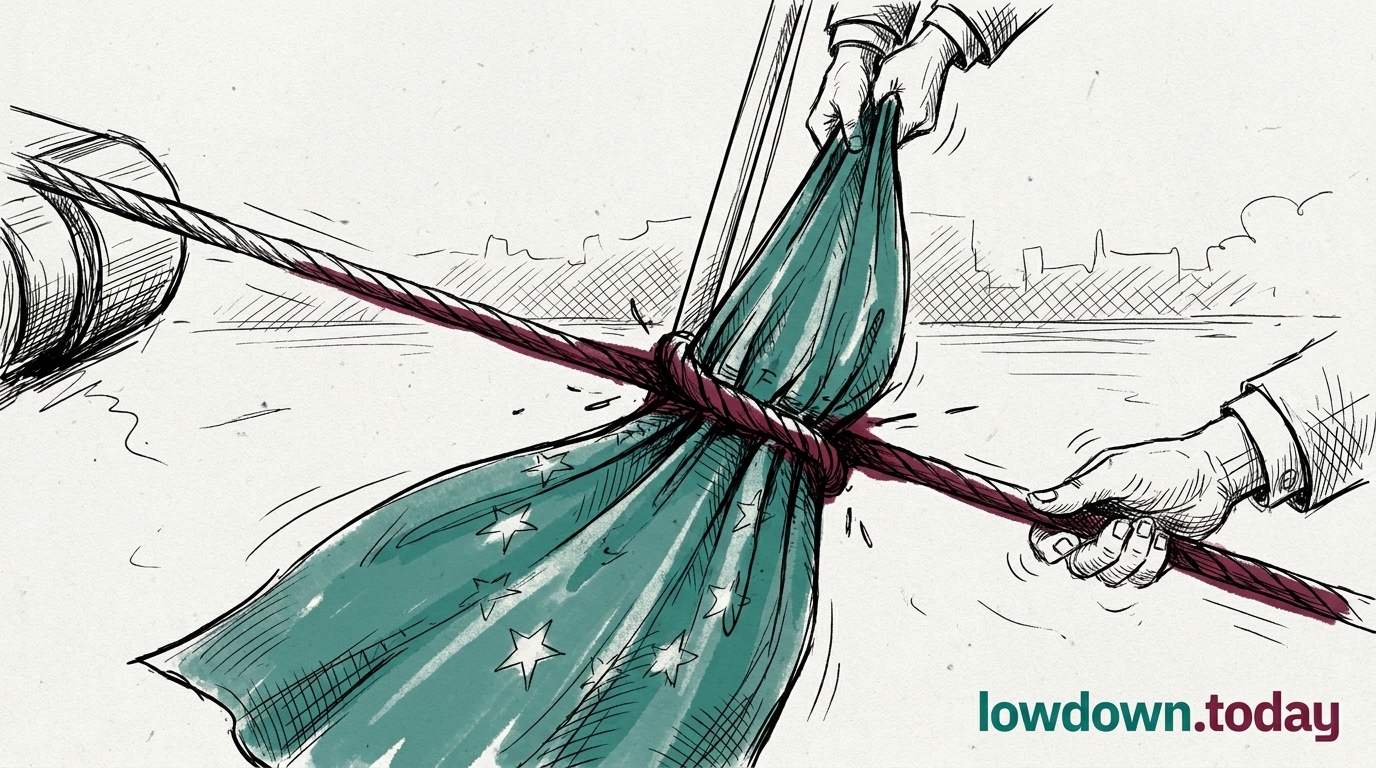
The two sovereignty models now sit side by side. Britain builds national isolation, picking domestic champions and funding them directly through equity and compute. The EU builds shared dependency through pan-EU procurement frameworks , spreading the bet across a single market. The British design concentrates risk in a handful of state-backed firms: if the chosen champions fail, the strategy fails with them. The EU design spreads that risk but ties delivery to the slowest legislative clock in the bloc, the same clock that has held CAIDA on its fourth scheduled date.

Neither doctrine reaches the layer that matters most. For British founders the offer is up to GBP 5m of non-dilutive funding within weeks, but only for projects the state has pre-selected as strategic. For European firms it is access to a shared procurement pool that depends on a law not yet adopted. Both run on US or Chinese chips, and neither has closed the compute gap Bruegel measured.

Deep Analysis

In plain English

The UK government has a programme called the Sovereign AI Unit that funds British AI companies working on national security, cybersecurity, energy and health. In June 2026 the competition for a second wave of contracts closed, with each contract worth up to GBP 5m and running for one to two years. Unlike EU programmes that mainly give grants, the UK model takes a small ownership stake in the companies it funds. The idea is that the government becomes a part-owner of promising AI firms, which gives it access to their technology and a share of any future success. The first round backed a company called Callosum and gave compute access to six other firms.

What could happen next?
  • Consequence

    If UK equity-backed AI firms outperform EU grant-funded alternatives in commercial uptake, the UK's post-Brexit industrial policy framework gains a visible advantage in attracting AI investment over EU member states.

  • Risk

    GBP 5m contracts are too small to fund sovereign AI compute infrastructure; the programme builds capability at the application layer while remaining dependent on US hyperscaler cloud for training and inference.

First Reported In

Update #7 · Sovereignty arrives, minus Brussels

UK DSIT (GOV.UK)· 3 Jun 2026
Read original
Different Perspectives
United States (Google/Alphabet)
Alphabet lost its final Android appeal on 2 July with no further court to hear it, a result its Computer and Communications Industry Association allies frame as precedent, not deterrence, since the €4.1bn fine changed nothing about Google's Play Store terms across eight years of litigation.
UK Department for Science, Innovation and Technology
DSIT opened its £96m second Sovereign AI wave on 3 July, switching from April's equity stakes to fixed-price contracts because Britain has no domestic hyperscaler or Bpifrance-style lender to fund capacity another way. It is betting on buying outcomes it controls alone rather than joining an EU-wide framework.
German federal government
Berlin backed both German deliverables this week, Infineon's fab and Aleph Alpha's merger, but is finding one far harder to close than the other. It wants enforceable protective rights inside Cohere's cap table before the merger closes, a legal instrument the Bundeskartellamt has no filing to review yet.
European Commission
European Commission
The Commission banked a clean CJEU win on the eight-year Android case on 2 July, removing Google's last comparator argument before President von der Leyen rules on the far larger DMA self-preferencing fine due 27 July. Brussels treats Infineon's early Dresden delivery as proof the Chips Act mechanism works, at the node Europe already led.
Bruegel (EU industry sceptics)
Bruegel economist Mario Mariniello argued the EU sovereignty package mimics US and Chinese strategy while EU cloud providers hold roughly 15% of their home market; using nationality as a proxy for security without fixing the underlying capital and energy gaps that drive the dependency creates €86bn of migration cost without the security benefit it is sold as delivering.
France
France
France published a joint sovereignty definition with Germany at VivaTech and mobilised €13bn under Tibi Phase 3, placing SAP's partnership with Mistral as the working proof that a German enterprise-software giant running a French sovereign model inside public administration is what digital sovereignty looks like in practice.
