Skip to content
Welcome, thoughtbot's Giant Robots listeners!Start here
European Tech Sovereignty
19APR

EU drops consortium rule for AGILE fund

2 min read
17:00UTC

The EU unveiled its €115 million AGILE defence technology programme, the first to allow single-company applications without requiring multinational consortia.

TechnologyDeveloping
Key takeaway

Removing the consortium requirement could accelerate European defence technology deployment by years.

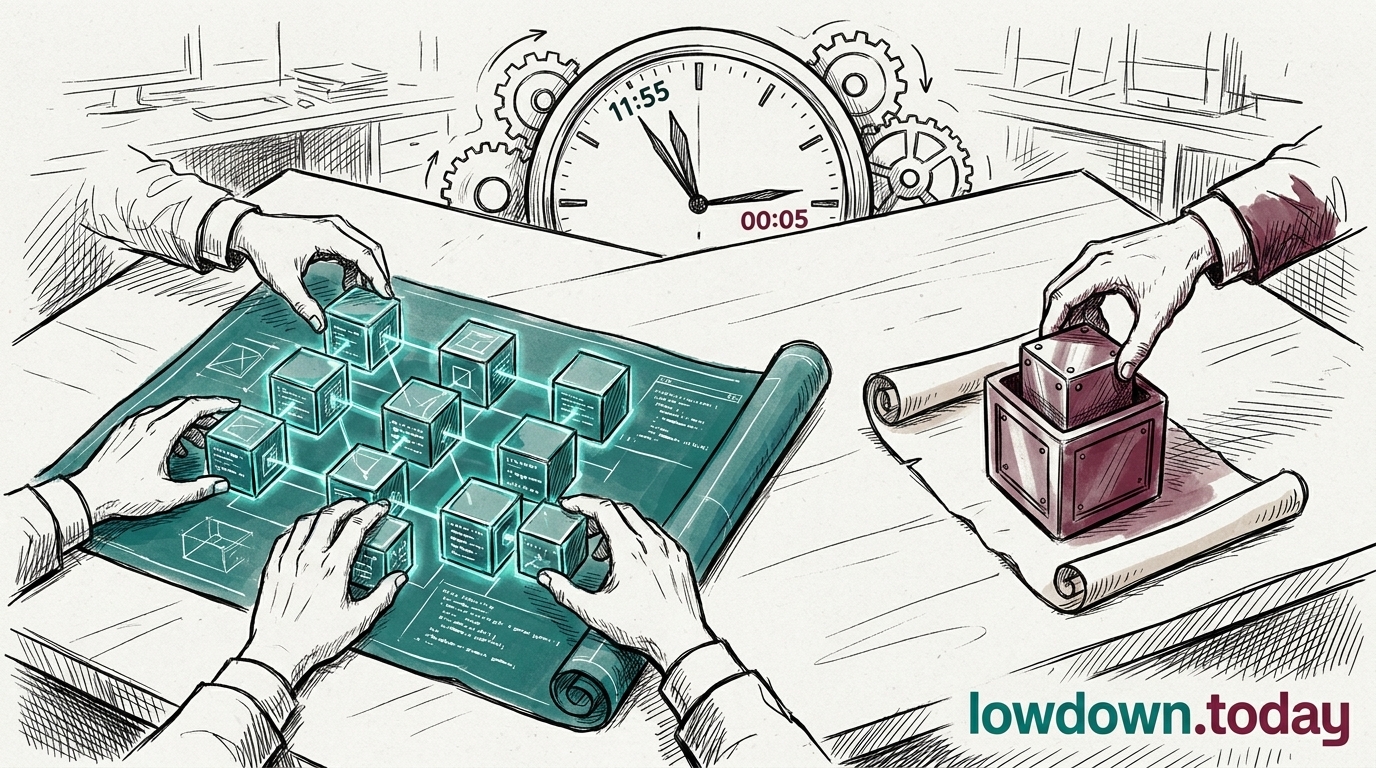
The European Union unveiled the €115 million AGILE (Accelerated Government Innovation for Lethality and Effectiveness) defence technology programme on 7 April. For the first time, a single company can apply directly without forming a multinational consortium. The programme awaits European Parliament and Council approval.

The consortium requirement has historically added months or years to EU defence procurement timelines. Removing it is a structural change to how European defence technology reaches the market. If AGILE passes in its current form, it establishes a precedent for direct EU-to-company contracts that bypasses the national industrial politics constraining capability development across the bloc.

The €115 million pilot is modest relative to Britain's £4bn commitment and the Pentagon's multibillion-dollar Drone Dominance programme. The procedural innovation matters more than the sum: 20 to 30 projects at €1 to €5 million each, with shorter evaluation timelines and retroactive funding for completed work. For European drone startups that previously had no route into EU-level defence procurement, AGILE creates an addressable market that did not exist before.

AGILE arrives weeks after Gulf conflict escalation and DroneShield's Amsterdam headquarters opening. Gulf conflict dynamics are reshaping institutional procurement rules that Brussels had previously treated as politically fixed. Whether Parliament and Council approve the programme without reinstating consortium requirements will determine whether the structural change holds.


Deep Analysis

In plain English

The EU has historically required that multiple companies from different countries form a partnership before applying for defence funding. This was meant to encourage cooperation, but in practice it added so much cost and delay that many small companies simply never applied. AGILE changes that: a single British, French, or Polish startup can now apply for EU defence funding on its own. That is genuinely new. The total fund is €115 million, which across 20-30 projects works out to roughly €4-6 million each. For a small drone startup, that is meaningful early-stage capital with no consortium overhead.

What could happen next?
  • Opportunity

    If AGILE passes without the consortium requirement being reinstated, European drone startups gain a direct funding route to EU defence procurement that bypasses the national industrial gatekeeping that has historically excluded them.

  • Precedent

    The single-company application model, if successful, will be cited in future EU defence procurement reform debates as evidence that the consortium requirement is a bureaucratic rather than a strategic necessity.

First Reported In

Update #5 · Gulf drone war rewrites procurement

Euronews· 13 Apr 2026
Read original →
Different Perspectives
European Centre for International Political Economy
ECIPE found nine states gave about 97% of awarded cloud lots to home providers from 2018 to 2025, and every sovereignty-framed lot went to a domestic supplier. The think tank reads sovereignty clauses as a home-bias tool that narrows competition, with a 46% sole-bidder rate on a small sample.
Mistral AI
Mistral AI
Mistral opened a Munich industrial AI hub on 28 September with BMW and Siemens Energy work, and Germany's digital minister Karsten Wildberger praised it on the launch page. The French lab gains a German ministerial endorsement while its 21 October Nvidia partnership ties the work to US accelerators.
AWS European Sovereign Cloud
AWS will run its Brandenburg region for several hours on 24 October cut off from the AWS global backbone, with an EU-resident team. AWS says the test follows BSI's C3A criteria and will give regulators and customers verifiable evidence of separation.
Greenland government
Greenland signed a joint declaration with the EU and Denmark in September and received Virkkunen on 24 and 25 September. The Arctic Strategy now backs a cable linking Greenland directly to Europe, an alternative to Greenland Connect, which lands in Canada and Iceland.
Greek government
Greek government
Kyriakos Mitsotakis inaugurated DAEDALUS at Lavrion on 19 October, a €36m machine on Nvidia GH200 chips that anchors the PHAROS AI Factory. Athens paid 65% through Greece 2.0, making national recovery money the main funder of an EU AI Factory.
ASML
ASML
ASML reported record quarterly sales of €11.66bn and said planned supply for 2027 and 2028 will not fully meet demand. It plans about 30% more capacity in 2027, and some customers want to book for 2029 and 2030.

Written with AI from Lowdown's published reporting. Not individually reviewed by an editor. Editorial standards.