Skip to content
Welcome, thoughtbot's Giant Robots listeners!Start here
European Tech Sovereignty
19APR

Brave1 Market takes 590,000 drone orders

3 min read
17:00UTC

Ukrainian brigades ordered more than 590,000 drones through Brave1 Market in nine months, paying with points earned for confirmed results.

TechnologyAssessed
Key takeaway

Ukrainian brigades ordered over 590,000 drones themselves this year as approvals of new designs accelerated.

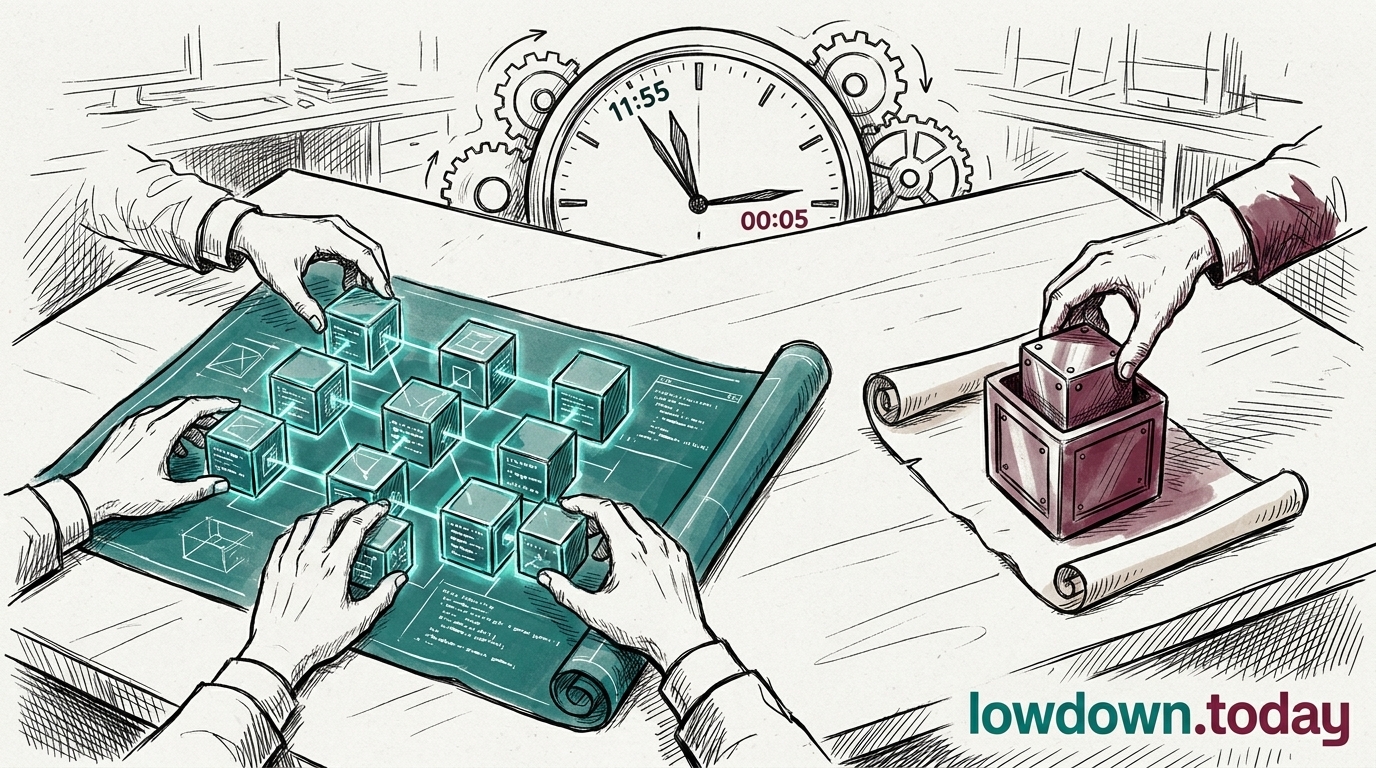
Ukrainian units ordered more than 590,000 drones through Brave1 Market in the first nine months of 2026, Ukraine's Ministry of Defence said on 25 September⁠1. Brave1 Market is the ordering platform of Brave1, the state defence-technology cluster. Brigades choose a supplier there and pay with ePoints, credits earned for confirmed results such as hits, reconnaissance and evacuations.

That works out at roughly 65,000 drones a month chosen by the units that fly them rather than by a central buyer. The ministry says the average monthly value of orders has more than doubled since January, and that orders for fixed-wing kamikaze drones peaked at six times their January level. It gave no hryvnia total and no supplier count, so the volume cannot be turned into a price per drone. In August the ministry said Brave1 listed 46 AI products.

The ministry has also codified 650 drone systems since January, among them 238 strike copters and 231 fibre-optic systems⁠2. Codification is the approval a Ukrainian maker needs before the state can buy its product. Fibre-optic drones trail a thin cable instead of using a radio link, so a jammer cannot cut them off, and they now nearly match strike copters among approved designs.

The ministry had reported 413 codified systems by mid-July⁠3. By Lowdown's calculation from those two figures, approvals ran at about 100 a month from mid-July, against about 63 a month before: roughly 1.6 times the earlier pace. A system that pays brigades for results only works if they have a wide catalogue to choose from, and codification is how Kyiv widens it.


Deep Analysis

In plain English

Ukraine's army uses huge numbers of small drones to scout and to strike Russian forces. Instead of a central office buying all of them, the government runs Brave1 Market, an online shop where frontline units choose drones themselves. Units pay with ePoints, a kind of credit they earn for confirmed results such as destroying enemy equipment. Before a company can sell a drone through the system, the defence ministry must approve, or codify, the design. Some newer drones are steered through a thin cable rather than by radio, so enemy jamming cannot cut them off.

Deep Analysis
Root Causes

Electronic warfare drove the design shift. Jammers cut the radio link of most small drones, so fibre-optic control, which trails a cable instead, has become a default requirement, and 231 of the 650 approvals now use it.

The ministry's codification by type also shows where the next demand sits: 42 interceptor drones, 32 middle-strike and nine deep-strike systems were approved alongside the copters. Interceptors answer Russia's Shahed-type attack drones, and the deep-strike types reach targets far behind the front.

What could happen next?
  • Consequence

    Fibre-optic control becomes a standard Ukrainian requirement, pushing radio-only designs to the margins of state buying.

  • Opportunity

    Approved Ukrainian interceptor and deep-strike designs give European partners a catalogue to co-produce if exports open.

First Reported In

Update #18 · Four EU states skip tenders on drone defence

Ministry of Defence of Ukraine (via GlobalSecurity.org)· 1 Oct 2026
Read original →
Different Perspectives
European Centre for International Political Economy
ECIPE found nine states gave about 97% of awarded cloud lots to home providers from 2018 to 2025, and every sovereignty-framed lot went to a domestic supplier. The think tank reads sovereignty clauses as a home-bias tool that narrows competition, with a 46% sole-bidder rate on a small sample.
Mistral AI
Mistral AI
Mistral opened a Munich industrial AI hub on 28 September with BMW and Siemens Energy work, and Germany's digital minister Karsten Wildberger praised it on the launch page. The French lab gains a German ministerial endorsement while its 21 October Nvidia partnership ties the work to US accelerators.
AWS European Sovereign Cloud
AWS will run its Brandenburg region for several hours on 24 October cut off from the AWS global backbone, with an EU-resident team. AWS says the test follows BSI's C3A criteria and will give regulators and customers verifiable evidence of separation.
Greenland government
Greenland signed a joint declaration with the EU and Denmark in September and received Virkkunen on 24 and 25 September. The Arctic Strategy now backs a cable linking Greenland directly to Europe, an alternative to Greenland Connect, which lands in Canada and Iceland.
Greek government
Greek government
Kyriakos Mitsotakis inaugurated DAEDALUS at Lavrion on 19 October, a €36m machine on Nvidia GH200 chips that anchors the PHAROS AI Factory. Athens paid 65% through Greece 2.0, making national recovery money the main funder of an EU AI Factory.
ASML
ASML
ASML reported record quarterly sales of €11.66bn and said planned supply for 2027 and 2028 will not fully meet demand. It plans about 30% more capacity in 2027, and some customers want to book for 2029 and 2030.

Written with AI from Lowdown's published reporting. Not individually reviewed by an editor. Editorial standards.