Skip to content
You can now search across every topic, entity and event.What's new
European Tech Sovereignty
8SEP

Iran inflation at worst since 1942

3 min read
15:06UTC

The Central Bank of Iran put annual inflation at 77.2 per cent for the month to 20 May, the highest reading since the wartime occupation of 1942. Daily-needs goods rose 113 per cent.

TechnologyAssessed
Key takeaway

Iran's own central bank reports 77.2 per cent inflation, the worst since the 1942 occupation.

The CBI (Central Bank of Iran) reported annual inflation of 77.2 per cent for the month to 20 May 2026, the highest reading since the wartime occupation of 1942 1. Daily-needs goods rose 113 per cent point-to-point, with some items past 300 per cent. Rice climbed from 1.8m rials to more than 5m a kilogram and cooking oil quadrupled. Arman Khaleghi of Iran's Chamber of Commerce confirmed the squeeze on fixed-income earners.

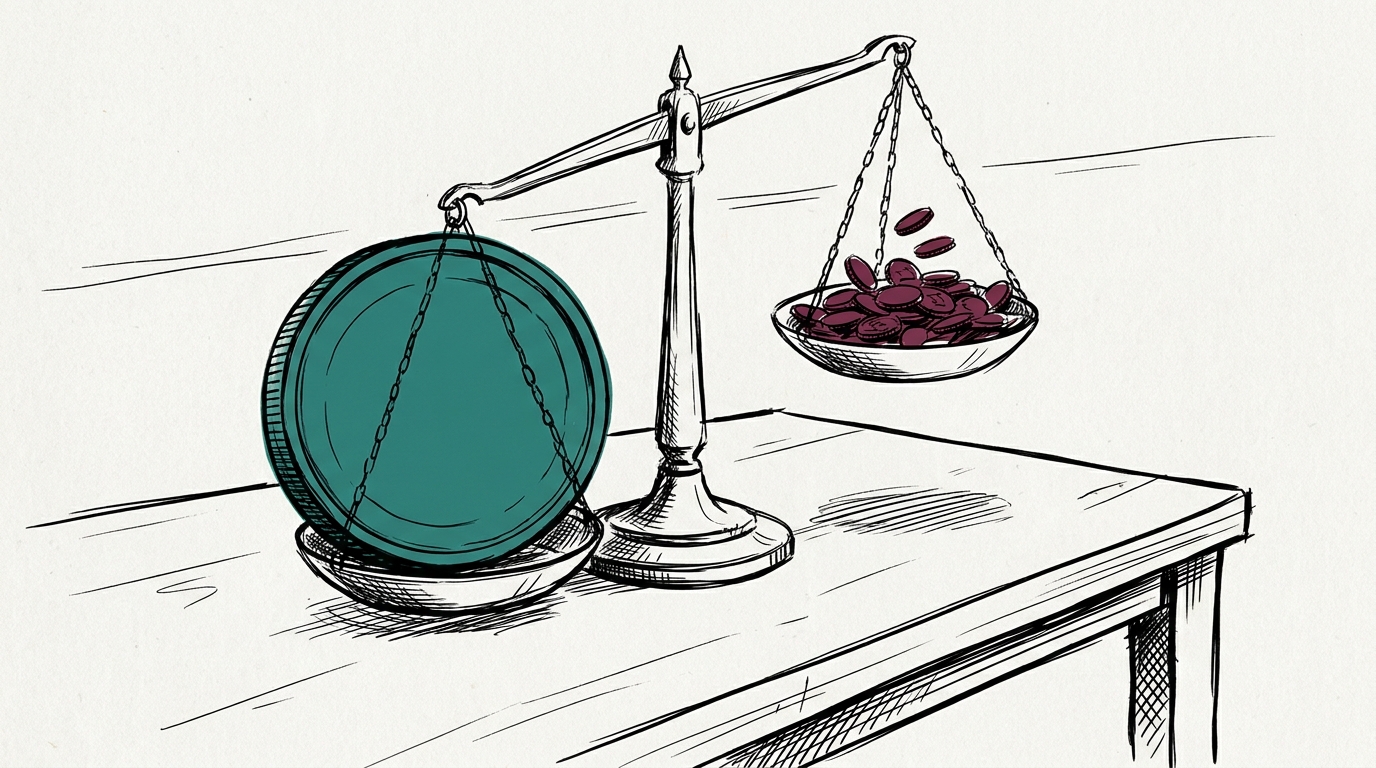
For a household, a wage now buys little more than half what it did a year ago. The CBI is the regime's own statistics arm, certifying the collapse in its own figures rather than leaving it to an outside estimate Tehran could wave away as hostile.

The reading compounds pressure already logged. The rial reached 1,746,000 per dollar on 1 June after a 43 per cent six-month devaluation . Inflation and the currency slide feed each other: an importing economy paying for goods in a collapsing rial passes the cost straight to the shelf, which is how a 43 per cent devaluation becomes a 77.2 per cent price reading.


Deep Analysis

In plain English

Iran's central bank reported that prices across the economy rose 77.2% in the year to 20 May 2026, the worst reading since the 1942 wartime occupation. For everyday items like food and household basics, the increase was 113%: something that cost 1,000 tomans last May now costs 2,130 tomans. This is the compounding effect of two things happening at once. The Iranian currency (the rial) has lost 43% of its value against the dollar in six months, making anything imported much more expensive. At the same time, Iran's oil exports have almost completely stopped due to the blockade, so the government has far less money to keep the economy running. Iranian households on fixed incomes, roughly two-thirds of the workforce, have seen their real purchasing power cut roughly in half in six months.

Deep Analysis
Root Causes

Three structural drivers compound. First, the rial has depreciated 43% in six months , raising the cost of any import-priced good. Second, the blockade has cut oil export revenue by $5.8bn since April (event index 5), reducing the foreign-currency reserves used to defend the exchange rate.

Third, the Central Bank's TRON-based stablecoin reserve mechanism was disrupted by OFAC's 24 April designation of two CBI TRON wallets, partially closing the informal currency defence channel.

The 113% daily-needs figure is qualitatively different from headline inflation: it indicates that the food and household-essentials supply chain has partially fractured, not merely that prices have risen.

Escalation

At 77.2% annual inflation and a 113% food-price spike, Iran is approaching the threshold where domestic stability becomes a strategic variable. The 1942 parallel is relevant: civilian economic collapse has historically preceded political rupture in Iran more reliably than military defeat. If inflation persists at this rate through July, it accelerates the calculation for any faction inside Iran that a deal is economically preferable to continued resistance.

What could happen next?
  • Consequence

    Fixed-income Iranian households, roughly two-thirds of the workforce, face a real purchasing-power collapse of approximately 50% over six months.

    Immediate · Assessed
  • Risk

    Supply-chain fracture in food and essentials, as opposed to pure currency devaluation, will persist 12-24 months after any deal, creating a prolonged humanitarian baseline degradation.

    Medium term · Reported
  • Opportunity

    Accelerating economic collapse strengthens the hand of Iranian factions that favour a deal, though the IRGC's institutional interests in the wartime economy complicate the arithmetic.

    Short term · Reported
First Reported In

Update #119 · Trump's Iran deal: 95% done, 0% signed

Al Jazeera· 6 Jun 2026
Read original
Causes and effects
This Event
Iran inflation at worst since 1942
The regime's own statistics arm has certified an economic collapse on par with foreign occupation. The figure is hard for Tehran to dismiss because Tehran produced it.
Different Perspectives
Poland
Poland
Poland leads a self-announced AI Gigafactory consortium with a EUR 100 million phase-one commitment, matched by Czechia and joined by Hungary at EUR 25 million. EuroHPC has confirmed no consortium for the call closing 12 November, so the bloc exists only in national announcements so far.
UK Government (DCMS)
Secretary of State Lisa Nandy told the Commons on 3 September she has inherited the sovereign AI brief from Liz Kendall, but gave no assessment, figure or date on frontier-model access. It is the first public claim of ownership since DSIT's abolition, without the substance the committee asked for.
ASML
ASML
ASML CEO Christophe Fouquet credited Intel Foundry, not a European fab, with shipping the first high-volume logic product made on High-NA EUV, the tool only ASML builds. Europe holds the chokepoint tool; the company that spent it into volume production first is American.
Luxembourg
Luxembourg
Luxembourg joined Mistral's Series D as a new investor on 8 September, the same government that co-funds EuroHPC's MeluXina-AI supercomputer. One small member state now funds the sovereign compute Mistral may need and holds equity in the company using it.
Samsung Electronics
Samsung Electronics
Samsung led Mistral's Series D on 8 September and the same day expanded its ASML collaboration on next-generation lithography. One Korean company now sits atop Europe's largest AI funding round and inside its most sensitive chip-tooling relationship.
Mistral AI
Mistral AI
Mistral closed a EUR 3 billion Series D above a EUR 21 billion valuation on 8 September, with Samsung leading and Luxembourg joining as a new state investor. The company markets itself as Europe's non-American AI option even as the round's lead capital comes from South Korea and two US private-equity firms.