Skip to content
You can now search across every topic, entity and event.What's new
European Tech Sovereignty
8SEP

Infantino cites 500m requests, skips the 163% rise

4 min read
15:06UTC

FIFA president Gianni Infantino defended World Cup ticket prices in Spain on 6 May, citing over 500 million ticket requests against fewer than 50 million for 2018 and 2022 combined; he did not address the 163% rise in the final-match ceiling.

TechnologyDeveloping
Key takeaway

FIFA's demand-side defence omits the supply-side number: the final-match ceiling has risen 163%.

On 6 May, Gianni Infantino defended World Cup ticket pricing at a conference in Spain. FIFA, he said, had received over 500 million ticket requests for 2026 against fewer than 50 million combined for 2018 and 2022, and 25% of group-stage tickets sit under $300. He framed resale at "more than double" face value as market-driven. Yet the defence does not address the 163% rise in the official ceiling for a final-match Front Category 1 ticket since the closure of FIFA's "final" sales window . 1

The demand figure and the supply figure point opposite directions. 69 Members of Congress wrote to FIFA in March demanding lower prices, and Football Supporters Europe called the structure "extortionate", up to seven times higher than 2022 Qatar . FIFA introduced dynamic pricing for the first time in World Cup history; the cheapest final ticket has moved from $4,185 at launch to $10,990 by mid-April. The 30% Commission FIFA takes on its own resale marketplace runs on every transaction at the new ceiling.

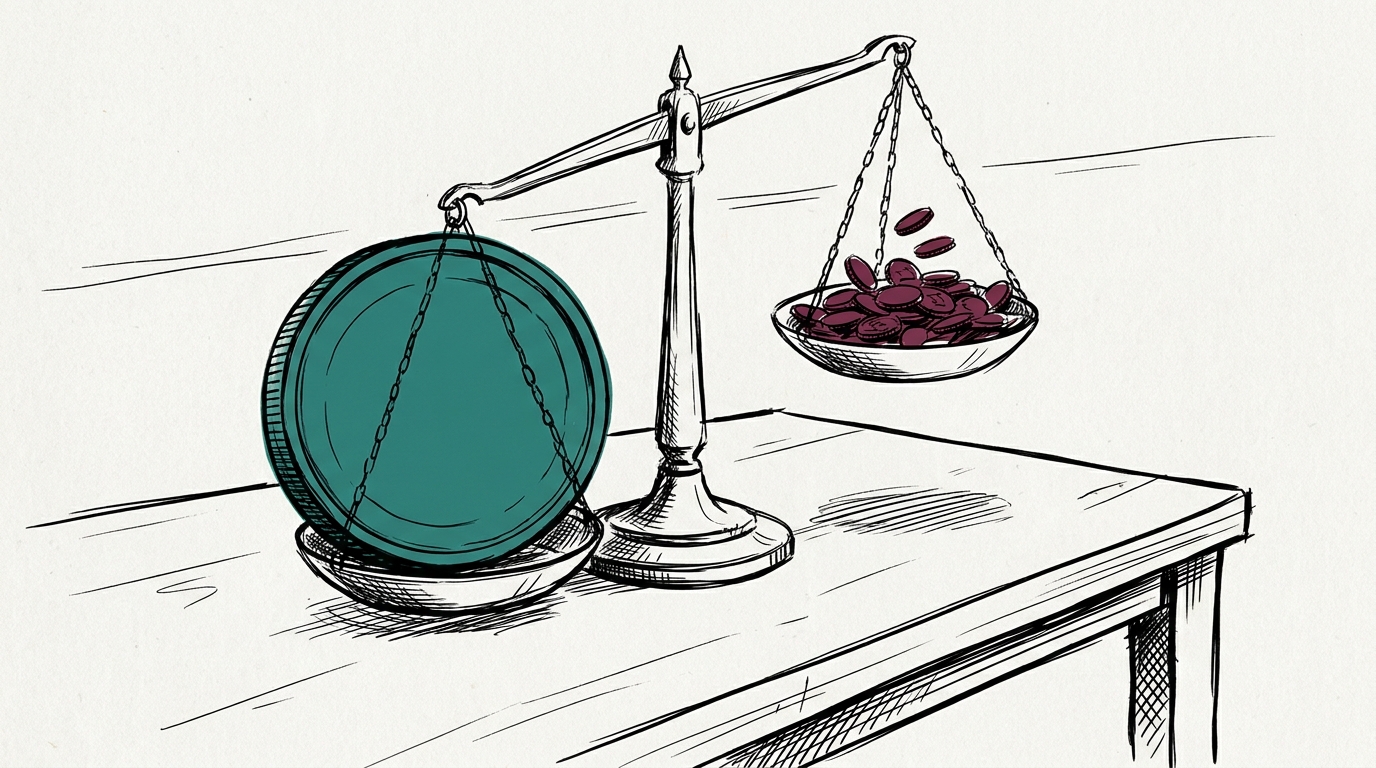
Infantino paired a denominator FIFA did not set with a numerator FIFA chose not to mention. 500 million requests describe demand the market generated; the 163% ceiling rise reflects supply decisions FIFA's own pricing committee made between launch and mid-April. A reader who hears only the 500m figure cannot judge whether FIFA's pricing tracks demand or sets it.


Deep Analysis

In plain English

World Cup tickets cost far more in 2026 than in previous tournaments. Gianni Infantino, who runs FIFA, said in Spain on 6 May that this is because demand is so high. FIFA received 500 million ticket requests for this tournament, compared to about 50 million for the previous two combined. What Infantino did not mention is that the most expensive final tickets went up in price by 163% since FIFA's own 'final' sales window closed. A front-row final ticket now costs roughly $10,990. FIFA also earns a 30% commission every time a ticket changes hands on its own resale platform.

What could happen next?
  • Consequence

    The Football Supporters Europe Article 102 complaint (ID:1458) and the MEP question filed by Brando Benifei directly reference the ceiling rise Infantino avoided addressing; if DG COMP assigns a case number, the 163% rise becomes the central exhibit.

  • Precedent

    FIFA's 2026 dynamic pricing model, if unchallenged, sets the commercial template for the 2030 and 2034 World Cups; the absence of an EU competition ruling before kickoff effectively allows the model to run its full commercial cycle.

First Reported In

Update #10 · Tehran names the players

Al Jazeera· 11 May 2026
Read original
Different Perspectives
Poland
Poland
Poland leads a self-announced AI Gigafactory consortium with a EUR 100 million phase-one commitment, matched by Czechia and joined by Hungary at EUR 25 million. EuroHPC has confirmed no consortium for the call closing 12 November, so the bloc exists only in national announcements so far.
UK Government (DCMS)
Secretary of State Lisa Nandy told the Commons on 3 September she has inherited the sovereign AI brief from Liz Kendall, but gave no assessment, figure or date on frontier-model access. It is the first public claim of ownership since DSIT's abolition, without the substance the committee asked for.
ASML
ASML
ASML CEO Christophe Fouquet credited Intel Foundry, not a European fab, with shipping the first high-volume logic product made on High-NA EUV, the tool only ASML builds. Europe holds the chokepoint tool; the company that spent it into volume production first is American.
Luxembourg
Luxembourg
Luxembourg joined Mistral's Series D as a new investor on 8 September, the same government that co-funds EuroHPC's MeluXina-AI supercomputer. One small member state now funds the sovereign compute Mistral may need and holds equity in the company using it.
Samsung Electronics
Samsung Electronics
Samsung led Mistral's Series D on 8 September and the same day expanded its ASML collaboration on next-generation lithography. One Korean company now sits atop Europe's largest AI funding round and inside its most sensitive chip-tooling relationship.
Mistral AI
Mistral AI
Mistral closed a EUR 3 billion Series D above a EUR 21 billion valuation on 8 September, with Samsung leading and Luxembourg joining as a new state investor. The company markets itself as Europe's non-American AI option even as the round's lead capital comes from South Korea and two US private-equity firms.