Skip to content
You can now search across every topic, entity and event.What's new
European Tech Sovereignty
30JUN

Iran writes Hormuz toll into statute

3 min read
17:31UTC
TechnologyDeveloping

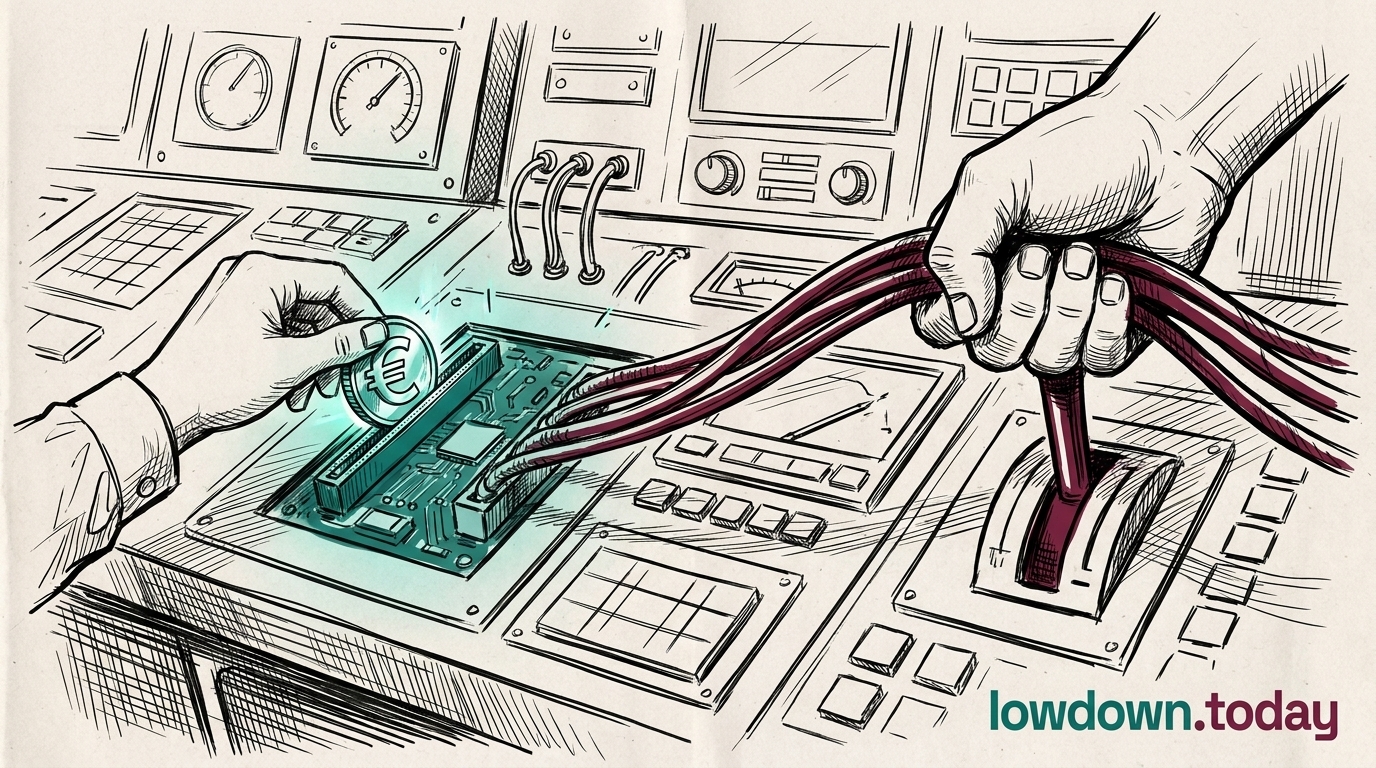
Iran's Islamic Consultative Assembly (the Majlis) is drafting legislation to formalise the Strait of Hormuz toll as Iranian domestic law, with finalisation due next week, according to an unnamed lawmaker cited by Fars news agency. 1 The bill would codify what began as an IRGC field improvisation into statute, transforming a wartime military mechanism into a permanent legal claim over one of the world's critical waterways.

The significance of the timing cannot be overstated. IRGC Navy Commander Admiral Alireza Tangsiri, the man who personally built the toll and vetting system from scratch, was killed in an Israeli airstrike hours before this legislation was publicly confirmed. He was killed at 3am on Wednesday. By that afternoon, the Majlis legal committee in Tehran was drafting his toll system into permanent law. Twenty-six vessels have now transited under the IRGC vetting regime; operators submit IMO numbers, cargo manifests, and crew names to IRGC-connected intermediaries, receive a clearance code, and follow an approved route under escort past Larak Island. At least two paid in Chinese yuan. India continues to transit while denying it pays. 2

Iran's UN representative told the IMO this week that vessels linked to 'aggressor parties' have forfeited the right of innocent passage, the international law principle that merchant ships may transit straits freely. 3 Iran frames its vetting system not as a blockade but as legitimate self-defence, a framing designed to survive any post-ceasefire legal challenge.

The closest historical parallel is Egypt's 1957 Suez Canal nationalisation law, which survived the tripartite invasion and became the permanent legal basis for Egyptian canal authority. Iran appears to be following the same playbook: establish physical control during a crisis, then legislate before the crisis ends, so that any resolution begins from the new legal baseline rather than the pre-war status quo. The right of innocent passage existed for decades before this week. Iran told the IMO it no longer applies to hostile parties. If that position is codified in domestic law, every future negotiation over Hormuz will begin from the position that Iran holds a legal claim, not merely a physical one.

Deep Analysis

In plain English

Iran is writing a law that says it can permanently charge ships to pass through the Strait of Hormuz, not just during the war. About 20% of the world's oil travels through this narrow waterway. If that law passes, every barrel of oil, every container of goods, and every tonne of grain that moves through the strait costs more, because a toll gets baked into the price. That cost eventually lands on consumers worldwide in fuel prices, heating bills, and food costs. The clever part, from Iran's perspective, is that a law is much harder to undo than a military order: bombing a toll booth is one thing, repealing another country's legislation is something else entirely.

Deep Analysis
Root Causes

Iran is not merely closing a strait but creating a domestic legal framework that will require treaty-level renegotiation, not just military pressure, to dismantle.

The Majlis drafting process converts a wartime military mechanism into permanent domestic statute. Once codified, reversal requires legislative repeal, not military defeat.

The underlying structural cause is Iran's three-sided physical control of the strait, which no military operation can alter without permanent occupation.

First Reported In

Update #49 · Hormuz toll into law; Tangsiri killed

Bloomberg· 27 Mar 2026
Read original
Different Perspectives
United States (Google/Alphabet)
Alphabet lost its final Android appeal on 2 July with no further court to hear it, a result its Computer and Communications Industry Association allies frame as precedent, not deterrence, since the €4.1bn fine changed nothing about Google's Play Store terms across eight years of litigation.
UK Department for Science, Innovation and Technology
DSIT opened its £96m second Sovereign AI wave on 3 July, switching from April's equity stakes to fixed-price contracts because Britain has no domestic hyperscaler or Bpifrance-style lender to fund capacity another way. It is betting on buying outcomes it controls alone rather than joining an EU-wide framework.
German federal government
Berlin backed both German deliverables this week, Infineon's fab and Aleph Alpha's merger, but is finding one far harder to close than the other. It wants enforceable protective rights inside Cohere's cap table before the merger closes, a legal instrument the Bundeskartellamt has no filing to review yet.
European Commission
European Commission
The Commission banked a clean CJEU win on the eight-year Android case on 2 July, removing Google's last comparator argument before President von der Leyen rules on the far larger DMA self-preferencing fine due 27 July. Brussels treats Infineon's early Dresden delivery as proof the Chips Act mechanism works, at the node Europe already led.
Bruegel (EU industry sceptics)
Bruegel economist Mario Mariniello argued the EU sovereignty package mimics US and Chinese strategy while EU cloud providers hold roughly 15% of their home market; using nationality as a proxy for security without fixing the underlying capital and energy gaps that drive the dependency creates €86bn of migration cost without the security benefit it is sold as delivering.
France
France
France published a joint sovereignty definition with Germany at VivaTech and mobilised €13bn under Tibi Phase 3, placing SAP's partnership with Mistral as the working proof that a German enterprise-software giant running a French sovereign model inside public administration is what digital sovereignty looks like in practice.
