Skip to content
You can now search across every topic, entity and event.What's new
European Oil Markets
18JUN

Russian diesel exports crash to 187kbd

1 min read
12:45UTC

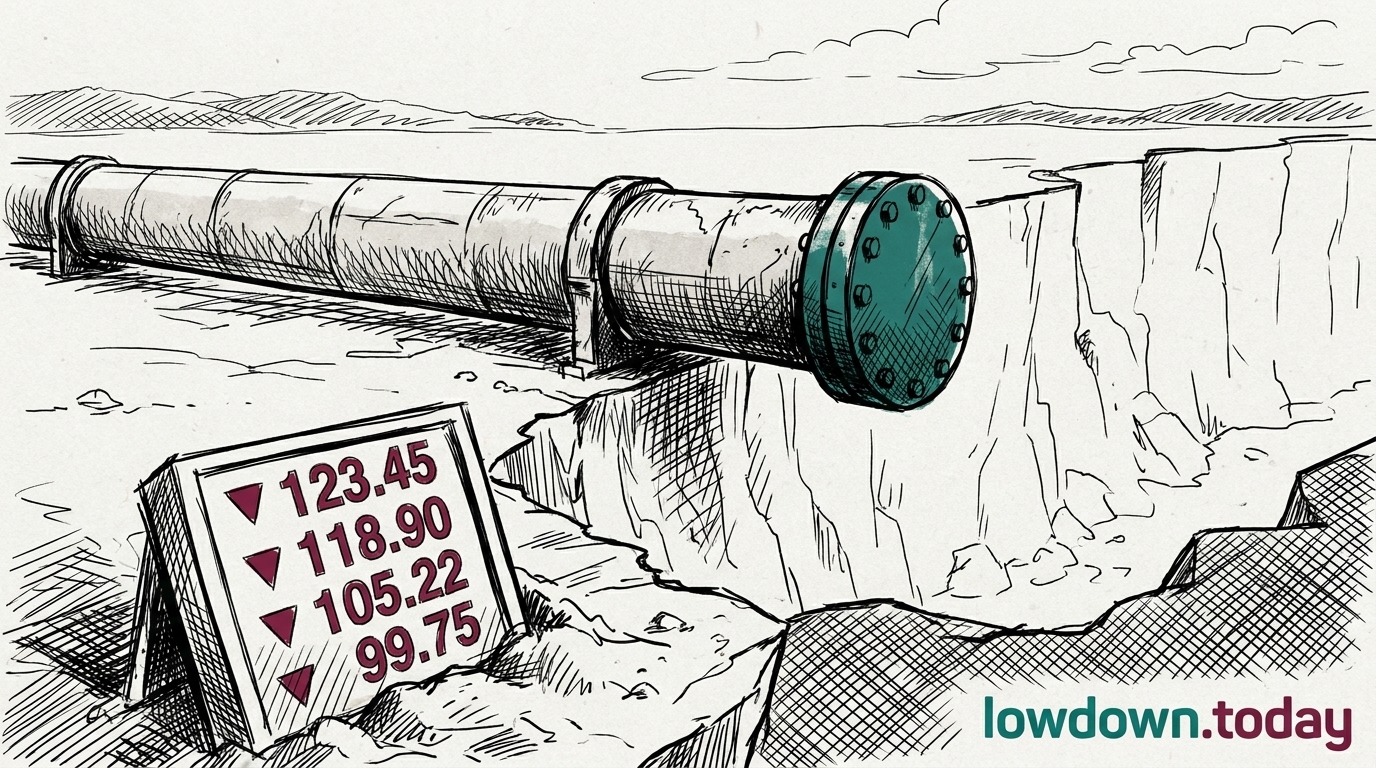
Russian diesel exports averaged just 187kbd over 1-8 July against 535kbd a year earlier, the first hard read on Novak's producer-wide ban.

EconomicDeveloping
Key takeaway

Russian diesel exports fell to 187kbd as Novak's producer-wide ban rationed a shrinking export base.

Russian diesel exports averaged 187kbd over 1-8 July against 535kbd a year earlier, an advance loadings figure confirming the scale of the export ban Alexander Novak widened to producers on 8 July 1. Novak is Russia's deputy prime minister for energy; Kpler tracked the loadings and CNN Business relayed the count.

The collapse pulls Atlantic-basin distillate backfill thinner at the exact moment European product stocks are drawing, feeding the same tightness that keeps the diesel crack bid. Novak framed the ban as protecting domestic pump supply after Ukrainian strikes cut refinery runs to multi-year lows, so the measure rations a shrinking export base rather than trimming a surplus.


Deep Analysis

In plain English

Russia banned its oil refineries from exporting diesel fuel starting 8 July, widening an earlier, narrower restriction. New data for the first week of July shows the effect: diesel exports fell to 187,000 barrels a day, down from 535,000 barrels a day a year earlier. That is a huge drop, and it matters because diesel powers trucks, farm equipment and heating across Europe, much of which used to rely partly on Russian supply before the war. Less diesel leaving Russia means importing countries have to find replacement barrels elsewhere, usually at a higher price.

Deep Analysis
Root Causes

Russia's diesel export ban targets producers specifically, meaning refineries themselves are barred from shipping diesel abroad, but the restriction does not by itself prevent independent traders or blenders from acquiring product domestically and exporting it under a different classification, leaving a structural loophole the headline export figure does not capture.

The scale of the collapse, from 535kbd a year earlier to 187kbd, also reflects compounding pressure: the ban widened from a narrower producer-only restriction on 8 July at the same time Ukrainian strikes have been reducing Russian refining capacity, so falling exports partly reflect less diesel being refined at all, in addition to less being allowed to leave.

What could happen next?
  • Consequence

    Markets that relied on Russian diesel must source replacement barrels from the Gulf Coast or Middle East while the ban holds, adding cost pressure

First Reported In

Update #17 · EU freezes the cap a week; Brent-WTI gaps to $5.13

CNN Business· 16 Jul 2026
Read original
Causes and effects
This Event
Russian diesel exports crash to 187kbd
Collapsing Russian diesel loadings thin Atlantic-basin backfill and keep European distillate tight.
Different Perspectives
Gulf oil producer
Gulf oil producer
Secured OPEC's confirmed 188,000 b/d September increment with the next meeting set for 6 September, but the Secretariat's own 2 August release says nothing about the fourth quarter. Output guidance beyond September remains undisclosed even as delegate sourcing keeps filling that gap.
Money manager positioned in WTI
Added 21,402 lots to a 108,307 net long in NYMEX WTI in the week to 28 July, against just 1,485 added to Brent's 15,740, a roughly fourteen-to-one split. Conviction sits in the American benchmark even as the European diesel story sets the record.
Indian refiner buying Urals
Bought Russian crude at a discount that narrowed to $1-2 a barrel in the week to 29 July from over $10, as Hormuz risk pushed it toward Urals. If that risk eases with the strike now called off, the discount it is currently enjoying could re-widen just as fast.
Russian diesel exporter
Novak tied any lifting of the diesel export ban, due to lapse 31 July, to an unspecified market recovery with no date, and pushed the gasoline ban to end-2026. An open-ended constraint suits an exporter benefiting from the record European crack it feeds.
War-risk underwriter
Withdrew war-risk cover for Saudi-linked hulls on 24 July and has not reinstated it, holding Bab el-Mandeb tanker transits near 7.5 a day. A cancelled strike does not by itself trigger the committee review needed to re-accept the class.
Northwest European refiner
Sources only 17% of diesel imports from Saudi Red Sea ports against the Mediterranean's 24%, so the ARA crack at $85.86 trails the Med print by $5.81. Lower Red Sea exposure is cushioning it against the rerouting cost, not eliminating it.



