Skip to content
You can now search across every topic, entity and event.What's new
European Oil Markets
15JUN

The EU can now sell a tanker's cargo

2 min read
11:33UTC

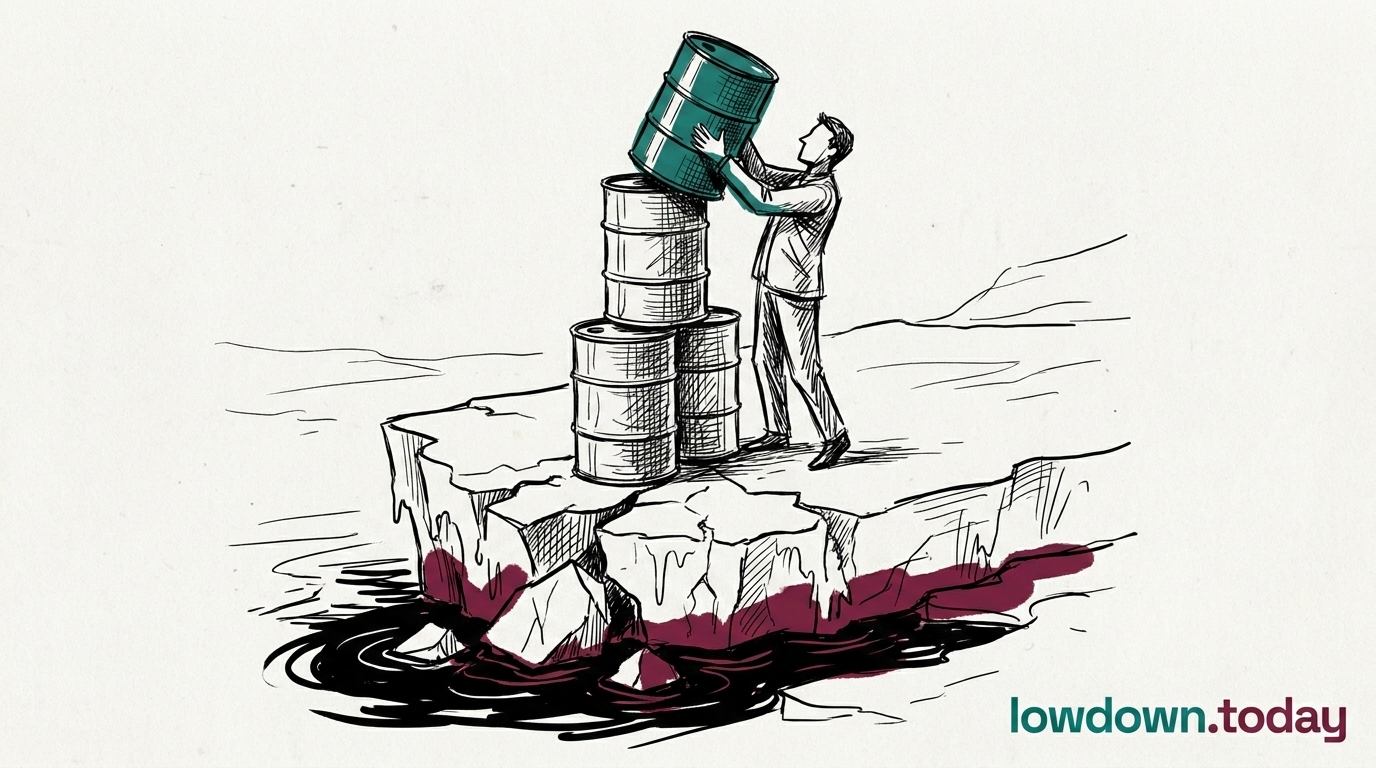
A member state that boards a shadow-fleet tanker may now confiscate and sell its cargo outright, rather than hold the vessel in storage indefinitely, under enforcement powers the EU brought into force this week.

EconomicAssessed
Key takeaway

EU boarding states can now seize and sell a shadow tanker's cargo; the frozen price cap will not rise.

A member state that boards a shadow-fleet tanker may now confiscate and then sell its cargo, rather than hold the vessel and its oil in storage indefinitely, under enforcement provisions in the Council of the EU's 21st sanctions package 1. The shadow fleet is the ageing, opaquely owned tanker pool that moves sanctioned Russian crude outside Western insurance and ownership chains. Until now, boarding one left a state holding a vessel it could not easily dispose of; selling the cargo turns a storage liability into a recovered asset and a direct cost to the operator.

The package widened the net in two further ways. It lifted the count of listed vessels from 632 to 673 and, for the first time, designated a crewing agency rather than a ship, extending listing risk from the hulls to the labour supply chain that mans them. The listing criteria now reach bunkering and support vessels, not tankers alone.

The clause that reaches this desk sits in the price cap. The G7 cap's automatic adjustment is paused to 15 July 2027, the Council citing the market situation around the strait of Hormuz. A floating cap would have drifted the $44.10 ceiling upward as Brent climbed; freezing it means Russia gains none of that legal headroom even as the flat price rises. The binding constraint stays the shadow-fleet insurance workaround, which the freeze leaves untouched, so sanctioned crude can still clear above the cap in practice while the ceiling itself no longer moves.


Deep Analysis

In plain English

The EU's newest sanctions package, adopted on 23 July, gives member states a new power: if they stop and board a sanctioned Russian oil tanker, they can now sell its cargo instead of just holding the ship in port indefinitely, which used to tie up money and space without resolving anything. The package also, for the first time, sanctioned a company that supplies crew to these tankers rather than only the ships or their owners, and added 41 more vessels to its blacklist, bringing the total to 673.

What could happen next?
  • Consequence

    Boarding states gain a financial incentive to enforce more actively, since detained cargo now converts to recoverable value rather than an open-ended storage cost.

  • Precedent

    The first crewing-agency designation sets a template for the EU to target labour-supply contractors across the shadow fleet, not only vessel owners and flag states.

First Reported In

Update #20 · Saudi crude reroutes to Suez, freight bites

Council of the European Union· 27 Jul 2026
Read original
Causes and effects
This Event
The EU can now sell a tanker's cargo
The confiscate-and-sell power changes the economics of detention for both the boarding state and the shadow-fleet operator, and it arrives alongside the first designation of a crewing agency and a freeze on the price cap's upward drift.
Different Perspectives
Sanctions compliance officer reviewing a Lukoil International GmbH bid
OFAC's amended FAQ 1224 gives a compliance desk its first published standard: full severance from Lukoil and a US-jurisdiction blocked account for sale proceeds. The conditions name neither ISAB nor Italy, so a Priolo Gargallo-linked bid answers a different question than a Neftochim Burgas or Petrotel Ploiesti one.
Managed-money funds on Brent Last Day
CFTC data for the week to 21 July showed managed money flipping 74,400 contracts to a net long of 15,665 against 1,410 short on the Brent Last Day contract, code 06765T. A fund that held that short through July has now covered it, and the spent short base raises the bar for the next leg higher.
Saudi crude exporters
Saudi-linked tanker transits through Bab el-Mandeb fell to about 7.5 a day after the 24 July underwriting withdrawal, pushing more barrels onto the longer route round the Cape or through the Yanbu terminal. Every diverted barrel ties up a ship for longer, and a fleet that turns slower charges more.
Tanker owners on the Bab el-Mandeb route
Lloyd's-market syndicates withdrew war-risk cover from Saudi-linked hulls on 24 July, leaving owners of that class of vessel to sail Bab el-Mandeb uninsured or not at all. Tanker transits on the route fell to roughly 7.5 a day, and cover, once withdrawn, does not return on a shipowner's timetable.
Eni
Eni
Eni's board approved second-quarter results on 29 July, swinging refining EBIT to a EUR0.08bn profit from a year-earlier loss even as group profit doubled, and named Red Sea freight cost as a cap on that improvement. A refiner absorbing higher shipping costs on Saudi-linked crude while its numbers improve treats the freight line as a drag, not a crisis.
Asian buyers (India, Japan, China, South Korea)
Asian refiners are absorbing 62% of Yanbu's 3.75m b/d flow, the bulk of Saudi Arabia's rerouted crude now clearing east rather than into the Atlantic basin. That destination split leaves Asian buyers more exposed to any single Yanbu-specific disruption than under the kingdom's normal multi-terminal export pattern.



