Skip to content
You can now search across every topic, entity and event.What's new
European Oil Markets
4JUN

Rubio slips Iran deal timeline to months

2 min read
10:20UTC

Secretary of State Marco Rubio said on 7-8 June that Iran's enrichment matters could take months to resolve, walking back the administration's earlier weekend timeline.

EconomicDeveloping
Key takeaway

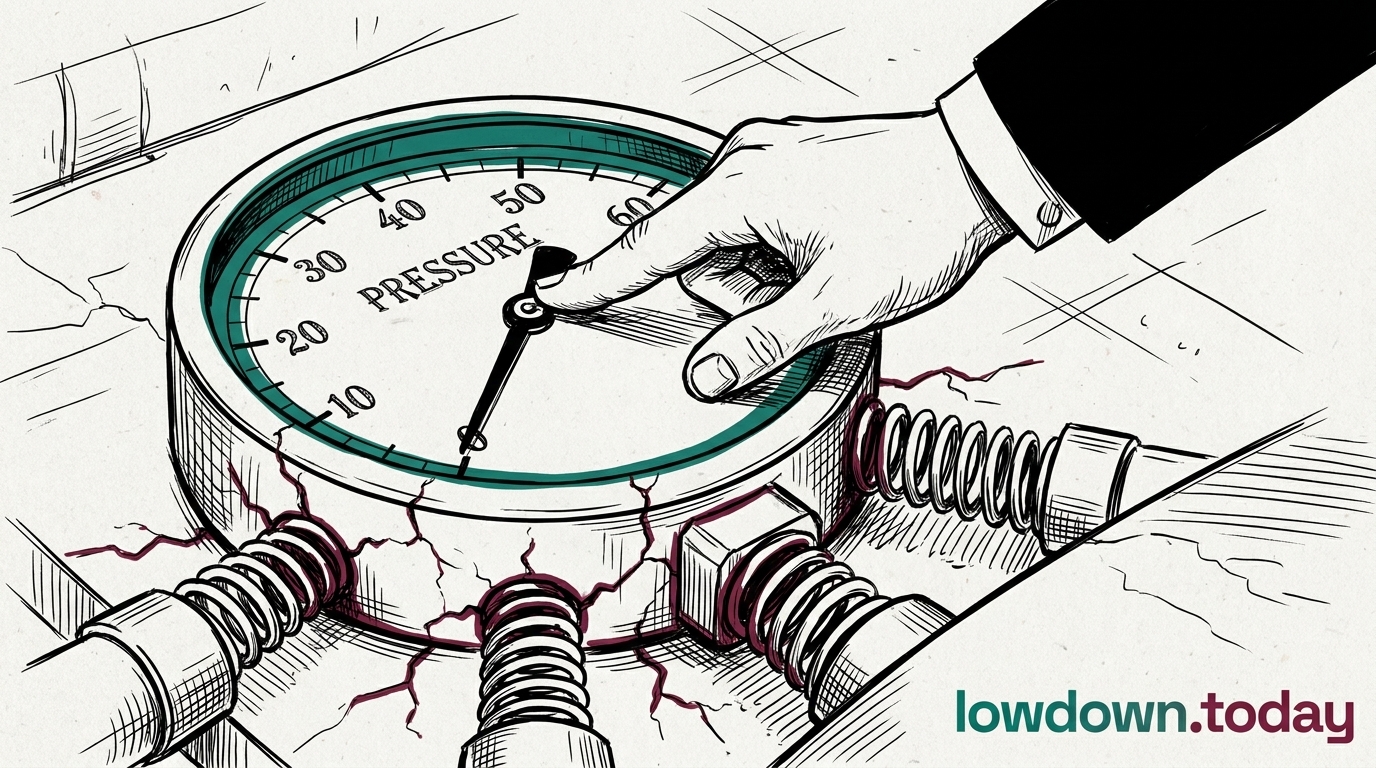
Rubio stretched the Iran deal from this weekend to months, with nothing signed and a strike in between.

Secretary of State Marco Rubio said on 7-8 June that Iran's enrichment matters "could take months" to resolve 1. That walks back the administration's earlier line that a deal "could happen over the weekend", and no Iran instrument was signed across 7-8 June.

The slip belongs in the Trump words-versus-action ledger. No US-Iran deal was put on paper across 5-6 June while the president talked up an imminent settlement; Rubio's months estimate now stretches that gap from days into a quarter. Rezaei's financial precondition remains the substantive sticking point, and the IDF strike inside Iran adds a kinetic complication a negotiating track measured in months can ill absorb.


Deep Analysis

In plain English

US Secretary of State Marco Rubio, the top US diplomat, said on 7-8 June that sorting out Iran's uranium enrichment issues would take months. This contradicted President Trump, who had said days earlier that a deal could happen 'over the weekend'. Nothing was signed. The gap matters because two parties need to agree: Iran has demanded $24 billion in frozen assets be released before any deal (a condition the US has publicly refused), and the UN nuclear agency has not had inspectors inside Iran for 97 days, meaning no one outside Iran can verify what state the uranium stockpile is in. A deal without that verification is something no US president could credibly sell domestically. Rubio's months estimate is a more honest timetable than Trump's weekend framing.

Deep Analysis
Root Causes

Trump's withdrawal from the 2015 JCPOA (nuclear deal) in 2018 destroyed the trust architecture that made that agreement possible. Iran's position since 2018 has been that any new deal requires upfront sanctions relief before compliance steps, having seen a previous deal abandoned by the same government after Iran met its obligations.

This structural trust deficit makes Rubio's 'Hormuz first, sanctions later' sequence (stated at Senate Foreign Relations on 2 June) non-starter logic from Tehran's perspective. The months estimate reflects the time needed to bridge a gap that the 2018 withdrawal created.

What could happen next?
  • Consequence

    The rial hit 1,762,000 per dollar on Day 100 (ID:3974), erasing all deal-optimism gains from the prior fortnight; Rubio's months estimate, once reported in Tehran markets, is likely to push it further, removing any economic incentive for the Iranian government to concede quickly.

  • Risk

    Each week without a signed instrument increases the probability that the US midterm elections in November 2026 move Iran policy into electoral politics, making any administration concession on sanctions relief domestically harder to defend.

First Reported In

Update #121 · Trump said don't strike; Israel struck Iran

Trading Economics (Reuters synthesis)· 8 Jun 2026
Read original
Causes and effects
Different Perspectives
Kuwait
Kuwait
Kuwait absorbed the Iranian strike that knocked generating units offline at a combined power-and-desalination plant on 17 July, the event that finally moved freight and insurance in lockstep with Brent. The strike hit essential civilian infrastructure, not a trading desk's benchmark.
Asian buyers (Singapore)
Singapore's middle distillates rose 12% month-to-date to 8.91m barrels and fuel oil passed 19m barrels on a 105% net-import surge, buyers retaining barrels as the East-West arbitrage window narrows. Cargoes are being stockpiled ahead of further Hormuz-driven freight repricing rather than released west.
Austria (Coreper holdout)
Vienna is blocking the same package over roughly EUR 2bn of frozen Russian assets earmarked for Raiffeisen, a domestic banking dispute with no connection to the oil cap racing toward its 23 July expiry. The linkage forces the whole package to wait on a bilateral compensation fight.
Greece (Coreper holdout)
Athens is holding the 21st sanctions package at the 22 July Coreper vote over Russian LNG re-export rights, a condition unrelated to the oil price cap itself, leaving the $44.10 freeze one day from expiry without a deal. Greece's own tanker registry gives it a direct stake in how any shadow-fleet measures are drafted.
Marine underwriters (Gulf war-risk)
Hull war-risk cover for Hormuz transits widened to a 3-10% band on 17 July with 5% the emerging norm, up from a 3-4% baseline set in late June, the first repricing in six weeks to track a flat-price move rather than lag it. Cover resets on actuarial evidence of loss, not on diplomatic or price signals.
Money managers (CFTC-tracked)
The CFTC's week-to-14-July snapshot, released 17 July, showed WTI managed-money net long collapsing 69% to 19,783 contracts and a standalone 60,141-contract net short on Brent Last Day (NYMEX). Both readings predate the Kuwait strike and the 20 July escalation, so any covering since is not yet visible in public data.