Skip to content
You can now search across every topic, entity and event.What's new
European Oil Markets
4JUN

EU delays Ukraine's 9.1bn loan tranche

2 min read
10:20UTC

The EU held back the €9.1bn first tranche of its €90bn loan to Ukraine on unmet technical conditions, even as it disbursed a separate €2.8bn Ukraine Facility payment on 8 June.

EconomicDeveloping
Key takeaway

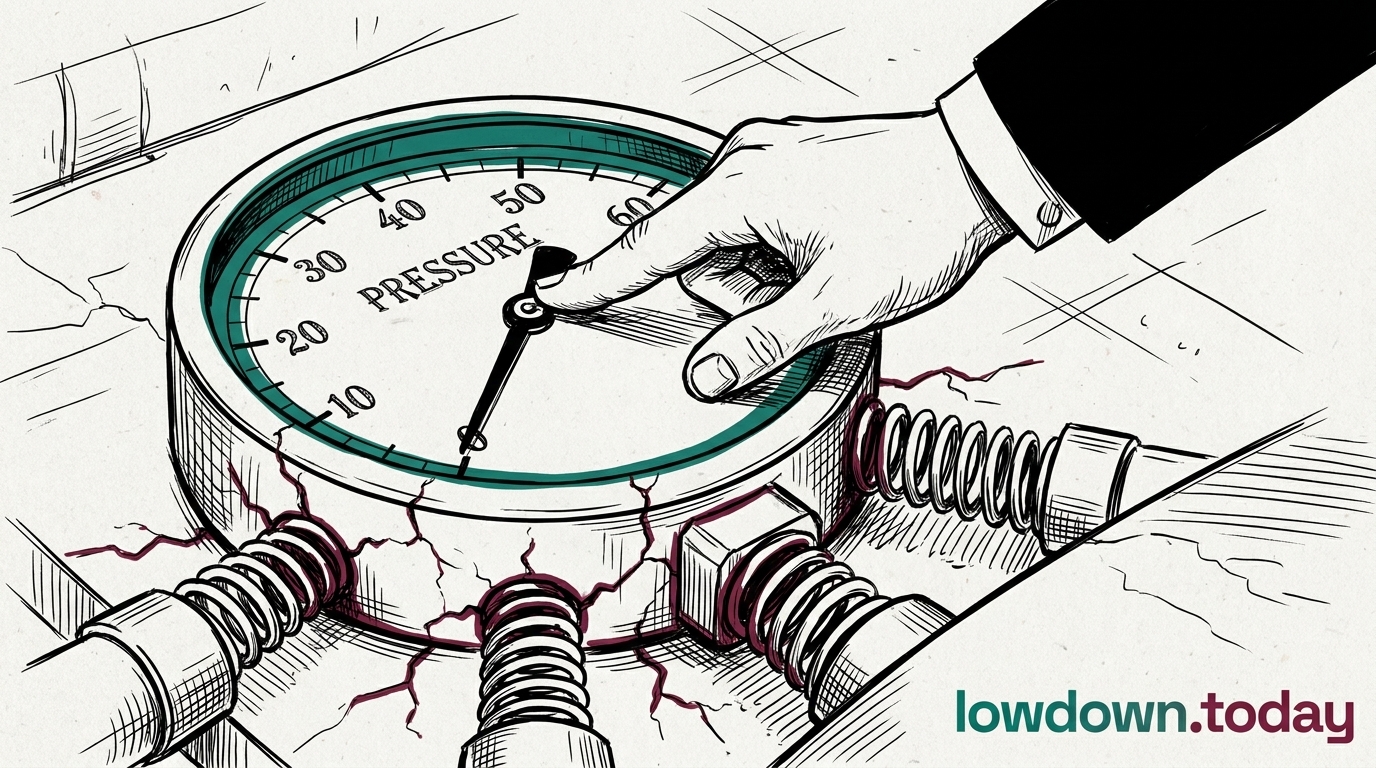
Ukraine's €9.1bn loan tranche is stalled on technical conditions, not on any political veto.

The European Union delayed the €9.1bn first tranche of its €90bn loan to Ukraine, citing unmet technical conditions 1. The €90bn facility is the bloc's headline financing package for Kyiv, approved by Ukraine's parliament in late May with the first tranche expected in mid-June . Brussels has paused the payment over compliance steps Kyiv has yet to complete, not cancelled it.

A separate €2.8bn Ukraine Facility payment was disbursed on 8 June, which shows the difference between the two channels. The Ukraine Facility is an established budget-support stream with its own milestones; the €90bn loan is the larger new instrument, and its first payment carries conditions Kyiv has yet to satisfy, including anti-corruption benchmarks.

For most of the past year, EU funding for Ukraine was held up by Hungary's veto rather than by Kyiv's own compliance. With that veto broken, Ukraine's own reform progress now decides when the money moves. Ursula von der Leyen told the Group of Seven (G7) summit the first payment is coming "soon", but the tranche moves only once Ukraine clears the technical bar, not on a political signal alone. The delay is a reminder that European support, while no longer blocked, is metered against reform.


Deep Analysis

In plain English

The European Union agreed in May to lend Ukraine €90bn over several years to help pay for its war and reconstruction. The first slice, worth €9.1bn, was supposed to be paid in June but has been delayed because Ukraine had not yet met certain technical conditions the EU set as part of the loan agreement. Separately, a smaller €2.8bn payment from a different EU fund was made on 8 June. Loan conditions typically involve things like anti-corruption reforms and governance improvements that the EU uses as part of Ukraine's application to join the bloc. Missing a condition delays the money but does not cancel the loan; Ukraine must meet the requirements to unlock the next tranche.

What could happen next?
  • Risk

    If Hungary uses its Council voting position to convert a technical conditionality delay into a prolonged political blockage, the €9.1bn tranche may not arrive before Ukraine's defence budget faces a mid-year cash shortfall.

  • Consequence

    The disbursement of €2.8bn from the separate Ukraine Facility on 8 June confirms that not all EU financial channels are blocked, providing a partial bridge while the main tranche clears its conditions.

First Reported In

Update #20 · Oil vise shuts as Russia torches the Lavra

Trading Economics (Reuters synthesis)· 16 Jun 2026
Read original
Different Perspectives
Kuwait
Kuwait
Kuwait absorbed the Iranian strike that knocked generating units offline at a combined power-and-desalination plant on 17 July, the event that finally moved freight and insurance in lockstep with Brent. The strike hit essential civilian infrastructure, not a trading desk's benchmark.
Asian buyers (Singapore)
Singapore's middle distillates rose 12% month-to-date to 8.91m barrels and fuel oil passed 19m barrels on a 105% net-import surge, buyers retaining barrels as the East-West arbitrage window narrows. Cargoes are being stockpiled ahead of further Hormuz-driven freight repricing rather than released west.
Austria (Coreper holdout)
Vienna is blocking the same package over roughly EUR 2bn of frozen Russian assets earmarked for Raiffeisen, a domestic banking dispute with no connection to the oil cap racing toward its 23 July expiry. The linkage forces the whole package to wait on a bilateral compensation fight.
Greece (Coreper holdout)
Athens is holding the 21st sanctions package at the 22 July Coreper vote over Russian LNG re-export rights, a condition unrelated to the oil price cap itself, leaving the $44.10 freeze one day from expiry without a deal. Greece's own tanker registry gives it a direct stake in how any shadow-fleet measures are drafted.
Marine underwriters (Gulf war-risk)
Hull war-risk cover for Hormuz transits widened to a 3-10% band on 17 July with 5% the emerging norm, up from a 3-4% baseline set in late June, the first repricing in six weeks to track a flat-price move rather than lag it. Cover resets on actuarial evidence of loss, not on diplomatic or price signals.
Money managers (CFTC-tracked)
The CFTC's week-to-14-July snapshot, released 17 July, showed WTI managed-money net long collapsing 69% to 19,783 contracts and a standalone 60,141-contract net short on Brent Last Day (NYMEX). Both readings predate the Kuwait strike and the 20 July escalation, so any covering since is not yet visible in public data.