Skip to content
You can now search across every topic, entity and event.What's new
European Oil Markets
4JUN

Beijing's Hengli reply stops at the embassy

2 min read
10:20UTC

China's Washington embassy called the OFAC Hengli Petrochemical designations 'illegal unilateral sanctions' on Saturday 25 April; no MOFCOM elevation followed.

EconomicDeveloping
Key takeaway

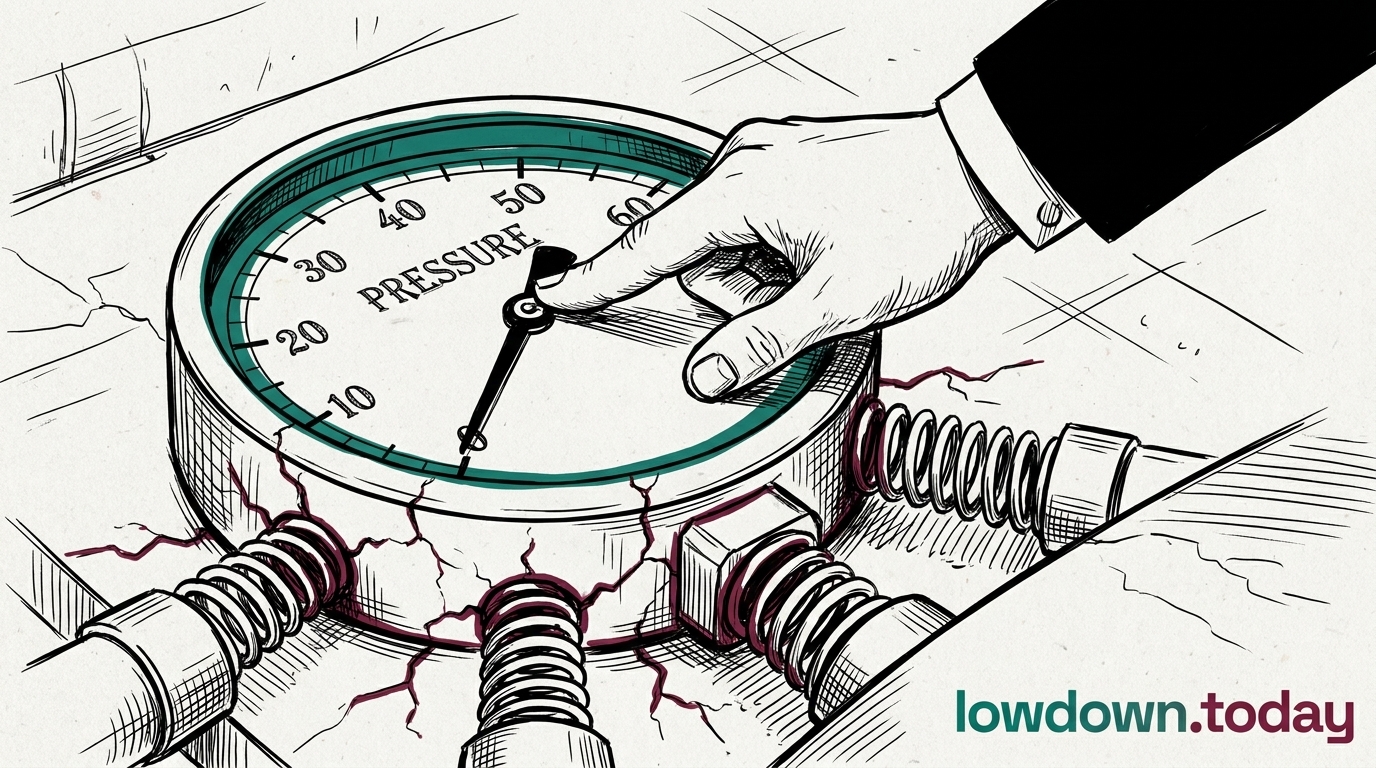
An embassy-level response to a designation against China's second-largest independent refinery is a deliberately under-weighted reply.

China's Washington embassy issued a statement on Saturday 25 April opposing the OFAC designation of Hengli Petrochemical as "illegal unilateral sanctions". The response stayed at the embassy floor; no MOFCOM elevation followed. MOFCOM is China's Ministry of Commerce, the cabinet-level body that issues China's retaliatory trade and sanctions instruments; an embassy statement is the lowest-rank state response in the Chinese diplomatic ladder.

Hengli is China's second-largest independent refinery. The OFAC action on Friday 24 April designated Hengli plus 39 entities under the sb0472 statutory authority and was the first US designation to cite Iranian-nuclear-programme financing as the legal basis . A response that stops at embassy level on a sanctions action against a domestic industrial player of Hengli's size signals Beijing's unwillingness to risk a trade escalation cycle with Washington in the current quarter.

The operational consequence is that Chinese-owned dark-fleet tonnage continues to dominate the surviving Hormuz traffic without a state-level escalation challenge to the legal predicate. OFAC has not yet published a GL-V wind-down deadline or authorised counterparty scope for Hengli's customers; that text, when it arrives, will set the price refiners and traders must pay to exit Hengli-related supply chains. Until MOFCOM elevates, Beijing's position on the nuclear-financing framing remains a verbal-only objection from the lowest rung of its diplomatic apparatus.


Deep Analysis

In plain English

When the United States sanctions a Chinese company, Beijing has several ways to respond. At the top end, China's Ministry of Commerce (MOFCOM) can issue counter-sanctions or formal retaliatory trade measures. Below that, the foreign ministry can issue a ministerial protest. At the bottom sits an embassy statement from Washington, which is what China chose for **Hengli Petrochemical**, its second-largest independent refinery. An embassy statement signals objection without risking trade escalation. China wants to keep buying Iranian oil through Hengli and similar refineries, but has decided this particular designation does not warrant a response that could trigger a broader trade confrontation with Washington.

What could happen next?
  • Meaning

    If OFAC extends Hengli-style designations to Chinese state-owned refineries such as Sinopec or PetroChina, Beijing cannot respond at embassy level; MOFCOM counter-measures and potential Anti-Foreign Sanctions Law invocation would become the required response.

    Short term · Assessed
  • Meaning

    Hengli's existing Iranian crude allocation will be redistributed to Chinese state-owned refineries at a discount, meaning Chinese demand for Iranian oil does not fall; the designation changes the buyer, not the volume.

    Short term · Assessed
  • Meaning

    The embassy-level response is read by OFAC as a green light to proceed with further designations of privately held Chinese entities buying Iranian crude, accelerating the enforcement cadence established by GL-V.

    Short term · Assessed
First Reported In

Update #80 · Three carriers, zero instruments

Lloyd's List· 26 Apr 2026
Read original
Different Perspectives
Kuwait
Kuwait
Kuwait absorbed the Iranian strike that knocked generating units offline at a combined power-and-desalination plant on 17 July, the event that finally moved freight and insurance in lockstep with Brent. The strike hit essential civilian infrastructure, not a trading desk's benchmark.
Asian buyers (Singapore)
Singapore's middle distillates rose 12% month-to-date to 8.91m barrels and fuel oil passed 19m barrels on a 105% net-import surge, buyers retaining barrels as the East-West arbitrage window narrows. Cargoes are being stockpiled ahead of further Hormuz-driven freight repricing rather than released west.
Austria (Coreper holdout)
Vienna is blocking the same package over roughly EUR 2bn of frozen Russian assets earmarked for Raiffeisen, a domestic banking dispute with no connection to the oil cap racing toward its 23 July expiry. The linkage forces the whole package to wait on a bilateral compensation fight.
Greece (Coreper holdout)
Athens is holding the 21st sanctions package at the 22 July Coreper vote over Russian LNG re-export rights, a condition unrelated to the oil price cap itself, leaving the $44.10 freeze one day from expiry without a deal. Greece's own tanker registry gives it a direct stake in how any shadow-fleet measures are drafted.
Marine underwriters (Gulf war-risk)
Hull war-risk cover for Hormuz transits widened to a 3-10% band on 17 July with 5% the emerging norm, up from a 3-4% baseline set in late June, the first repricing in six weeks to track a flat-price move rather than lag it. Cover resets on actuarial evidence of loss, not on diplomatic or price signals.
Money managers (CFTC-tracked)
The CFTC's week-to-14-July snapshot, released 17 July, showed WTI managed-money net long collapsing 69% to 19,783 contracts and a standalone 60,141-contract net short on Brent Last Day (NYMEX). Both readings predate the Kuwait strike and the 20 July escalation, so any covering since is not yet visible in public data.