Skip to content
You can now search across every topic, entity and event.What's new
European Oil Markets
31JUL

Majlis approves Hormuz toll bill

2 min read
09:33UTC

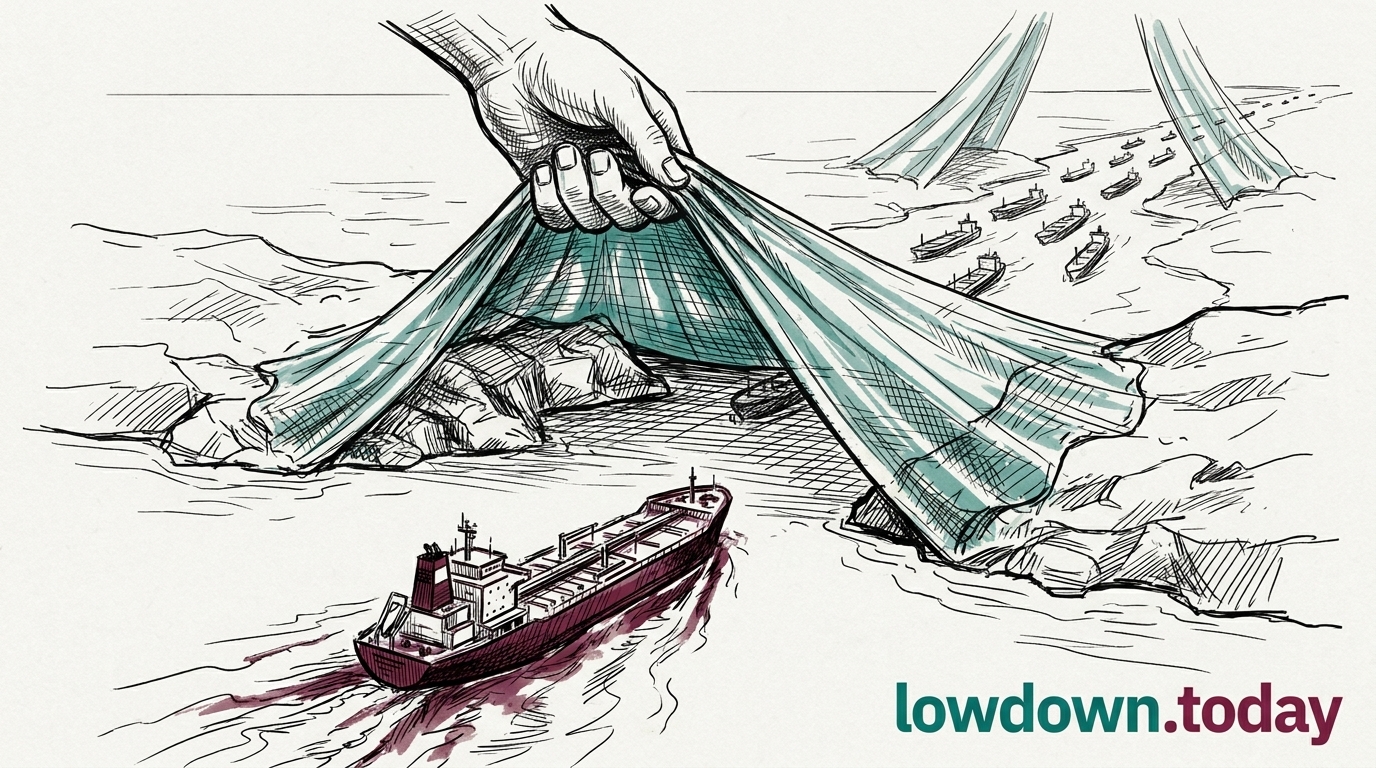
A key Majlis committee approved the Hormuz toll bill, advancing legislation that would permanently ban US and Israeli vessels and require fees in Iranian rial from all other shipping. Once codified, the toll becomes reversible only through domestic political process ; no future ceasefire can unwind it.

EconomicDeveloping
Key takeaway

Committee approval advances legislation that would make Hormuz's contested status a matter of Iranian domestic law, not merely military posture.

The Majlis committee approved the Hormuz toll legislation on 1 April, advancing a bill that permanently bans US and Israeli vessels from the strait and requires fees in Iranian rial from all other shipping. The bill had been drafted in parliament on Day 25, moved to committee stage on Day 32, and has now cleared committee. Full parliamentary vote, Guardian Council review, and presidential signature remain.

There is a fundamental difference between the IRGC imposing a toll because it controls a strait and the Iranian Parliament enacting a law that makes the toll a statutory requirement. The first is a military fact reversible by military defeat. The second is a legal instrument reversible only by domestic political process. Iran had already demanded Hormuz sovereignty as a formal peace condition ; the legislation converts that negotiating demand into permanent law.

The bill bans US and Israeli vessels explicitly and requires fees in Iranian rial, forcing buyers to transact in a sanctioned currency. The NPT withdrawal bill is advancing on the same legislative track . Both bills are designed to survive any ceasefire: a ceasefire can stop the shooting, but it cannot repeal domestic Iranian legislation.

The IRGC's toll system had already been operating since around Day 12, with Chinese state ships paying and crossing . Codifying the practice into permanent law removes any ambiguity about whether a future Iranian government could unilaterally rescind it. If Trump withdraws in two to three weeks without securing this bill's reversal, the US leaves behind a legal architecture that makes Hormuz permanently contested.


Deep Analysis

In plain English

The Iranian parliament is voting on a law that would permanently charge ships money to use the Strait of Hormuz ; a narrow channel through which about one in five barrels of the world's oil passes. Right now, Iran is blocking the strait militarily during the war. This law would make that blockade permanent and legal under Iranian law, even after the war ends. American and Israeli ships would be banned outright. This matters because there is a big difference between Iran blocking the strait with soldiers, which can be reversed, and Iran blocking it with a law, which can only be reversed by Iran itself choosing to change the law.

Deep Analysis
Root Causes

The toll bill was drafted as a direct response to US and Israeli strikes on Iranian infrastructure. It converts an emergency military response into a permanent economic instrument, institutionalising the leverage Iran discovered it holds over global energy markets.

What could happen next?
  • Precedent

    First instance of a state attempting to codify transit fees for an international strait into domestic law, potentially triggering a global UNCLOS legal challenge.

    Long term · Assessed
  • Consequence

    A ceasefire that leaves the Hormuz toll law in place fails to address the economic cause of the oil price spike.

    Medium term · Assessed
  • Risk

    Guardian Council and presidential signature stages create multiple veto points, but each ratification stage makes repeal politically harder.

    Short term · Reported
First Reported In

Update #54 · Trump declares victory and withdrawal

US Energy Information Administration· 1 Apr 2026
Read original
Different Perspectives
Sanctions compliance officer reviewing a Lukoil International GmbH bid
OFAC's amended FAQ 1224 gives a compliance desk its first published standard: full severance from Lukoil and a US-jurisdiction blocked account for sale proceeds. The conditions name neither ISAB nor Italy, so a Priolo Gargallo-linked bid answers a different question than a Neftochim Burgas or Petrotel Ploiesti one.
Managed-money funds on Brent Last Day
CFTC data for the week to 21 July showed managed money flipping 74,400 contracts to a net long of 15,665 against 1,410 short on the Brent Last Day contract, code 06765T. A fund that held that short through July has now covered it, and the spent short base raises the bar for the next leg higher.
Saudi crude exporters
Saudi-linked tanker transits through Bab el-Mandeb fell to about 7.5 a day after the 24 July underwriting withdrawal, pushing more barrels onto the longer route round the Cape or through the Yanbu terminal. Every diverted barrel ties up a ship for longer, and a fleet that turns slower charges more.
Tanker owners on the Bab el-Mandeb route
Lloyd's-market syndicates withdrew war-risk cover from Saudi-linked hulls on 24 July, leaving owners of that class of vessel to sail Bab el-Mandeb uninsured or not at all. Tanker transits on the route fell to roughly 7.5 a day, and cover, once withdrawn, does not return on a shipowner's timetable.
Eni
Eni
Eni's board approved second-quarter results on 29 July, swinging refining EBIT to a EUR0.08bn profit from a year-earlier loss even as group profit doubled, and named Red Sea freight cost as a cap on that improvement. A refiner absorbing higher shipping costs on Saudi-linked crude while its numbers improve treats the freight line as a drag, not a crisis.
Asian buyers (India, Japan, China, South Korea)
Asian refiners are absorbing 62% of Yanbu's 3.75m b/d flow, the bulk of Saudi Arabia's rerouted crude now clearing east rather than into the Atlantic basin. That destination split leaves Asian buyers more exposed to any single Yanbu-specific disruption than under the kingdom's normal multi-terminal export pattern.



