Skip to content
You can now search across every topic, entity and event.What's new
European Oil Markets
26MAY

Oil Retreats From Peak Amid Ceasefire Speculation

1 min read
08:52UTC

Brent crude eased to $110.47 from its $116 peak, but remains 64% above pre-war levels with the strait operating at a fraction of normal capacity.

EconomicAssessed
Key takeaway

Markets priced in ceasefire hope; the supply disruption remains.

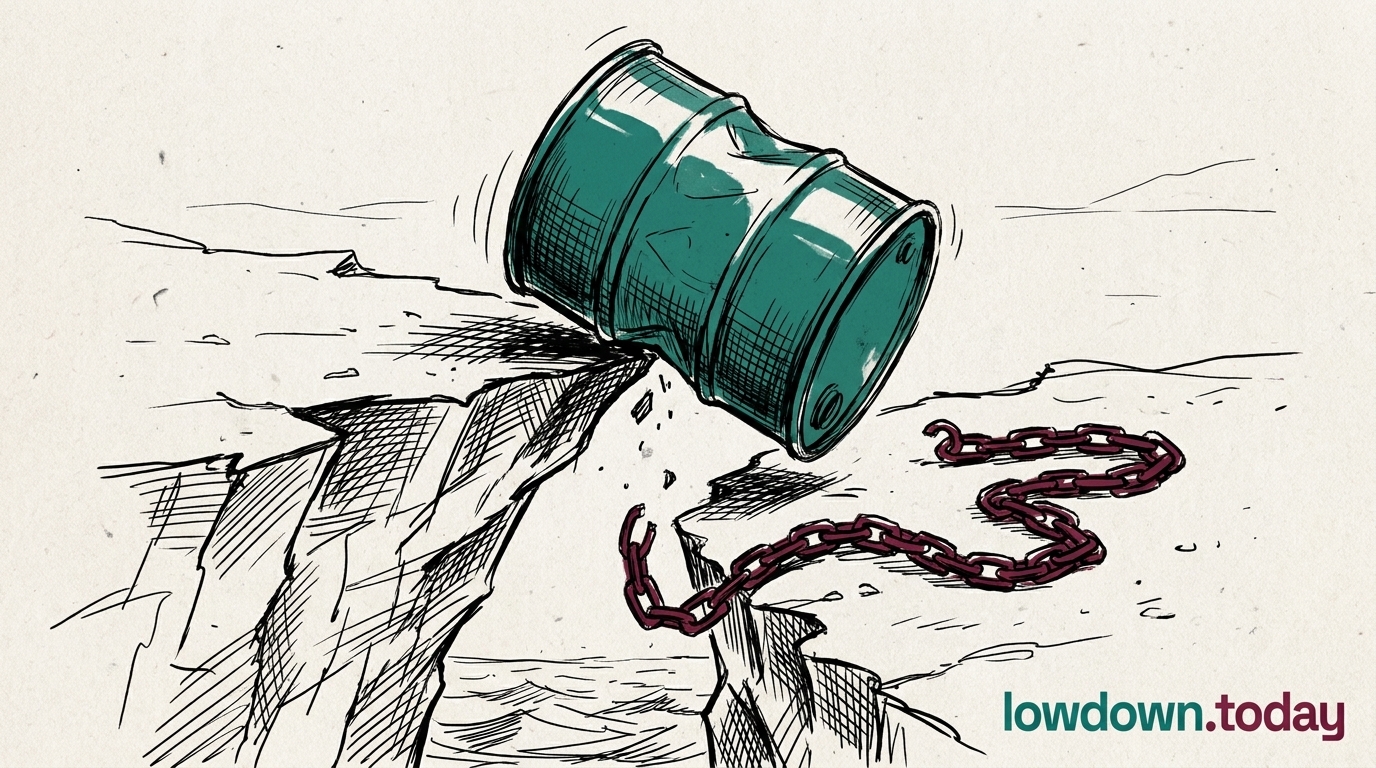
Brent Crude traded at $110.47 per barrel, retreating from the $116 peak on 28 March. The pullback may reflect ceasefire hopes from the Islamabad talks, though the fundamental supply picture has not changed. the strait of Hormuz remains over 90% below pre-war transit volumes at 53 weekly transits against a baseline of 966.

The price remains roughly 64% above pre-war levels of $67.41 per barrel. Analysts had warned that $150 per barrel was possible if the strait stays closed another month. The Islamabad Accord's immediate-reopening provision is the first diplomatic instrument that directly addresses the oil price mechanism, which may explain why markets have responded to the framework's existence even before Iran has accepted it.

The modest retreat should not be mistaken for normalisation. The IEA, IMF, and World Bank jointly described this as one of the largest supply shortages in energy market history . That assessment has not changed.

Deep Analysis

In plain English

Oil prices dropped slightly from their highest point of the war, possibly because traders think the new Pakistan peace plan might work. But prices are still about 64% higher than before the war started. The strait that most of the world's oil passes through is still barely open. If the peace plan fails, prices could rise sharply again.

What could happen next?
  • Markets pricing in ceasefire probability; failure would trigger sharp reversal

First Reported In

Update #60 · Pakistan's Ceasefire Plan Fills the Vacuum

CNBC· 6 Apr 2026
Read original
Causes and effects
This Event
Oil Retreats From Peak Amid Ceasefire Speculation
The price retreat, while modest, is the first sustained pullback since the war began. It suggests markets are pricing in a non-zero probability of ceasefire from the Islamabad talks. However, with Hormuz at roughly 5% of pre-war transit volumes, the fundamental supply disruption remains unchanged.
Different Perspectives
Greek shipping registries
Flag states dominating the tanker fleet await the EU's 15 July cap-freeze vote. A formula unlock toward $75 would loosen the ceiling squeezing insurance and crewing costs on their registered hulls.
US money managers
US money managers
NYMEX WTI managed-money net long fell 23% to +64,041 in the week to 7 July, trimming length into the rally on doubt the Hormuz premium survives without freight or war-risk confirmation.
European refiners (ARA)
ARA refiners are capturing an $80/bbl US diesel crack as Russian gasoil loadings collapsed to 234kbd before Novak's 31 July export ban even bites, widening the arbitrage straight into refining margins.
OPEC+
OPEC+
The seven-member group confirmed a fourth consecutive 188kbd August hike on 5 July, defending market share even though Saudi Arabia's $108-111/bbl breakeven means every added barrel costs Riyadh revenue it cannot recoup.
Indian refiners
Indian refiners
Refiners kept lifting discounted Urals as the India/Baltic split widened past $9-10 a barrel on 7 July. A wider Urals-Brent gap means cheaper feedstock locked in against Baltic buyers.
Russia
Russia
Urals traded $48.95-55.12 on 12-13 July, below Moscow's $59 budget floor even as Brent gained $6. Oil and gas fund roughly 30% of federal revenue, and Novak's diesel export ban is rationing a shrinking export base.
