Skip to content
You can now search across every topic, entity and event.What's new
European Oil Markets
23JUL

The corridor number that does not divide

2 min read
19:27UTC

CENTCOM's named spokesman put Hormuz escorted volumes at more than 660 million barrels since early May. That works out at 5.89 million barrels a day, against the 10 million a day two unnamed officials gave Axios.

EconomicDeveloping
Key takeaway

CENTCOM's escorted corridor is moving about a third of the strait's pre-war volume, on its own arithmetic.

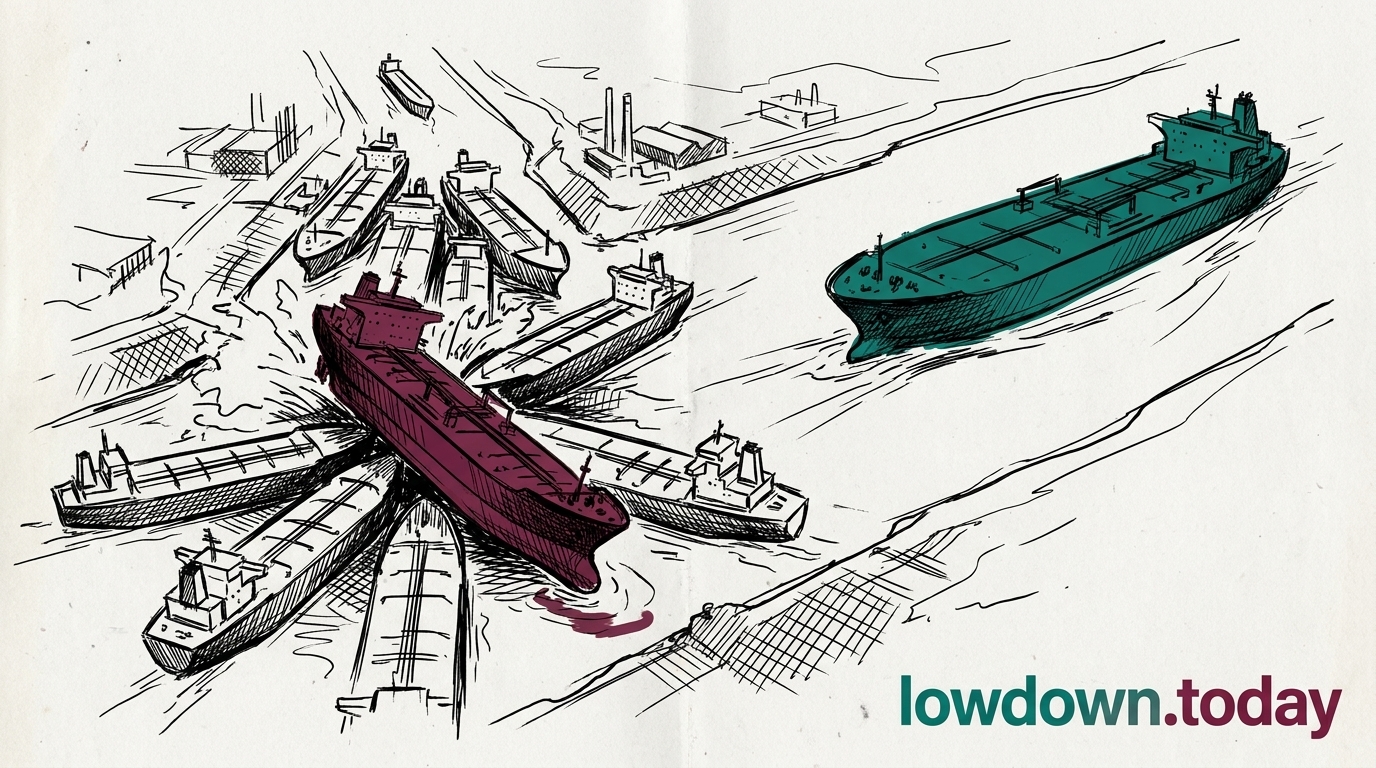
CENTCOM has assisted more than 660 million barrels of crude and about 1,300 commercial vessels through the Strait of Hormuz since early May, its spokesman, US Navy Captain Tim Hawkins, said in a statement dated Thursday 20 August 12. The command had put the same figure at 500 million barrels on 29 July. Assisted means escorted or accompanied by American warships through a strait that Iran has kept contested since the spring.

Do the division. That is 160 million barrels in 22 days, a run rate of 7.27 million a day. Spread across the whole period since early May, 112 days, the average falls to 5.89 million a day. Pre-war crude and product flow ran at about 20 million a day, so the protected corridor is carrying roughly a third of what the strait used to, and carrying it faster now than when it opened.

On 20 August we published a different number for the same corridor: about 10 million barrels a day, given to Axios by two unnamed US officials . That figure sits at 1.38 times CENTCOM's recent run rate and 1.70 times the period average. Hawkins's number counts barrels assisted from a stated start date. The 10 million figure was never tied to a period, a vessel count or a named official, and it may describe corridor capacity or a single peak day rather than sustained throughput. The two cannot both be measuring the same quantity.

Neither version can be audited from outside, because no vessel-level data sits behind either one, and counting ships has already produced totals the commercial trackers could not reconcile with each other , . The figure we published on 20 August carried no name on it. This one carries a spokesman's.

Deep Analysis

In plain English

CENTCOM, the US military command for the Middle East, said it has helped move more than 660 million barrels of oil and about 1,300 ships through the Strait of Hormuz since early May. That figure has risen from 500 million barrels stated on 29 July. But it does not match a separate claim, from anonymous officials, of 10 million barrels moving through the strait every day.

Deep Analysis
Root Causes

CENTCOM publishes cumulative totals since a fixed start date rather than a rolling daily rate, a format that requires the reader's own arithmetic to compare month to month.

That format serves an operational purpose distinct from a market report: CENTCOM's statement demonstrates its escort mission is functioning, and was not built as a substitute for the market data that would let it be checked against independent shipping trackers.

First Reported In

Update #174 · A $22.9bn missile order, and a hunger row

Gulf News· 23 Aug 2026
Read original
Causes and effects
This Event
The corridor number that does not divide
Two American figures for the same protected corridor cannot both describe throughput, and only one of them carries a name.
Different Perspectives
Gulf oil producer
Gulf oil producer
Secured OPEC's confirmed 188,000 b/d September increment with the next meeting set for 6 September, but the Secretariat's own 2 August release says nothing about the fourth quarter. Output guidance beyond September remains undisclosed even as delegate sourcing keeps filling that gap.
Money manager positioned in WTI
Added 21,402 lots to a 108,307 net long in NYMEX WTI in the week to 28 July, against just 1,485 added to Brent's 15,740, a roughly fourteen-to-one split. Conviction sits in the American benchmark even as the European diesel story sets the record.
Indian refiner buying Urals
Bought Russian crude at a discount that narrowed to $1-2 a barrel in the week to 29 July from over $10, as Hormuz risk pushed it toward Urals. If that risk eases with the strike now called off, the discount it is currently enjoying could re-widen just as fast.
Russian diesel exporter
Novak tied any lifting of the diesel export ban, due to lapse 31 July, to an unspecified market recovery with no date, and pushed the gasoline ban to end-2026. An open-ended constraint suits an exporter benefiting from the record European crack it feeds.
War-risk underwriter
Withdrew war-risk cover for Saudi-linked hulls on 24 July and has not reinstated it, holding Bab el-Mandeb tanker transits near 7.5 a day. A cancelled strike does not by itself trigger the committee review needed to re-accept the class.
Northwest European refiner
Sources only 17% of diesel imports from Saudi Red Sea ports against the Mediterranean's 24%, so the ARA crack at $85.86 trails the Med print by $5.81. Lower Red Sea exposure is cushioning it against the rerouting cost, not eliminating it.
