Skip to content
You can now search across every topic, entity and event.What's new
European Oil Markets
16JUL

Oil barely moves on the stand-down

3 min read
09:39UTC

Brent settled near $72.91 on 29 June, up just 1.3% on the stand-down, with the second quarter closing about 30% lower.

EconomicDeveloping
Key takeaway

Oil rose just 1.3% after Iran hit US bases, with Brent betting on a Hormuz reopening that has not come.

Brent Crude settled near $72.91 on 29 June, up just 1.3% on the verbal stand-down, after touching $75.26 when the Kiku tanker was struck on 27 June 1. WTI (West Texas Intermediate), the US benchmark, sat near $69.70, below its pre-war range 2. The second quarter closed down about 30%, the steepest quarterly fall since 2020.

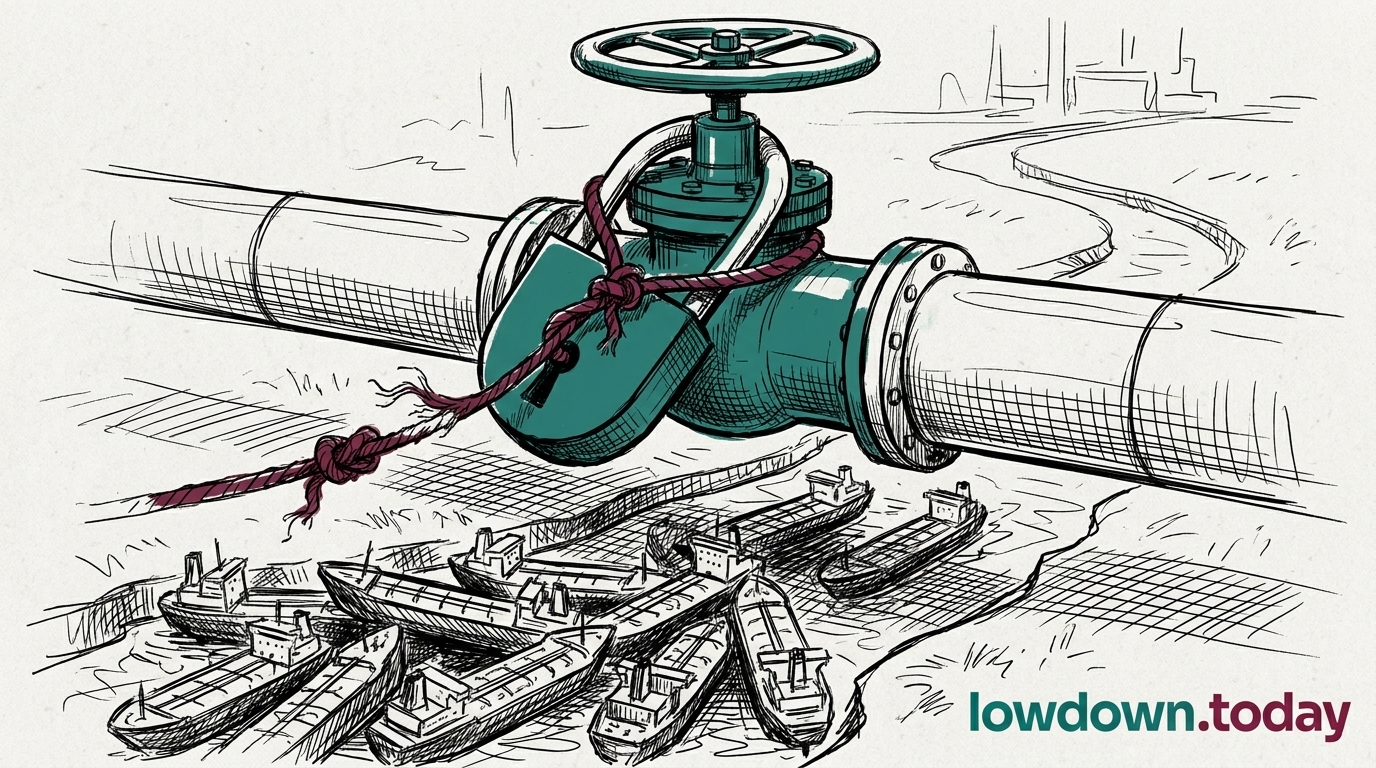
Iran struck two US bases, yet the benchmark held near $73, a sign traders are betting the strait reopens rather than pricing the escalation. Mines stay uncleared, hundreds of vessels remain stranded, and Iran's single-corridor demand is unmet; ING analysts warned that traders are too optimistic about the timeline for Gulf supply to return 3. Brent had settled at $71.99 on 26 June , so a fortnight of strikes, base attacks and a stand-down moved the benchmark barely a dollar.

Deep Analysis

In plain English

Oil prices moved very little on 29 June despite the US and Iran announcing a ceasefire. Brent crude, the main international oil price measure named after a North Sea oilfield, settled at $72.91 a barrel, up just 1.3% from the day before. Analysts at ING, a large Dutch bank that monitors commodity markets closely, warned that the modest rise was misleading. The physical problem, the Strait of Hormuz being practically closed to most shipping, has not gone away: sea mines still need to be cleared, hundreds of cargo vessels remain stuck outside the strait, and Iran insists ships use only a specific route it controls. Until shipping insurers reinstate war-risk cover, the cover that companies need before sending a vessel into a conflict zone, physical supply will not fully return even if the benchmark price implies otherwise. The broader picture: oil prices fell roughly 30% between April and June 2026, the sharpest quarterly decline since the early months of the COVID-19 pandemic in 2020.

What could happen next?
  • Consequence

    Brent's failure to rally more than 1.3% on the stand-down announcement confirms that restoring physical supply requires reinstating Lloyd's of London war-risk cover, rather than a verbal agreement to halt fire.

    Immediate · Reported
  • Risk

    ING's assessment that traders are too optimistic about the Gulf supply recovery timeline, given uncleared mines and the single-corridor dispute, suggests a downside correction is possible if the Doha shuttle fails to produce a routing resolution within the Article 5 window.

    Short term · Assessed
  • Consequence

    Q2 2026's roughly 30% Brent decline is the steepest quarterly fall since 2020, materially reducing the fiscal revenues of all Gulf oil producers and raising budget-deficit pressures in Saudi Arabia, Kuwait, and the UAE simultaneously with the active conflict.

    Short term · Reported
First Reported In

Update #141 · Iran hits two US bases; Trump pulls back

GlobalSecurity.org· 30 Jun 2026
Read original
Different Perspectives
Indian refiners
Indian refiners
Indian refiners kept lifting discounted Urals as the India/Baltic price split widened past $9-10 a barrel, a gap that only grows as GL X1's Iranian wind-down cuts an alternative discounted grade off the market by 17 July. Cheaper Russian feedstock is being locked in while it lasts.
Chinese refiners
Chinese refiners
Chinese refiners gain leverage as the Urals-Brent discount widens, since Beijing's state buyers already source discounted Russian barrels near the fiscal floor unaffected by Western insurance costs. A wider discount, if it holds past 23 July, lets them lock in cheaper term contracts regardless of the cap's outcome.
US money managers (CFTC-tracked)
Managed money trimmed WTI net length into the rally, positioning that reflects doubt the Hormuz premium survives without freight or war-risk confirmation. The Brent-WTI spread widening almost entirely on the Brent leg supports that scepticism about a broad-based repricing.
OPEC+ (Saudi-led subgroup)
Saudi Arabia is defending market share through a fourth straight 188kbd August hike even as OPEC's own July MOMR cut 2026 demand growth for the fourth consecutive month. At a $108-111 fiscal breakeven, every added barrel costs Riyadh revenue it cannot recoup, so the hike reads as a positioning signal, not a demand bet.
Greek shipping registries
Greece, backed by Cyprus and Malta, is pushing a three-month cap-freeze compromise against the Commission's freeze to January 2027 ahead of the 23 July vote. Athens' and Valletta's combined tanker registrations mean a shorter review gives their insurers more frequent chances to reprice risk on Russian cargoes.
Russia (Deputy PM Alexander Novak)
Novak extended the diesel export restriction to producers on 8 July, the first producer-binding curb of the war, protecting the domestic pump price ahead of any refinery repair timeline. Urals still trades below Russia's $59 budget floor even as Brent gained, so the ban trades export revenue for fiscal stability at home.