Skip to content
You can now search across every topic, entity and event.What's new
European Oil Markets
13JUL

Brent tops $100 then gives it back

3 min read
10:34UTC

Brent crude settled at $94.98 on 1 June, spiked to $101.36 on the morning of 3 June, then fell to $96.97 by 4 June, a round-trip that priced neither a signed deal nor a full blow-up.

EconomicDeveloping
Key takeaway

Brent swung above $100 and back inside a day; insurers will not move Hormuz war-risk without an official document.

Brent Crude, the benchmark that prices roughly two-thirds of internationally traded oil, settled at $94.98 on 1 June , spiked to $101.36 on the morning of 3 June, then fell to $96.97 by 4 June 1. The 3 June print was the first move back above $100 since 25 May.

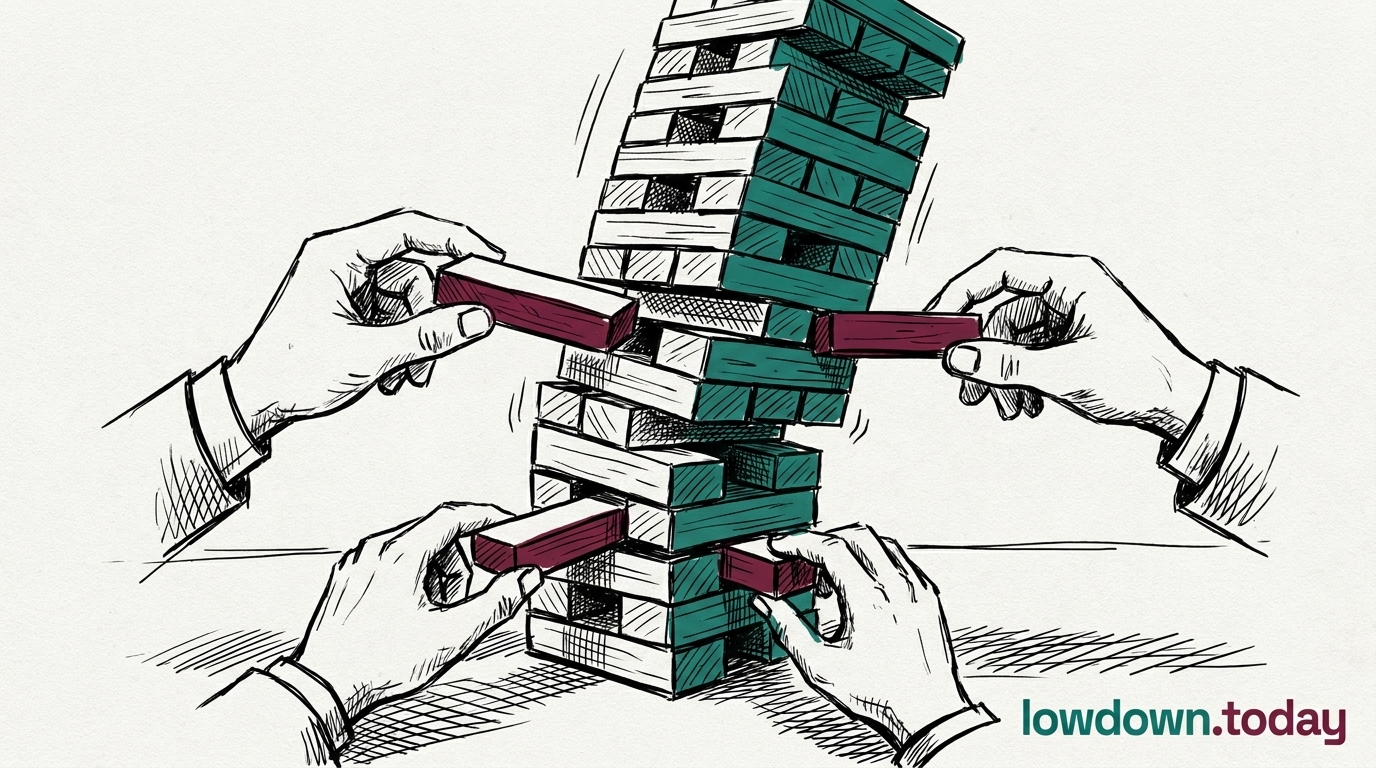
The round-trip says traders are pricing neither a signed deal nor a full blow-up. The market has settled into a $95 to $102 band that holds the conflict premium without betting on its resolution. Each fresh headline, a presidential phone call or a Senate hearing, moves the price for a session before it retraces, because nothing has changed the underlying supply risk through the strait of Hormuz.

Lloyd's of London shows why. The insurance market's Joint War Committee designates high-risk maritime zones, and to de-list Hormuz it requires a UN Security Council resolution or a government certification letter, not testimony or optimism. It has not repriced its Hormuz war-risk cover at all. Until an actual instrument lands, the insurers hold the premium steady while the futures market swings around it.


Deep Analysis

In plain English

Brent crude jumped from about $95 to over $101 a barrel on 3 June 2026, its highest since 25 May, after Iran struck a civilian airport and Gulf tension spiked. Within about 24 hours it fell back to just under $97, roughly where it had started. This kind of quick spike and retreat shows that oil traders are not betting on an all-out war or a complete deal: they are pricing a situation that keeps going at roughly the same level of tension without a major change either way. Meanwhile, the companies that actually insure ships to sail through the Strait of Hormuz have not changed their prices at all ; they still charge roughly $10 to 14 million extra per voyage, and that price only changes when there is an official government or UN declaration, not when the news is bad.

First Reported In

Update #117 · Iran's drone finds Kuwait's arrivals hall

Democrata· 4 Jun 2026
Read original
Causes and effects
This Event
Brent tops $100 then gives it back
Lloyd's of London needs official certification rather than headlines to reprice Hormuz war-risk cover, and it has not moved.
Different Perspectives
Greek shipping registries
Flag states dominating the tanker fleet await the EU's 15 July cap-freeze vote. A formula unlock toward $75 would loosen the ceiling squeezing insurance and crewing costs on their registered hulls.
US money managers
US money managers
NYMEX WTI managed-money net long fell 23% to +64,041 in the week to 7 July, trimming length into the rally on doubt the Hormuz premium survives without freight or war-risk confirmation.
European refiners (ARA)
ARA refiners are capturing an $80/bbl US diesel crack as Russian gasoil loadings collapsed to 234kbd before Novak's 31 July export ban even bites, widening the arbitrage straight into refining margins.
OPEC+
OPEC+
The seven-member group confirmed a fourth consecutive 188kbd August hike on 5 July, defending market share even though Saudi Arabia's $108-111/bbl breakeven means every added barrel costs Riyadh revenue it cannot recoup.
Indian refiners
Indian refiners
Refiners kept lifting discounted Urals as the India/Baltic split widened past $9-10 a barrel on 7 July. A wider Urals-Brent gap means cheaper feedstock locked in against Baltic buyers.
Russia
Russia
Urals traded $48.95-55.12 on 12-13 July, below Moscow's $59 budget floor even as Brent gained $6. Oil and gas fund roughly 30% of federal revenue, and Novak's diesel export ban is rationing a shrinking export base.