Skip to content
You can now search across every topic, entity and event.What's new
European Oil Markets
6JUL

Pakistan urged US to protect Iran envoys

2 min read
09:52UTC
EconomicDeveloping

The Wall Street Journal confirmed, via US officials, that Pakistan asked the US to press Israel to remove Foreign Minister Abbas Araghchi and Parliamentary Speaker Mohammad Bagher Ghalibaf from a joint US-Israeli assassination target list, and that the US complied, temporarily. 1 Both officials were 'temporarily removed from a Joint US-Israeli Target List for several days' while Trump explored indirect talks, per US officials speaking to the Journal.

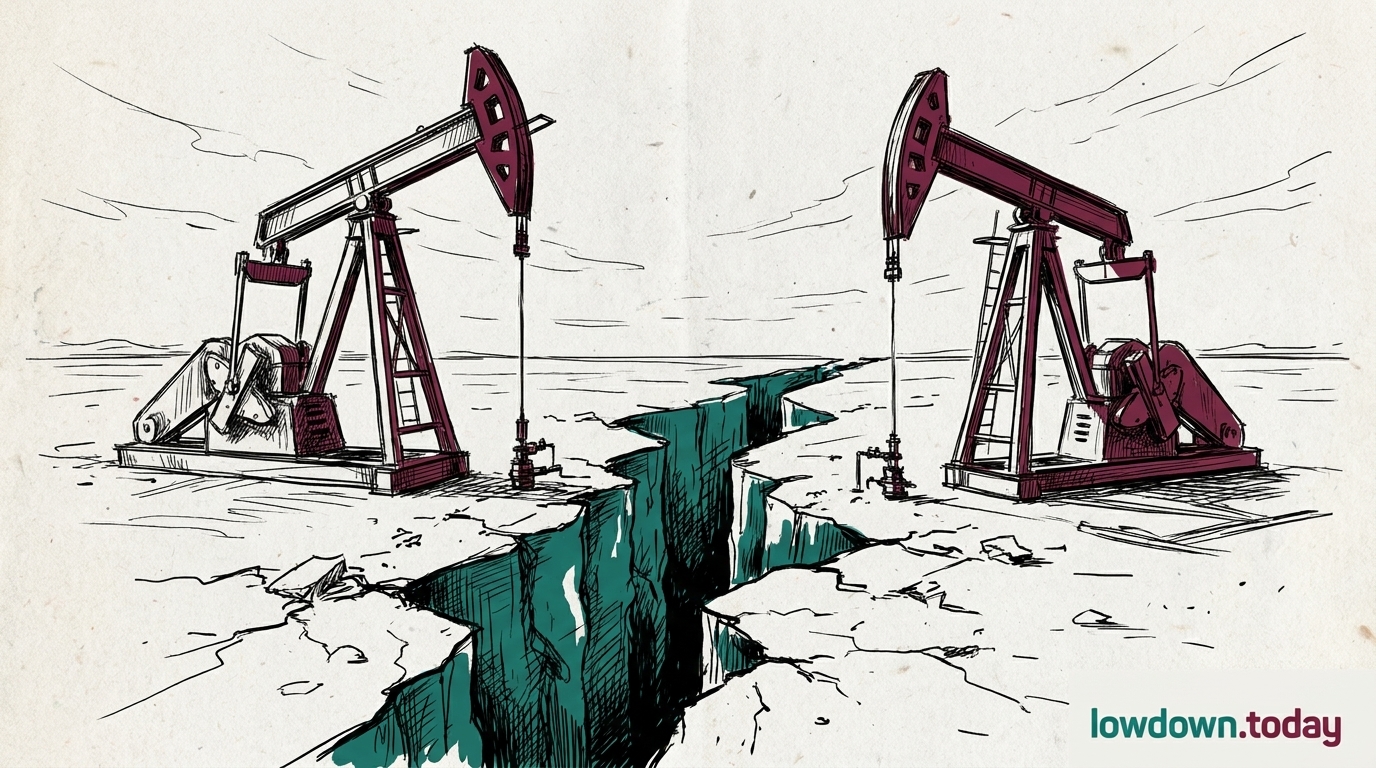
Iran had categorically denied any negotiations and Ghalibaf had dismissed talks as an attempt to 'escape the quagmire' . Yet Pakistan had already positioned itself as intermediary and confirmed it was relaying a 15-point US proposal . The public disclosure that the kill list is jointly operated, and that Washington can override Israeli targeting for diplomatic reasons, transforms targeted killing from a military tactic into a bargaining instrument.

Israel killed Tangsiri on the same day those protections were secured. The two events are not contradictory but they establish a hierarchy: the man managing the Hormuz blockade was expendable; the men who might negotiate its end were not. Iran now knows which of its officials the US considers necessary for talks and which it will allow Israel to kill. That knowledge reshapes Iranian internal power dynamics in ways that are difficult to predict but almost certainly corrosive to internal cohesion.

The political risk for the protected officials is also real: Araghchi and Ghalibaf can now be accused by hardliners of collaboration with Washington, given that their protection from the joint list is now public knowledge. The confirmation creates a domestic political vulnerability that may constrain their room to negotiate even if they wished to.


Deep Analysis

In plain English

The US and Israel share a list of Iranian officials they plan to kill. Pakistan asked the US to take two Iranian politicians off that list temporarily so peace talks could proceed, and the US agreed. The fact that this list exists, is jointly managed by Washington and Tel Aviv, and responds to diplomatic pressure from Islamabad is now confirmed public knowledge. For Iran, this means that the diplomatic protection of its officials can be revoked by Washington at any time, which makes trusting the talks considerably harder. For Israel's critics, it confirms that Washington has more control over Israeli targeting than it publicly admits.

Deep Analysis
Root Causes

The structural cause is the collision between two requirements: maintaining credible military deterrence (which requires unpredictability) and conducting diplomacy (which requires protected channels).

Public confirmation of the list's existence makes both functions harder. Targets know the criteria; adversaries know the constraints.

First Reported In

Update #49 · Hormuz toll into law; Tangsiri killed

Al Jazeera· 27 Mar 2026
Read original
Different Perspectives
Greek shipping registries
Flag states dominating the tanker fleet await the EU's 15 July cap-freeze vote. A formula unlock toward $75 would loosen the ceiling squeezing insurance and crewing costs on their registered hulls.
US money managers
US money managers
NYMEX WTI managed-money net long fell 23% to +64,041 in the week to 7 July, trimming length into the rally on doubt the Hormuz premium survives without freight or war-risk confirmation.
European refiners (ARA)
ARA refiners are capturing an $80/bbl US diesel crack as Russian gasoil loadings collapsed to 234kbd before Novak's 31 July export ban even bites, widening the arbitrage straight into refining margins.
OPEC+
OPEC+
The seven-member group confirmed a fourth consecutive 188kbd August hike on 5 July, defending market share even though Saudi Arabia's $108-111/bbl breakeven means every added barrel costs Riyadh revenue it cannot recoup.
Indian refiners
Indian refiners
Refiners kept lifting discounted Urals as the India/Baltic split widened past $9-10 a barrel on 7 July. A wider Urals-Brent gap means cheaper feedstock locked in against Baltic buyers.
Russia
Russia
Urals traded $48.95-55.12 on 12-13 July, below Moscow's $59 budget floor even as Brent gained $6. Oil and gas fund roughly 30% of federal revenue, and Novak's diesel export ban is rationing a shrinking export base.