Skip to content
You can now search across every topic, entity and event.What's new
European Oil Markets
30JUN

Trump Extends Hormuz Deadline for Fifth Time

2 min read
17:30UTC

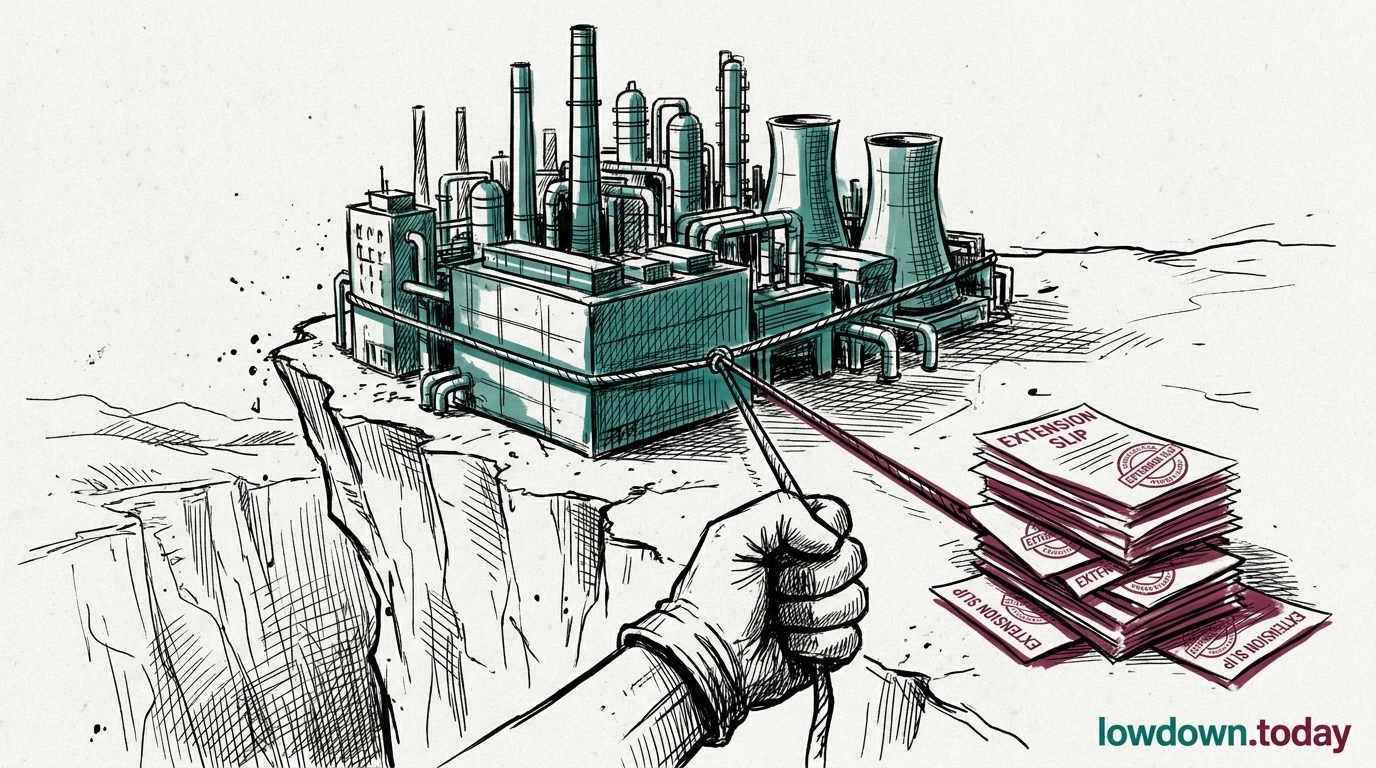
Five deadlines in six weeks, zero enforcement. The coercive mechanism has become diplomatic cover for continued talks.

EconomicAssessed
Key takeaway

Five deadlines, zero enforcement; the threat is now the extension.

The 6 April power-grid deadline was superseded by a 48-hour Hormuz ultimatum, which has now been extended again to Tuesday 8pm ET (8 April). This is the fifth reformulation of the same threat in six weeks.

The pattern: 16 March to 23 March. 23 March to 6 April. 6 April replaced by 48-hour ultimatum expiring 7 April. 7 April extended to Tuesday. Each deadline arrived with escalating rhetoric. None produced action. Trump told Axios the US is in deep negotiations and threatened to blow up everything if no deal by Tuesday. The words are documented. The action is the extension itself.

Coercive diplomacy requires credible commitment to escalation. Five extensions in 42 days is the opposite of credibility. What the pattern reveals is that Trump has no appetite for the energy infrastructure campaign he threatens. Each extension is a policy decision disguised as a tactical pause. Iran's General Aliabadi dismissed Trump as helpless, nervous, unbalanced and stupid. The deadline no longer functions as leverage; it functions as domestic political communication.

The Islamabad Accord's timing is not coincidental. It provides Trump with a potential face-saving exit from the deadline cycle. If the accord gains traction, Tuesday's deadline can be reframed as a diplomatic success rather than a sixth capitulation.


Deep Analysis

In plain English

Trump has threatened to bomb Iran's power grid five times in six weeks and extended the deadline every time. The threats no longer carry weight because Iran knows they will not be acted on. The new peace plan from Pakistan may give Trump a way to step back from the deadlines without looking like he backed down.

Deep Analysis
Root Causes

US coercive diplomacy required credible escalation. Five deadline extensions destroyed that credibility. The gap between rhetoric and action has become the defining feature of US policy in this conflict, creating the diplomatic vacuum Pakistan filled.

Escalation

Mixed. The extension itself is de-escalatory (no strike). But each extension without consequence makes the eventual choice between striking and permanently abandoning the threat more binary. The Islamabad Accord offers a third path.

What could happen next?
  • US coercive credibility in the Middle East is materially damaged for the remainder of this conflict

  • Trump faces growing political exposure from both anti-war and hawkish constituencies

First Reported In

Update #60 · Pakistan's Ceasefire Plan Fills the Vacuum

Time· 6 Apr 2026
Read original
Different Perspectives
Greek shipping registries
Flag states dominating the tanker fleet await the EU's 15 July cap-freeze vote. A formula unlock toward $75 would loosen the ceiling squeezing insurance and crewing costs on their registered hulls.
US money managers
US money managers
NYMEX WTI managed-money net long fell 23% to +64,041 in the week to 7 July, trimming length into the rally on doubt the Hormuz premium survives without freight or war-risk confirmation.
European refiners (ARA)
ARA refiners are capturing an $80/bbl US diesel crack as Russian gasoil loadings collapsed to 234kbd before Novak's 31 July export ban even bites, widening the arbitrage straight into refining margins.
OPEC+
OPEC+
The seven-member group confirmed a fourth consecutive 188kbd August hike on 5 July, defending market share even though Saudi Arabia's $108-111/bbl breakeven means every added barrel costs Riyadh revenue it cannot recoup.
Indian refiners
Indian refiners
Refiners kept lifting discounted Urals as the India/Baltic split widened past $9-10 a barrel on 7 July. A wider Urals-Brent gap means cheaper feedstock locked in against Baltic buyers.
Russia
Russia
Urals traded $48.95-55.12 on 12-13 July, below Moscow's $59 budget floor even as Brent gained $6. Oil and gas fund roughly 30% of federal revenue, and Novak's diesel export ban is rationing a shrinking export base.