Skip to content
You can now search across every topic, entity and event.What's new
European Oil Markets
30JUN

EU delays Ukraine's 9.1bn loan tranche

2 min read
17:30UTC

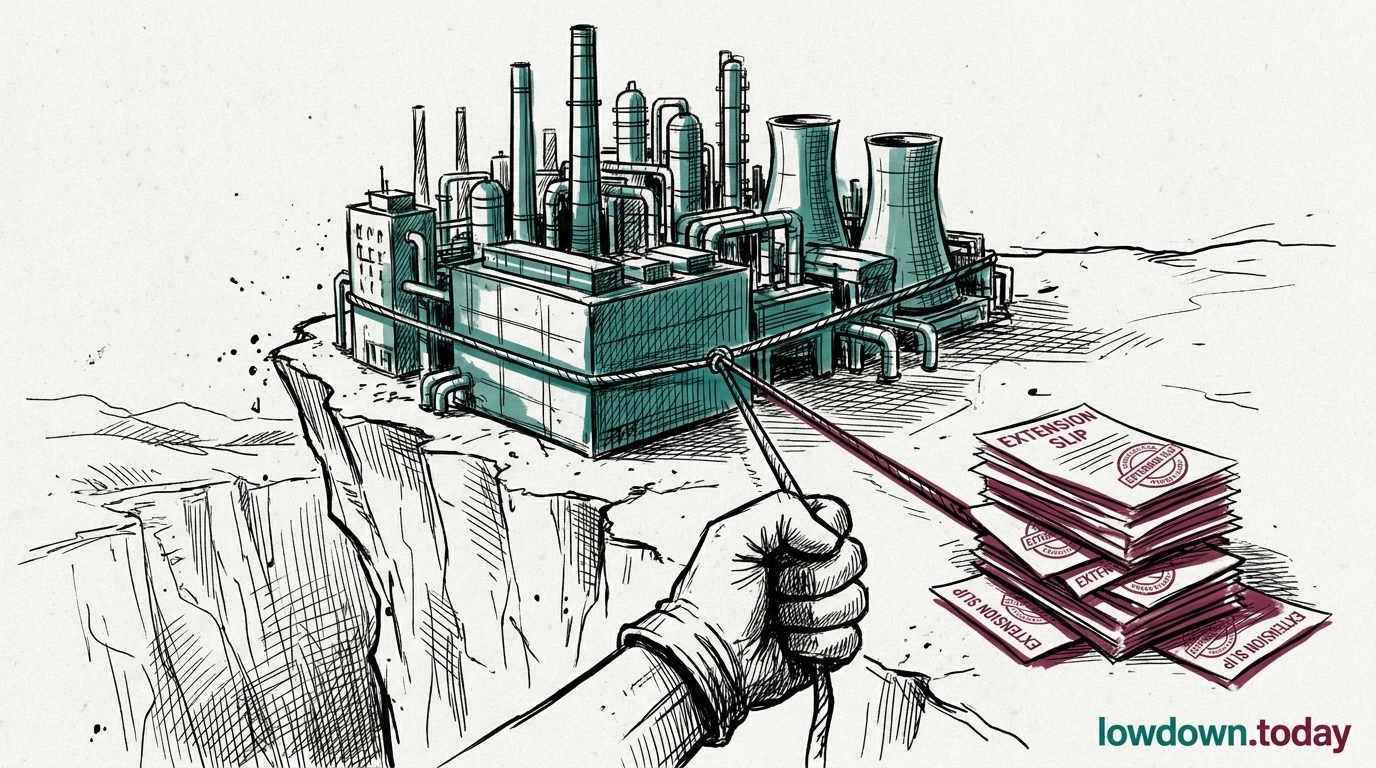
The EU held back the €9.1bn first tranche of its €90bn loan to Ukraine on unmet technical conditions, even as it disbursed a separate €2.8bn Ukraine Facility payment on 8 June.

EconomicDeveloping
Key takeaway

Ukraine's €9.1bn loan tranche is stalled on technical conditions, not on any political veto.

The European Union delayed the €9.1bn first tranche of its €90bn loan to Ukraine, citing unmet technical conditions 1. The €90bn facility is the bloc's headline financing package for Kyiv, approved by Ukraine's parliament in late May with the first tranche expected in mid-June . Brussels has paused the payment over compliance steps Kyiv has yet to complete, not cancelled it.

A separate €2.8bn Ukraine Facility payment was disbursed on 8 June, which shows the difference between the two channels. The Ukraine Facility is an established budget-support stream with its own milestones; the €90bn loan is the larger new instrument, and its first payment carries conditions Kyiv has yet to satisfy, including anti-corruption benchmarks.

For most of the past year, EU funding for Ukraine was held up by Hungary's veto rather than by Kyiv's own compliance. With that veto broken, Ukraine's own reform progress now decides when the money moves. Ursula von der Leyen told the Group of Seven (G7) summit the first payment is coming "soon", but the tranche moves only once Ukraine clears the technical bar, not on a political signal alone. The delay is a reminder that European support, while no longer blocked, is metered against reform.


Deep Analysis

In plain English

The European Union agreed in May to lend Ukraine €90bn over several years to help pay for its war and reconstruction. The first slice, worth €9.1bn, was supposed to be paid in June but has been delayed because Ukraine had not yet met certain technical conditions the EU set as part of the loan agreement. Separately, a smaller €2.8bn payment from a different EU fund was made on 8 June. Loan conditions typically involve things like anti-corruption reforms and governance improvements that the EU uses as part of Ukraine's application to join the bloc. Missing a condition delays the money but does not cancel the loan; Ukraine must meet the requirements to unlock the next tranche.

What could happen next?
  • Risk

    If Hungary uses its Council voting position to convert a technical conditionality delay into a prolonged political blockage, the €9.1bn tranche may not arrive before Ukraine's defence budget faces a mid-year cash shortfall.

  • Consequence

    The disbursement of €2.8bn from the separate Ukraine Facility on 8 June confirms that not all EU financial channels are blocked, providing a partial bridge while the main tranche clears its conditions.

First Reported In

Update #20 · Oil vise shuts as Russia torches the Lavra

US Treasury OFAC· 16 Jun 2026
Read original
Different Perspectives
Greek shipping registries
Flag states dominating the tanker fleet await the EU's 15 July cap-freeze vote. A formula unlock toward $75 would loosen the ceiling squeezing insurance and crewing costs on their registered hulls.
US money managers
US money managers
NYMEX WTI managed-money net long fell 23% to +64,041 in the week to 7 July, trimming length into the rally on doubt the Hormuz premium survives without freight or war-risk confirmation.
European refiners (ARA)
ARA refiners are capturing an $80/bbl US diesel crack as Russian gasoil loadings collapsed to 234kbd before Novak's 31 July export ban even bites, widening the arbitrage straight into refining margins.
OPEC+
OPEC+
The seven-member group confirmed a fourth consecutive 188kbd August hike on 5 July, defending market share even though Saudi Arabia's $108-111/bbl breakeven means every added barrel costs Riyadh revenue it cannot recoup.
Indian refiners
Indian refiners
Refiners kept lifting discounted Urals as the India/Baltic split widened past $9-10 a barrel on 7 July. A wider Urals-Brent gap means cheaper feedstock locked in against Baltic buyers.
Russia
Russia
Urals traded $48.95-55.12 on 12-13 July, below Moscow's $59 budget floor even as Brent gained $6. Oil and gas fund roughly 30% of federal revenue, and Novak's diesel export ban is rationing a shrinking export base.



