Skip to content
You can now search across every topic, entity and event.What's new
European Oil Markets
30JUN

Brent holds at $95 as markets wait

2 min read
17:30UTC

Oil prices stayed flat at $95-97, pricing a sustained stalemate rather than confidence in resolution.

EconomicDeveloping
Key takeaway

Brent above $95 reflects a market that expects neither resolution nor collapse.

Brent Crude traded between $95.20 and $96.69 on 11-12 April, essentially flat from the prior update's $96.39 . The post-ceasefire drop to $92 proved temporary; Brent has since recovered and settled into a narrow band above $95.

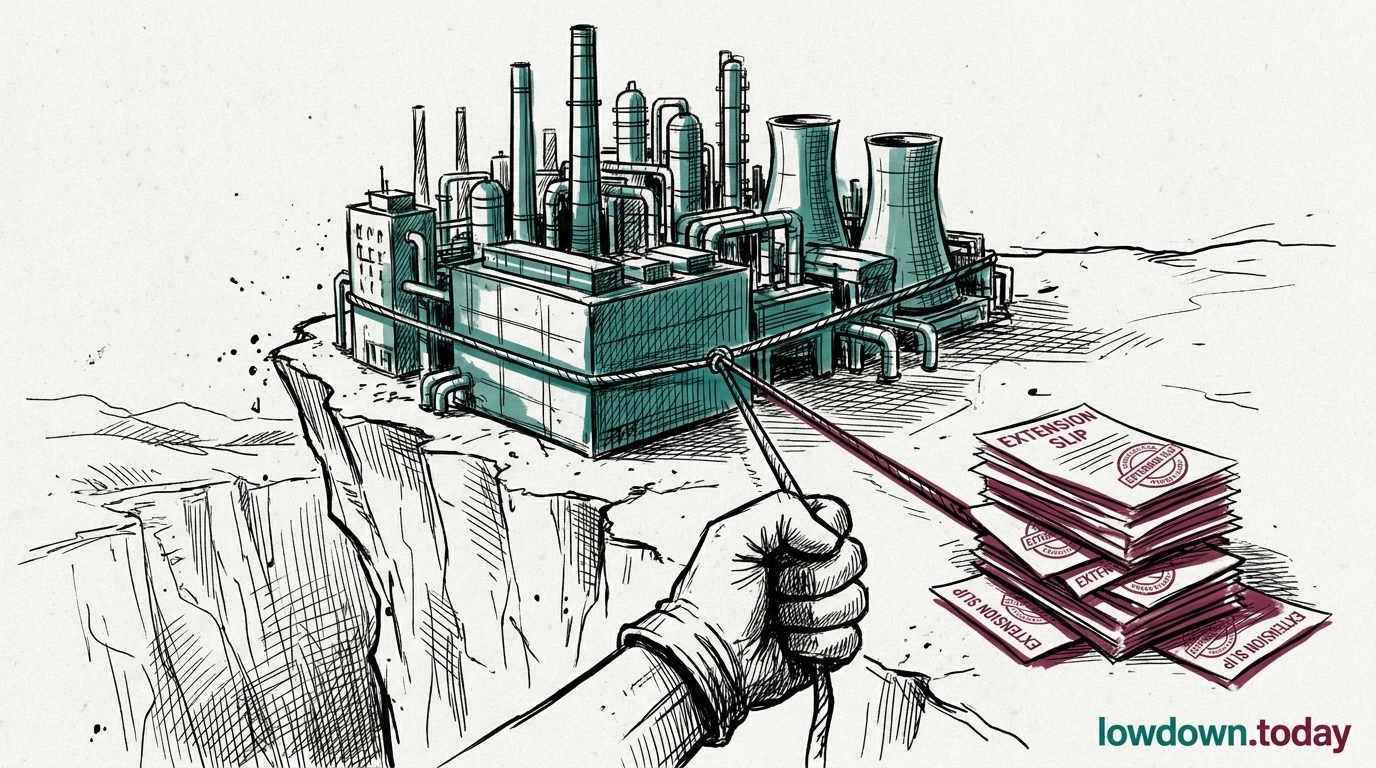
The flat range tells a story. Markets are not pricing in a clean resolution. They are not pricing in a return to conflict either. They are pricing a structural stalemate: the Hormuz strait stays mostly closed, supply stays constrained, and nobody knows what happens when the ceasefire expires.

Oxford Economics projects world GDP growth at 1.4% in 2026 if the conflict persists, down from a 2.6% baseline. War risk insurance premiums remain four to five times pre-war levels. Commercial vessels rerouting via the Cape of Good Hope add 10 to 20 days per voyage, and US importer freight rates have risen by up to 50%.

Most equity markets have not yet priced in a sustained conflict scenario, which means the current oil price may be an underestimate of the economic shock if the ceasefire collapses without a replacement framework. Brent peaked sharply higher before the ceasefire was announced; a return to those levels would sharpen the GDP drag considerably.


Deep Analysis

In plain English

Brent crude is the global oil price benchmark. It is trading just above $95 per barrel, roughly $20 above where it was before the conflict. The fact it has stayed flat, neither rising sharply nor falling, tells you what the markets think: they expect the stalemate to continue for a while, but they do not expect a catastrophic escalation either. Oxford Economics, one of the most widely-cited economic forecasting institutions, estimates that if this conflict drags on, the world economy will grow by only 1.4% in 2026, down from 2.6% without the conflict. That 1.2-percentage-point reduction does not sound like much, but at the scale of the global economy it represents roughly $1.2 trillion in lost output, roughly the entire GDP of Spain for a year. For ordinary people, the most direct effect is energy costs. Sustained $95+ Brent flows through to petrol, diesel, gas, and electricity prices over weeks to months.

What could happen next?
  • Consequence

    Markets pricing a structural stalemate rather than resolution means Brent will stay elevated regardless of ceasefire expiry, unless Hormuz transit actually resumes at scale, a signal the first oil tanker full transit would provide.

  • Risk

    The Oxford Economics 1.4% global growth scenario is predicated on sustained conflict without re-escalation; a return to active hostilities would trigger a spike above $110, potentially pushing the global economy into recession territory.

First Reported In

Update #66 · Islamabad collapses: 10 days to expiry

Stimson Center· 12 Apr 2026
Read original
Different Perspectives
Greek shipping registries
Flag states dominating the tanker fleet await the EU's 15 July cap-freeze vote. A formula unlock toward $75 would loosen the ceiling squeezing insurance and crewing costs on their registered hulls.
US money managers
US money managers
NYMEX WTI managed-money net long fell 23% to +64,041 in the week to 7 July, trimming length into the rally on doubt the Hormuz premium survives without freight or war-risk confirmation.
European refiners (ARA)
ARA refiners are capturing an $80/bbl US diesel crack as Russian gasoil loadings collapsed to 234kbd before Novak's 31 July export ban even bites, widening the arbitrage straight into refining margins.
OPEC+
OPEC+
The seven-member group confirmed a fourth consecutive 188kbd August hike on 5 July, defending market share even though Saudi Arabia's $108-111/bbl breakeven means every added barrel costs Riyadh revenue it cannot recoup.
Indian refiners
Indian refiners
Refiners kept lifting discounted Urals as the India/Baltic split widened past $9-10 a barrel on 7 July. A wider Urals-Brent gap means cheaper feedstock locked in against Baltic buyers.
Russia
Russia
Urals traded $48.95-55.12 on 12-13 July, below Moscow's $59 budget floor even as Brent gained $6. Oil and gas fund roughly 30% of federal revenue, and Novak's diesel export ban is rationing a shrinking export base.