Skip to content
You can now search across every topic, entity and event.What's new
European Oil Markets
22JUN

Brent spikes on the strike, then gives it back

2 min read
09:55UTC

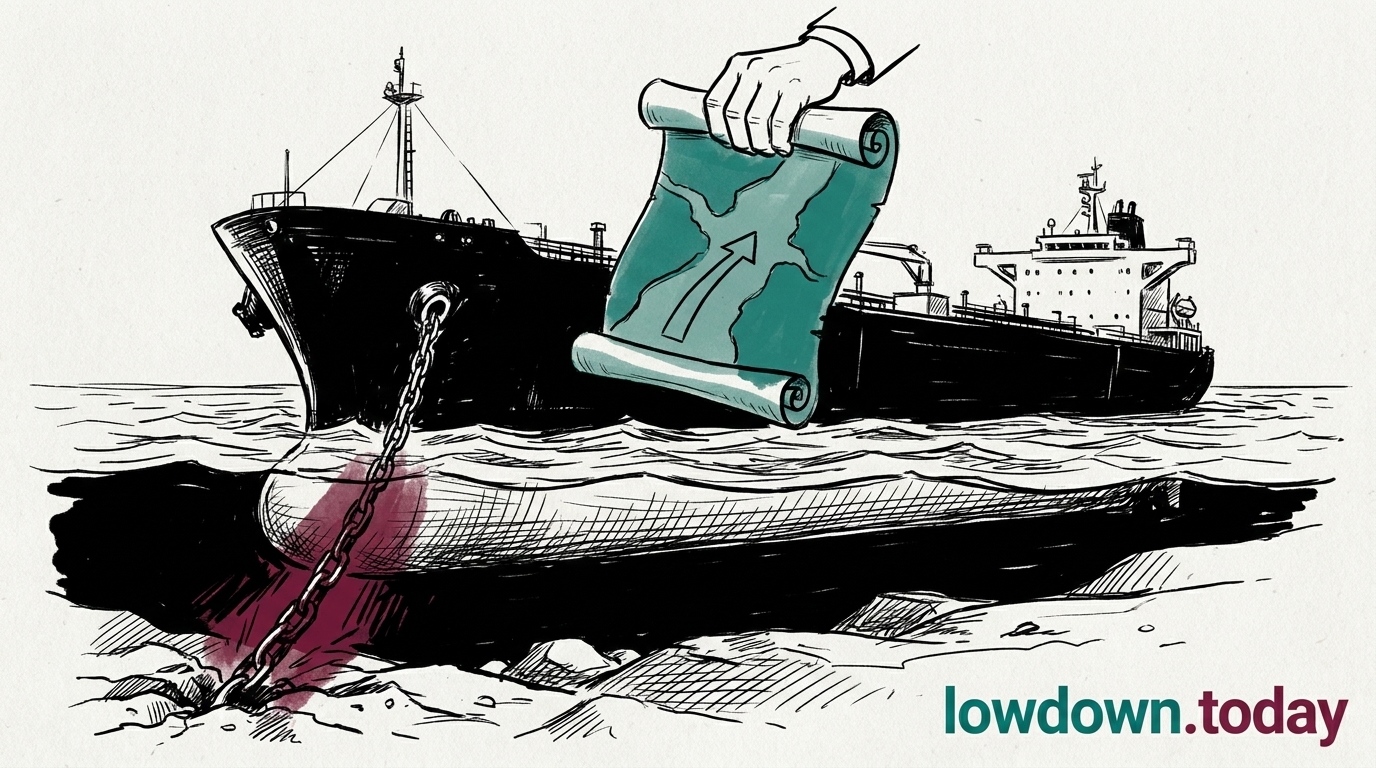
Brent crude spiked intraday to roughly $109.98 on Friday 11 September on news of the pipeline attack, then settled the same session at $104.61, down 2.81 per cent.

EconomicDeveloping

Brent Crude spiked intraday to roughly $109.98 on Friday 11 September 2026, around 6 per cent higher overnight on news of the attack on the Saudi east-west crude line and its highest since early May, then settled the same session at $104.61, down 2.81 per cent 1. West Texas Intermediate, the US benchmark, settled at $100.05, down 2.37 per cent 2.

Both numbers are Friday's, and both close a session that began with the pipeline news. Brent settled at $71.99 on 26 June , and Friday's close sits far above that on the same benchmark. The US Energy Information Administration had raised its forecast for Middle East production shut in during the fourth quarter and pushed its recovery date into 2027 two days earlier, on 9 September .

A spike that unwinds inside a session says traders priced a disruption to a route rather than a loss of barrels. Saudi crude still reaches the water, and the Ministry of Energy has named neither a damaged segment nor a restart date, so the quantity actually removed from the market is unknown to the people pricing it. Futures markets do not trade on Saturday or Sunday. Monday 14 September is the first settlement that can price anything that happened over the weekend.


Deep Analysis

In plain English

Oil is bought and sold on futures exchanges, where a price moves all day and then a single closing figure, the settlement, goes in the record. On Friday 11 September news of the attack on the Saudi pipeline pushed Brent crude, the main global benchmark, up to around $109.98 at one point. By the close it had fallen back to $104.61, which was below Thursday's closing price. The American benchmark, West Texas Intermediate, closed at $100.05. So the market got excited and then changed its mind inside a single day. Exchanges are shut at the weekend, which means anything that happened on Saturday or Sunday has to wait until Monday to show up in a price at all.

What could happen next?
  • Meaning

    A spike that unwinds inside one session prices a disruption to a route rather than a loss of barrels.

    Immediate · Assessed
  • Risk

    Two days of weekend news sit unpriced, and the first settlement able to carry them is Monday 14 September.

    Immediate · Assessed
  • Consequence

    A forecaster raising its shut-in estimate while the market lowers its close leaves buyers hedging against two different views of the same quarter.

    Short term · Suggested
First Reported In

Update #178 · Saudi bypass hit, and Riyadh holds fire

Anadolu Agency· 13 Sept 2026
Read original
Causes and effects
Different Perspectives
Gulf oil producer
Gulf oil producer
Secured OPEC's confirmed 188,000 b/d September increment with the next meeting set for 6 September, but the Secretariat's own 2 August release says nothing about the fourth quarter. Output guidance beyond September remains undisclosed even as delegate sourcing keeps filling that gap.
Money manager positioned in WTI
Added 21,402 lots to a 108,307 net long in NYMEX WTI in the week to 28 July, against just 1,485 added to Brent's 15,740, a roughly fourteen-to-one split. Conviction sits in the American benchmark even as the European diesel story sets the record.
Indian refiner buying Urals
Bought Russian crude at a discount that narrowed to $1-2 a barrel in the week to 29 July from over $10, as Hormuz risk pushed it toward Urals. If that risk eases with the strike now called off, the discount it is currently enjoying could re-widen just as fast.
Russian diesel exporter
Novak tied any lifting of the diesel export ban, due to lapse 31 July, to an unspecified market recovery with no date, and pushed the gasoline ban to end-2026. An open-ended constraint suits an exporter benefiting from the record European crack it feeds.
War-risk underwriter
Withdrew war-risk cover for Saudi-linked hulls on 24 July and has not reinstated it, holding Bab el-Mandeb tanker transits near 7.5 a day. A cancelled strike does not by itself trigger the committee review needed to re-accept the class.
Northwest European refiner
Sources only 17% of diesel imports from Saudi Red Sea ports against the Mediterranean's 24%, so the ARA crack at $85.86 trails the Med print by $5.81. Lower Red Sea exposure is cushioning it against the rerouting cost, not eliminating it.



