Skip to content
You can now search across every topic, entity and event.What's new
European Energy Markets
16JUL

Bruegel puts refill bill at EUR 35bn

3 min read
09:48UTC

The Brussels think tank's estimate is the most precise public figure for the 2026 injection campaign: 55% above 2025, requiring 180 extra LNG cargoes.

EconomicDeveloping
Key takeaway

Reaching 80% storage requires 180 extra LNG cargoes at an estimated EUR 35 billion, 55% above 2025.

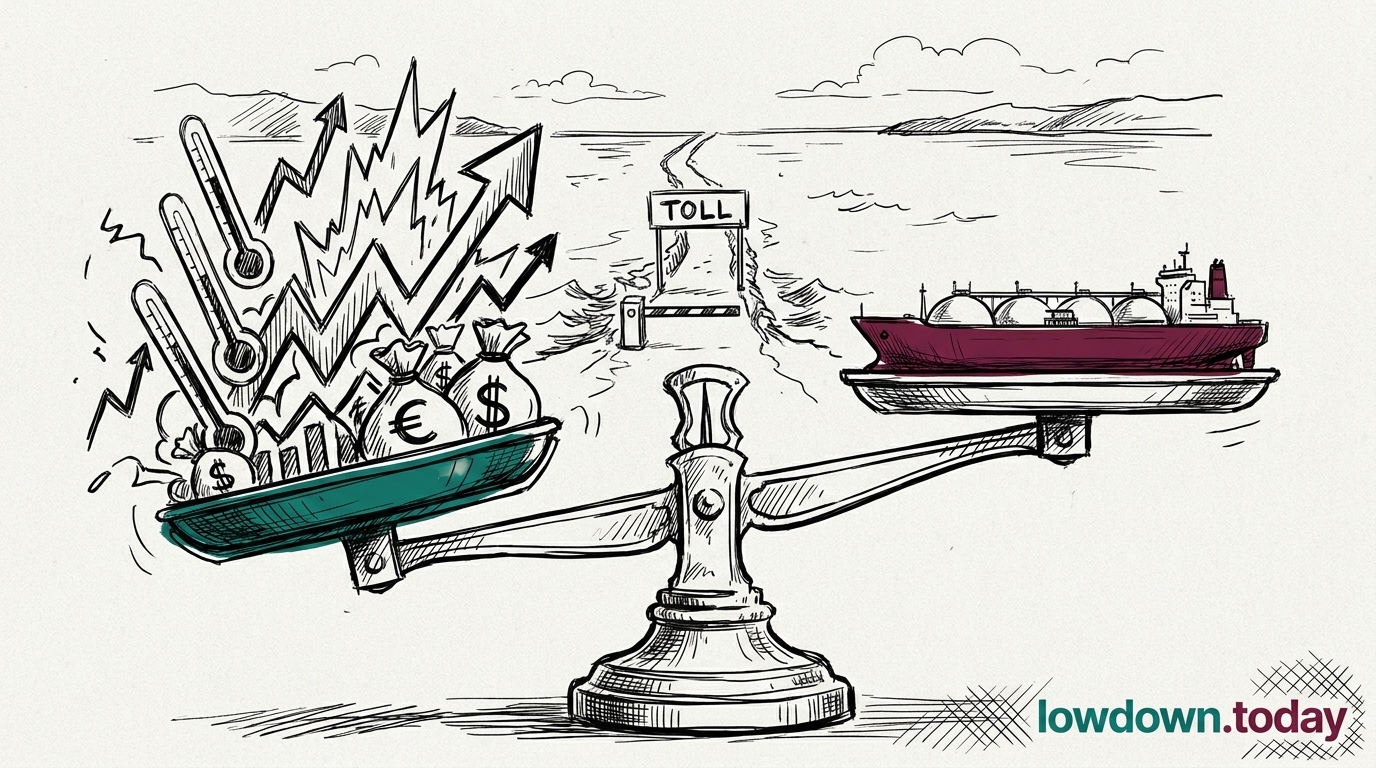
Bruegel, the Brussels-based economic think tank, estimated the cost of refilling EU gas storage to the revised target at EUR 35 billion at EUR 60/MWh, 55% above last year's equivalent costs. Europe needs approximately 180 additional LNG cargoes compared to last summer to reach the revised target by November. A gas price doubling from pre-crisis levels would add EUR 100 billion to the EU's annual import bill, which was EUR 117 billion last year.

Bruegel's policy recommendation includes an untested lever: a buyer coalition with Japan and South Korea, which together with the EU represents 60% of global LNG demand. Coordinated purchasing could counteract the cargo-by-cargo bidding war that currently favours sellers. No such coalition has been attempted at this scale, and the coordination challenges between three blocs with different regulatory frameworks and procurement cycles are substantial.


Deep Analysis

In plain English

A Brussels-based economic research organisation called Bruegel has calculated what it will cost Europe to refill its gas storage this summer. The answer is approximately EUR 35 billion, using current gas prices, and that is just to reach the newly lowered 80% target. Bruegel has also suggested that Europe should try to negotiate as a block with Japan and South Korea, the other major gas importers, to avoid all three bidding against each other for the same limited supply. If they compete separately, prices go up for everyone.

Deep Analysis
Root Causes

The EUR 35 billion refill cost reflects a structural illiquidity in the global LNG spot market. Unlike oil, where OPEC can release swing production within weeks, LNG supply is constrained by liquefaction train capacity that was committed 5-7 years earlier.

The US LNG expansion projects approved in 2019-21 (Sabine Pass Train 6, Calcasieu Pass, Plaquemines LNG) are coming online in 2025-26, but their output is 70-80% pre-committed under long-term contracts. The true spot market available to the EU is therefore a fraction of total Atlantic LNG output.

What could happen next?
  • Opportunity

    A coordinated EU-Japan-South Korea LNG buyer coalition could reduce spot cargo costs by 5-10% through demand aggregation, saving up to EUR 2-3.5 billion on the 180 additional cargo requirement.

  • Risk

    If all 180 additional cargoes must be sourced as spot, uncoordinated member state purchasing will replicate the 2022 competitive premium, pushing actual refill costs above Bruegel's EUR 35bn central estimate.

First Reported In

Update #1 · Europe's thinnest gas cushion since 2018

Bruegel· 13 Apr 2026
Read original
Different Perspectives
LNG spreads desk
LNG spreads desk
The JKM-TTF arb flipped to a TTF premium of roughly USD 0.6/MMBtu on 15 July, the first time this cycle Europe has outbid Asia, yet no Atlantic cargo has rerouted west. Until a cargo actually moves, the desk reads the Hormuz premium as unconfirmed and the EUR 55 print as vulnerable to a fast reversal.
United States
United States
Washington reimposed a blockade on Iranian ports and a 20% Strait of Hormuz cargo toll on 13 July, driving TTF's 9% two-session rally to EUR 54.995/MWh. The posture is again setting Europe's gas benchmark by sentiment rather than by any confirmed change in cargo flows.
EDF
EDF
EDF slipped the Bugey 3, Golfech 2 and Chooz 2 restarts to 19, 22 and 25 July, pushing all three past the 20 July Bugey heat exemption, after river-cooling limits on the Rhone, Garonne and Meuse forced the cuts. The same thermal ceiling has capped the fleet in every major heatwave since 2003, and this cycle is no exception.
German power desk
German power desk
German day-ahead power climbed from EUR 126 to EUR 156/MWh over 14-16 July as the heat dome held, flipping the clean spark spread positive for the first time since 14 July. Gas-for-power demand is now back in competition with mandate storage injection right as the injection margin itself is thinning.
EU carbon and storage regulators
EUA carbon broke EUR 81/tonne on 13 July as the ETS Market Stability Reserve's scheduled withdrawals met fresh fuel-switching demand from France's nuclear curtailment. Brussels' mandatory storage-fill rule kept German and French injection running regardless of the TTF swings, the mechanism working as designed four years after the 2022 shock.
Equinor
Equinor
Equinor returned its Asgard field from maintenance on 11 July, lifting Gassco's exit nominations to 319.8 mcm/day just as TTF round-tripped on Hormuz risk. The restart gave Norway spare pipeline capacity to help Europe absorb the gas rally without drawing down storage, reinforcing its role as the post-2022 swing supplier.
