Skip to content
Welcome, thoughtbot's Giant Robots listeners!Start here
European Energy Markets
22JUN

JIATF-401 adds ten Domestic Shield firms

3 min read
13:56UTC

A Pentagon counter-drone task force gave ten firms contract ceilings worth US$4.15bn to protect US bases from drones, with no orders yet published.

EconomicAssessed
Key takeaway

Ten firms won US$4.15bn of Domestic Shield ceilings, which cap spending rather than fund it.

Joint Interagency Task Force 401 (JIATF-401), the Pentagon's counter-drone task force, added ten firms to Domestic Shield, its programme to protect military sites inside the US from drones, on 29 September⁠1. Their base contract ceilings total US$4.15bn. Seven firms hold US$500m each: SRC Inc., L3Harris, DroneShield, Allen Control Systems, Digital Force Technologies, Napatree Technology and RADA Technologies. Echodyne and PVP Advanced EO Systems hold US$250m each.

The tenth, SmartShooter, holds a US$150m single-award ceiling for rifle sights that let a soldier bring down a drone with a standard rifle. Of the ten awards, only SmartShooter's names a single supplier.

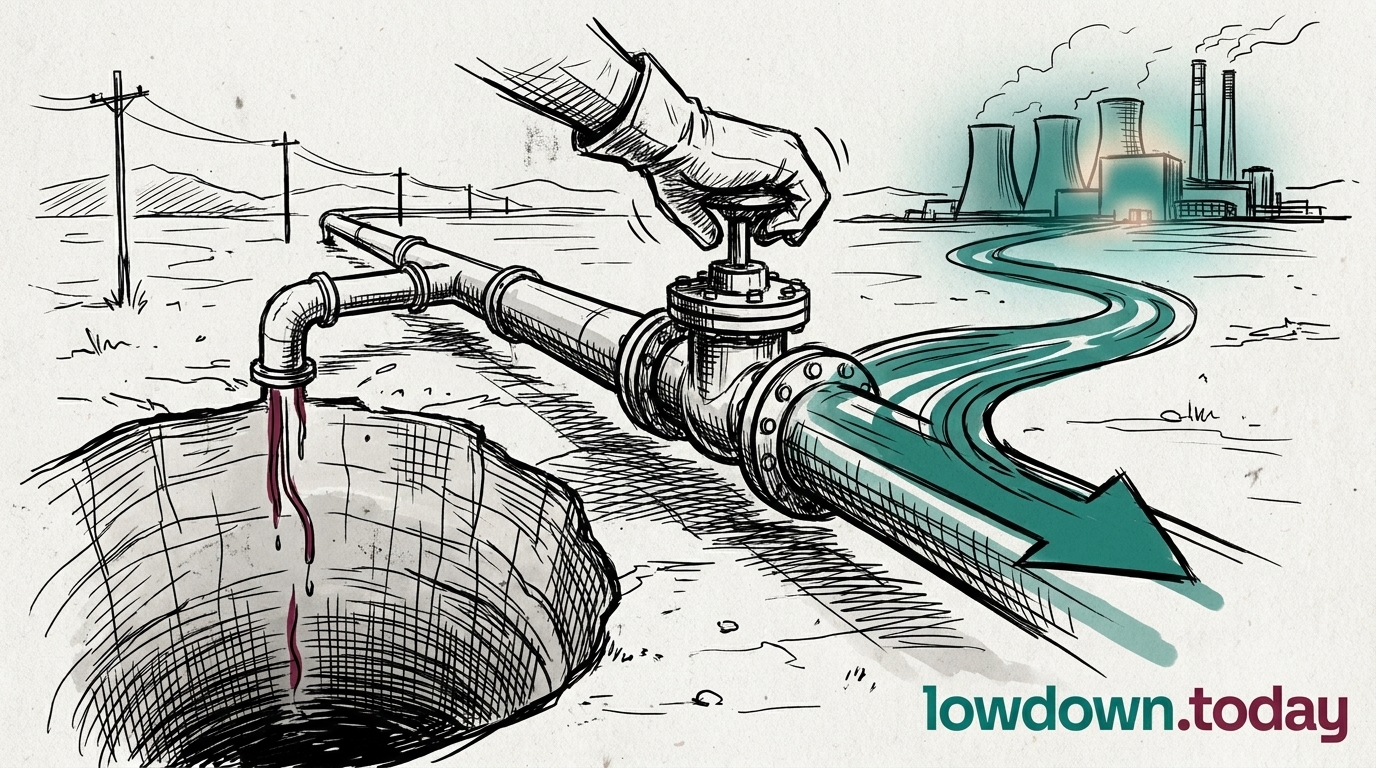
Add Perennial Autonomy's May award and AeroVironment's in July, and at least twelve firms hold US$5.15bn of ceilings. A ceiling is the most the government may spend under a contract, not money spent, and no published figure shows orders actually placed. DroneShield, the Australian counter-drone maker, said in its stock-exchange filing on 30 September that its award "does not guarantee any orders"⁠2.

Under a multiple-award contract of this kind, the holders usually compete again for each order. Seven matching US$500m ceilings therefore give JIATF-401 a pool of suppliers to choose from base by base, rather than a single prime for the whole country.


Deep Analysis

In plain English

The US military wants to protect its bases at home from drones, which can spy on or attack them. A Pentagon task force runs this work under the name Domestic Shield. It has now signed ten companies onto a framework contract. Each company has a maximum amount it could be paid, called a ceiling. That number is not a payment. When the military needs equipment at a base, the approved companies compete again for that specific order. Only then does real money change hands.

Deep Analysis
Root Causes

A multiple-award contract lets the buyer pre-approve many suppliers once and then order quickly without a new tender for each base. JIATF-401 has to protect many military sites inside the US against several kinds of drone, so it needs radars, jammers, optics and gun sights from different makers.

Setting identical ceilings for seven firms avoids picking a winner too early. It also means each ceiling says almost nothing about how much any single firm will sell.

What could happen next?
  • Meaning

    Summing Domestic Shield ceilings as spending would overstate the programme many times over.

  • Opportunity

    Foreign-origin firms, an Australian maker and two Israeli-origin technologies, hold places on a US homeland-defence contract.

First Reported In

Update #18 · Four EU states skip tenders on drone defence

US Army (via GlobalSecurity.org)· 1 Oct 2026
Read original →
Causes and effects
Different Perspectives
Cross-border power traders
The France-Germany day-ahead spread flipped from a EUR 17.20 German premium on 1 August to a EUR 4.15 French premium on 3 August, the same day French curtailment peaked. They cannot yet attribute the flip to curtailment alone, since a like-for-like overnight comparison shows French nuclear output rising while wind fell and demand returned on the weekday step.
EDF
EDF
River-cooling limits took 7.6 GW, 12 per cent of its fleet, offline on 3 August, the highest curtailment since the heatwave began, with an easing forecast to 4.3 GW on 4 August and 3 GW after. It manages the cut as a recurring seasonal constraint, expecting it to lift with river temperature, not repair.
Gasunie
Gasunie
TTF, the Dutch hub it operates, drifted to roughly EUR 55 to 58 per MWh across the window, staying inside its recent range through both the German spark reversal and the French curtailment. It reads a flat hub price as evidence that neither event this window carried enough weight to move the fuel leg on its own.
German gas-fired generators
Record German solar of 18,761 MW on 2 August pushed the clean spark spread to minus 18.48 EUR/MWh, a loss-making day, before it returned to plus 16.20 on 3 August. They now price dispatch against post-solar residual load rather than wind alone, since the sign flipped inside 48 hours on unchanged fuel and carbon costs.
European Commission (DG Energy)
Its implementing-measures register logged transposition notices from only Portugal and Slovakia against Wednesday's Article 94 deadline for Directive (EU) 2024/1788, with 25 states silent. It expects the register to fill only gradually, since filing routinely lags legislating and any infringement track against non-notifying states runs on a slower clock than the deadline itself.
Spain's LNG terminal operators
Spain's 9,145 GWh terminal inventory is the largest single stock in the EU LNG network, an option value that can reroute cargoes wherever the winter strip pays best rather than a cavern gas obligation tied to a fixed date. That flexibility matters more as Germany's cavern shortfall pushes more of the winter security question onto import infrastructure.

Written with AI from Lowdown's published reporting. Not individually reviewed by an editor. Editorial standards.
