Skip to content
You can now search across every topic, entity and event.What's new
European Energy Markets
15JUN

White House funds war without Congress

3 min read
12:23UTC

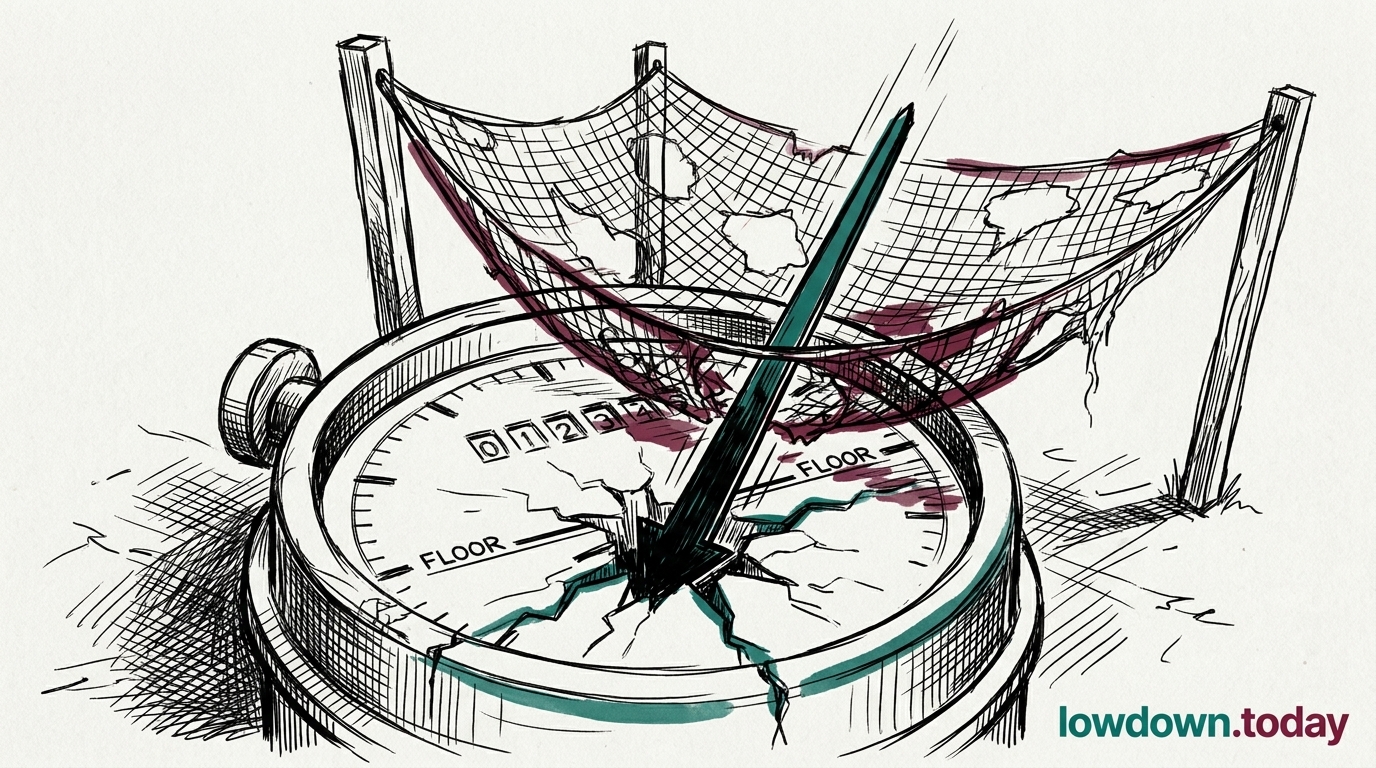
Congress rejected war authorisation twice in one week. The White House is spending $891 million a day anyway, drawing on Pentagon accounts never designed for a campaign of this scale.

EconomicAssessed
Key takeaway

Congress holds two war-checking levers — authorisation and appropriation — and by formally refusing both, it has placed enforcement entirely on courts that have historically declined to intervene in live combat spending decisions.

The White House has not requested supplemental funding from Congress for a campaign consuming $891 million per day. Congress — which rejected the KainePaul War Powers Resolution 47–53 in the Senate on Wednesday and defeated the Massie–Khanna resolution in the House on Thursday — has been asked for neither war authorisation nor war funding.

The statute at issue is the Antideficiency Act (31 U.S.C. §§ 1341–1342), which prohibits federal officers from obligating or expending funds beyond amounts Congress has appropriated. Violations carry criminal penalties: fines up to $5,000 and imprisonment of up to two years. No executive official has ever been criminally prosecuted under the Act for wartime spending. Enforcement has been administrative — reprimands and reassignments — making the statute a constraint that has never been tested in practice at anything approaching this expenditure rate.

The Administration's legal footing for the operation itself rests on Article II commander-in-chief authority and the War Powers Resolution's 60-day clock, which began when strikes started on 28 February and expires in late April. The Resolution requires the President either to withdraw forces or obtain congressional authorisation within that window. Every president since Nixon has questioned its constitutionality; no court has ruled definitively. The funding question is more immediately pressing: existing DoD accounts are finite, and at $891 million per day, available balances may be exhausted before the constitutional clock runs out.

The arrangement has no precedent at this scale. Congress twice declined to authorise the war. Congress twice declined to stop it. The White House has not asked for money. The executive is drawing down accounts filled by prior appropriations for purposes Congress did not envision. Each additional day of operations deepens the gap between what has been authorised and what is being spent — a gap that only a supplemental appropriations bill or a ceasefire can close.


Deep Analysis

In plain English

The US constitution gives Congress — not the president — the power to declare war and to control government spending. A law called the Antideficiency Act specifically forbids spending money that Congress hasn't approved. The administration is spending billions on a war that Congress both refused to authorise and has not funded. The reason this hasn't stopped the operation is that courts have historically been unwilling to interfere in active military campaigns — judges worry about the consequences of stopping a war mid-execution. The administration is betting that by the time any legal challenge reaches a court ruling, the operation will be complete or Congress will have been pressured into retroactively approving the spending.

Deep Analysis
Synthesis

The administration's strategy appears to treat the Antideficiency Act violation as politically safer than requesting a supplemental appropriation. A supplemental request would force a congressional vote that could impose operational conditions, timelines, or geographic restrictions; spending violations produce only slow-moving legal challenges. The legal risk is deferred and may never materialise; the political risk of a messy congressional debate is avoided entirely. This calculus is rational given precedent but normalises the complete subordination of war-funding to executive discretion.

Root Causes

The Antideficiency Act's enforcement mechanism relies on congressional political will to cut off funding — a step no Congress has taken against an ongoing US military operation because of the 'defunding the troops' political dynamic. Once combat is joined, the appropriations power becomes functionally unenforceable through normal legislative channels, leaving only judicial challenge as a check — and courts have consistently declined to adjudicate war powers disputes on justiciability grounds.

What could happen next?
  • Risk

    If a federal court issues an injunction against unappropriated military spending — unlikely but not impossible given the scale — mid-campaign funding disruption could force operational pauses at a moment of tactical vulnerability.

    Short term · Suggested
  • Consequence

    Congress faces a structural dilemma: passing a retroactive supplemental validates both the spending and the war it explicitly rejected, while refusing it invites a constitutional crisis over whether military operations must halt.

    Short term · Assessed
  • Precedent

    Sustaining a major air campaign on unappropriated funds at this expenditure scale establishes that presidential war-making is financially self-sustaining without legislative consent, structurally weakening congressional war powers for all future administrations regardless of party.

    Long term · Assessed
  • Risk

    Individual DoD officials authorising unappropriated expenditures face theoretical Antideficiency Act personal liability; while enforcement is historically nil, the legal exposure may create a chilling effect on financial management decisions in future administrations.

    Medium term · Suggested
First Reported In

Update #24 · Trump demands unconditional surrender

CNN· 6 Mar 2026
Read original
Causes and effects
This Event
White House funds war without Congress
The administration is spending $891 million per day under legal authorities untested at this scale, without supplemental funding from a Congress that twice rejected war authorisation. Existing DoD accounts are finite; at current burn rates, the gap between spending and authorisation grows by nearly $900 million every day.
Different Perspectives
Spain's LNG terminal operators
Spain's 9,145 GWh terminal inventory is the largest single stock in the EU LNG network, an option value that can reroute cargoes wherever the winter strip pays best rather than a cavern gas obligation tied to a fixed date. That flexibility matters more as Germany's cavern shortfall pushes more of the winter security question onto import infrastructure.
European Commission
European Commission
Brussels holds the bloc to 90% on a flexible window while Germany, holding roughly a quarter of EU storage capacity, tracks toward missing its own lower 80% figure by 21 points. A national shortfall this size in the anchor market matters more to bloc security than the flexible timetable alone can absorb.
French power exporters and CRE
French day-ahead rose in step with Germany but by less, reopening a EUR 7-17 premium that makes northward export flows commercially attractive again after the EUR 43.09 discount evaporated in days. CRE separately authorised RTE and Enedis to buy flexibility locally, betting the coming winter's binding constraint is grid congestion rather than a shortage of firm capacity.
TTF trading desk
TTF trading desk
A visible national shortfall like Germany's 21-point gap is a directional signal, not noise, for a desk holding the summer-winter spread. TTF's flat EUR 58-60 range through this week's German price swings says the market has not yet chosen to reprice refill risk into the front of the curve.
German cavern and CCGT operators
German caverns kept buying prompt gas at TTF near EUR 58-60 through the inversion; the wind collapse to 2.4 GW then flipped the spark spread to plus EUR 29 and put turbines back in the same queue. Every day turbines win that bid, injection at a third of the 877 GWh/day pace needed falls further behind.
Slovakia
Slovakia
Slovakia says it dropped its hold-out on the 21st sanctions package only after Ursula von der Leyen personally signed written gas-price and supply guarantees. The Council of the European Union's own 17,238-character release on the package names neither Slovakia nor any guarantee, leaving Bratislava's account unconfirmed by the institutional record.



