Skip to content
You can now search across every topic, entity and event.What's new
European Energy Markets
15JUN

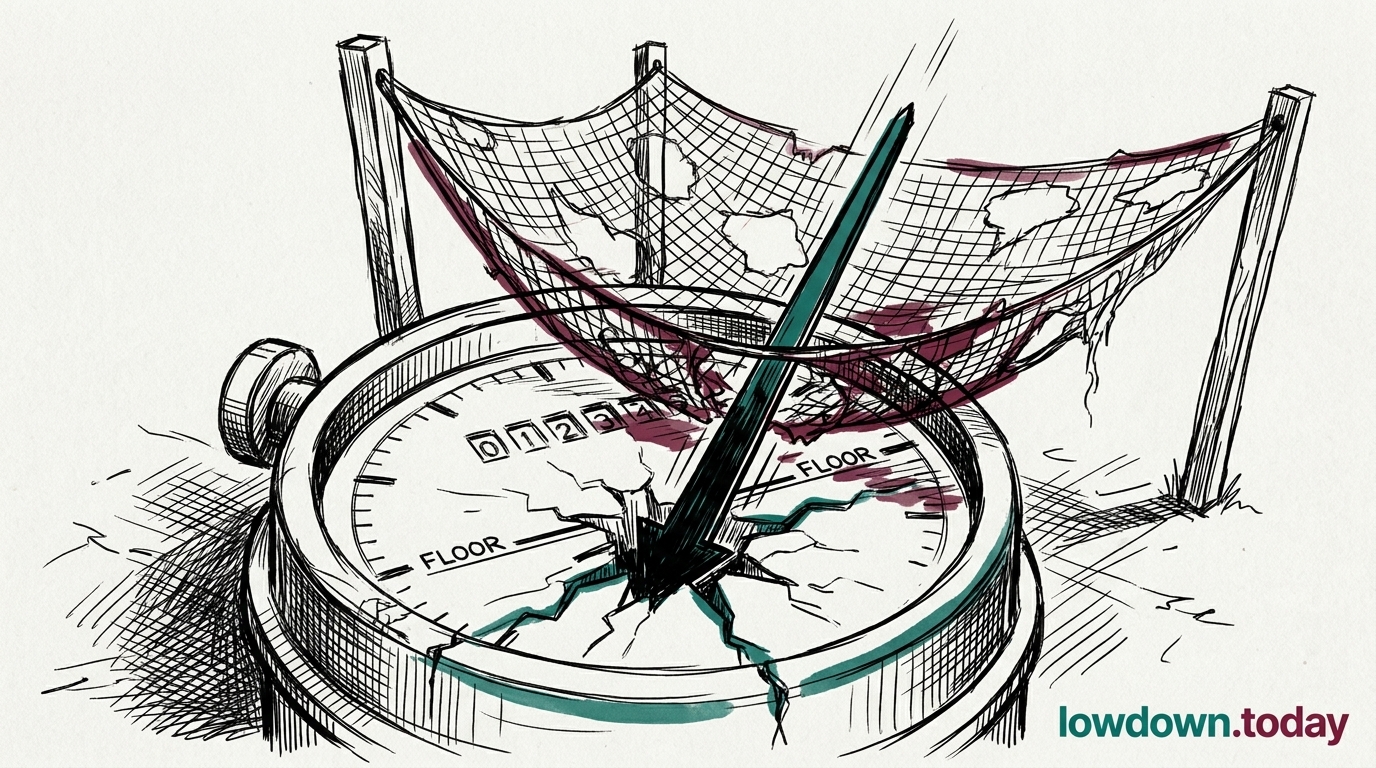
Storage gap widens to 18.7 pp, the series widest

3 min read
12:23UTC

EU aggregate gas storage reached 36.3% on Sunday 17 May, leaving the widest deficit to the five-year norm of the briefing series as injection pace slowed to 0.18 percentage points per day.

EconomicDeveloping
Key takeaway

EU storage hit its widest deficit of the series at 18.7 percentage points below the five-year norm.

EU aggregate gas storage reached 36.3% on Sunday 17 May per GIE AGSI+ data, up from 35.4% on 12 May. The implied injection pace of 0.18 percentage points per day across that window is the third consecutive deceleration: 0.257 pp/day floor at season open, 0.248 pp/day to 7 May , 0.18 pp/day to 17 May. The five-year seasonal norm sits at 55.0%, leaving an 18.7 percentage point deficit, the widest of the briefing series and the milestone the deceleration delivered.

Bundesnetzagentur, the German energy regulator, reaffirmed on Monday 18 May that gas supply remains 'stable' with no new measures. Germany has now held Frühwarnstufe (the first of three emergency escalation stages) for more than ten consecutive months since 1 July 2025 . Bruegel's three-scenario refill model , costed at EUR 45/MWh TTF and 0.257 pp/day injection, is now materially underpriced on both dimensions. The Commission cut its mandatory target from 90% to 80% in April; a second formal cut would require Council unanimity that is not available, leaving silent acceptance of a sub-80% landing as the operative posture.


Deep Analysis

In plain English

Europe stores gas underground during summer to use in winter, like filling a tank before a long trip. The tank is filling more slowly than needed each week, and the shortfall against the five-year average is now the largest on record for this stage of the season. At the current rate, Europe would arrive at winter with far less stored gas than it needs.

Deep Analysis
Root Causes

Germany's abolition of the gas storage levy on 1 January 2026 removed the principal mechanism that had incentivised early-season injection across the EU's largest storage market, with no replacement instrument announced in this window.

Injection economics at TTF above EUR 47/MWh are commercially unattractive without forward-hedged offtake certainty, and the forward curve does not offer a backwardated structure that would make summer fill-and-sell profitable for independent storage operators.

The 25 April Russian LNG ban removed the marginal Russian short-term cargo volumes that had periodically depressed spot prices enough to create injection-economic windows in early 2026.

What could happen next?
  • Meaning

    A second formal storage target cut from 80% would require unanimous Council support that is not available, meaning the EU is on course for a silent sub-80% landing rather than a policy-managed revision.

    Short term · Assessed
  • Meaning

    Industrial gas users in Germany and the Netherlands who defer winter-gas procurement on the assumption that storage pace accelerates in June face the sharpest exposure if the pace deceleration persists.

    Short term · Assessed
  • Meaning

    The widening of the five-year storage deficit to 18.7 pp gives the Commission additional political leverage to extend REMIT market surveillance to storage injection reporting, a step ACER has flagged as under consideration.

    Short term · Assessed
First Reported In

Update #10 · TTF breaks EUR 50; US LNG hits 58% of imports

EnergyRiskIQ / GIE AGSI+· 18 May 2026
Read original
Causes and effects
This Event
Storage gap widens to 18.7 pp, the series widest
The 18.7 percentage point gap to the five-year norm is the season's widest, and Bruegel's EUR 26bn refill model is now an undercount on both price and pace.
Different Perspectives
Equinor
Equinor
Equinor stacked a 13-16 June planned maintenance window on Hammerfest LNG directly atop the unresolved compressor fault running since 22 April, creating two simultaneous live stoppages at 4.3 mtpa capacity for the first time. The 10 July return target carries overrun risk: the same compressor class slipped 24 days in the 2025 maintenance cycle.
EDF and French nuclear-anchored power buyers
EDF's fleet repriced French July contracts roughly 10% in two days on cooling-water curtailment risk, flipping the FR-DE spread to France EUR 1.6 above Germany after a EUR 96.20 record in the other direction a week earlier. Industrial buyers long France against short Germany face EUR 97.7/MWh of spread swing in seven calendar days.
Hungary and Slovakia supply-security ministries
Hungary's Tisza government has reframed Russian gas dependency as a systemic risk, removing Budapest as a co-plaintiff in the CJEU challenge; MVM's 3.5 bcm long-term TurkStream contract remains exempt to September 2027, so Budapest's near-term supply is intact. Slovakia under Fico presses its QMV challenge alone and faces a 3-4 bcm/year short-term supply gap with no contracted LNG alternative.
LNG spot traders and cargo routers
At JKM-TTF of USD 5.26/MMBtu, every uncommitted Atlantic cargo loading in late June routes east; the arb sits roughly twice the OIES-assessed diversion threshold of USD 2.50-3.00/MMBtu after freight. European storage terminals are the losing bid in the cargo auction until TTF recovers or JKM eases.
European Commission / ACER
The Commission structured Regulation 2026/261 as a QMV trade measure to resist Article 194 unanimity challenges; the six-origin prior-authorisation waiver acknowledges that LNG capacity cannot substitute pipeline gas within the legislative window. ACER's cross-border enforcement powers activate in H2 2026, but jurisdiction over the Kipi entry point is legally contested.
German CCGT capacity planners
Capacity planners at Uniper and RWE face the StromVKG Wirtschaftsausschuss scrutiny as the decisive near-term fork: if the Greens' hydrogen-conversion amendment passes, the September 2026 auction becomes unbiddable on technology risk grounds and the capacity-payment fix delays into winter. Plants that have run at -EUR 44 spark spread for weeks cannot commercially sustain extended shut-in.



