Skip to content
You can now search across every topic, entity and event.What's new
European Energy Markets
15JUN

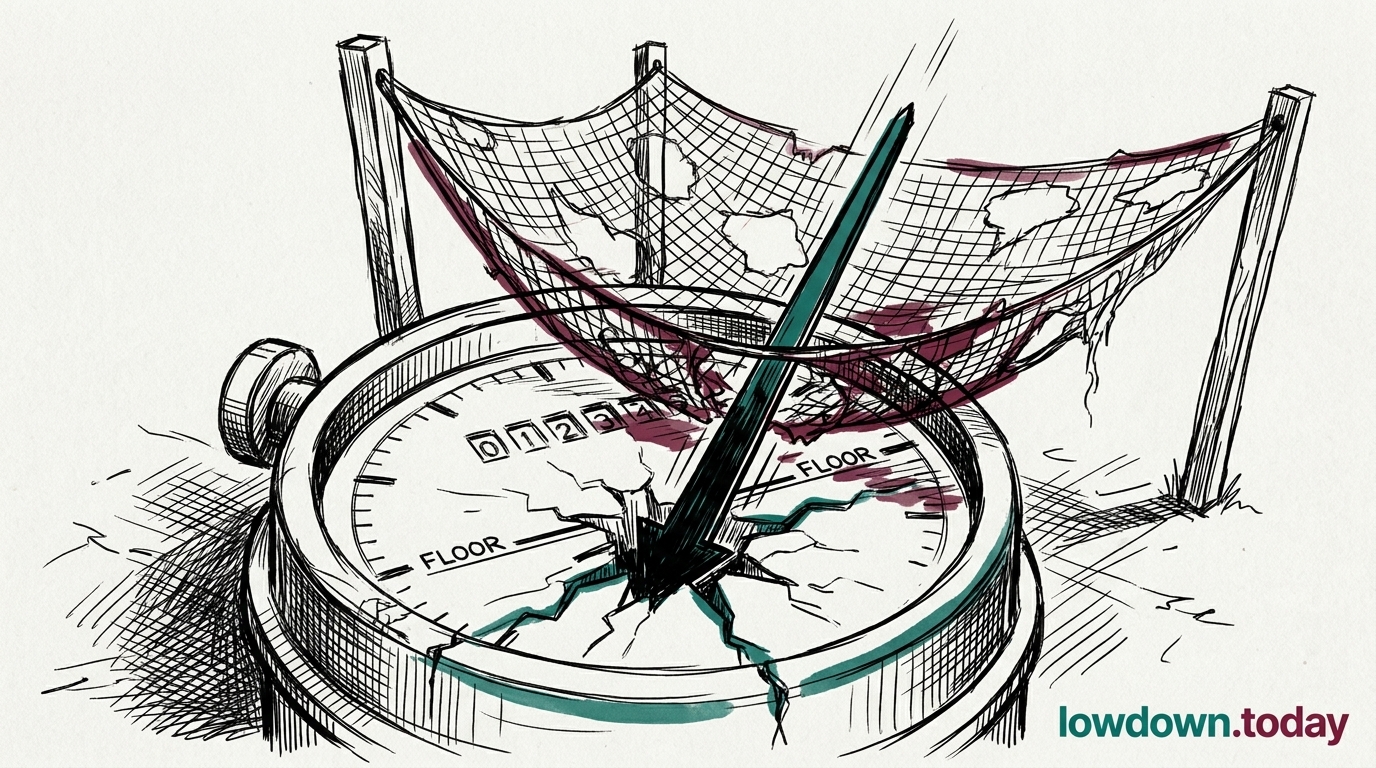
Brent falls 8% on phantom peace talks

1 min read
12:23UTC

Brent crude dropped to $97 on Trump's negotiation claims, despite Iran's categorical rejection.

EconomicAssessed
Key takeaway

Oil prices reflect Trump's rhetoric, not Iran's actions; the paper-physical disconnect is at record levels.

Brent crude (the international oil benchmark) fell to $96.68 per barrel on Wednesday, down from $104 at the start of the week but still 43% above the pre-war baseline of $67.41. The slide began Sunday when Donald Trump announced his 15-point ceasefire plan and continued despite Iran's categorical rejection.

Sunday's 10.9% crash to $99.94 reversed to $102-104 within 48 hours . Physical crude tells a different story from futures: the record $14.20-per-barrel spot premium means refiners pay an effective $111 or more for delivered barrels, even as paper barrels trade at $97. The Strait of Hormuz remains closed; the physical price is more likely to pull paper up than reverse.

For British drivers, the war has added roughly 15p per litre at the pump since February. A return to the $126 peak would push that toward 30p. Goldman Sachs head of oil research Daan Struyven raised the probability of US recession to 25% at oil above $120 .


Deep Analysis

In plain English

Oil prices dropped because traders believe Trump is close to a deal with Iran. But Iran publicly rejected the deal. When that gap closes, prices will jump back up and petrol will get more expensive again.

What could happen next?
  • Risk

    Rapid upward correction likely when rejection registers

  • Consequence

    Record backwardation strains refiner working capital

First Reported In

Update #48 · Iran rejects ceasefire; Kharg fortified

CNBC· 26 Mar 2026
Read original
Causes and effects
This Event
Brent falls 8% on phantom peace talks
Markets are pricing rhetoric over reality; when Iran's rejection registers, a rapid correction could strain derivatives markets at record backwardation.
Different Perspectives
Spain's LNG terminal operators
Spain's 9,145 GWh terminal inventory is the largest single stock in the EU LNG network, an option value that can reroute cargoes wherever the winter strip pays best rather than a cavern gas obligation tied to a fixed date. That flexibility matters more as Germany's cavern shortfall pushes more of the winter security question onto import infrastructure.
European Commission
European Commission
Brussels holds the bloc to 90% on a flexible window while Germany, holding roughly a quarter of EU storage capacity, tracks toward missing its own lower 80% figure by 21 points. A national shortfall this size in the anchor market matters more to bloc security than the flexible timetable alone can absorb.
French power exporters and CRE
French day-ahead rose in step with Germany but by less, reopening a EUR 7-17 premium that makes northward export flows commercially attractive again after the EUR 43.09 discount evaporated in days. CRE separately authorised RTE and Enedis to buy flexibility locally, betting the coming winter's binding constraint is grid congestion rather than a shortage of firm capacity.
TTF trading desk
TTF trading desk
A visible national shortfall like Germany's 21-point gap is a directional signal, not noise, for a desk holding the summer-winter spread. TTF's flat EUR 58-60 range through this week's German price swings says the market has not yet chosen to reprice refill risk into the front of the curve.
German cavern and CCGT operators
German caverns kept buying prompt gas at TTF near EUR 58-60 through the inversion; the wind collapse to 2.4 GW then flipped the spark spread to plus EUR 29 and put turbines back in the same queue. Every day turbines win that bid, injection at a third of the 877 GWh/day pace needed falls further behind.
Slovakia
Slovakia
Slovakia says it dropped its hold-out on the 21st sanctions package only after Ursula von der Leyen personally signed written gas-price and supply guarantees. The Council of the European Union's own 17,238-character release on the package names neither Slovakia nor any guarantee, leaving Bratislava's account unconfirmed by the institutional record.



