Skip to content
You can now search across every topic, entity and event.What's new
European Energy Markets
15JUN

France stays the cheaper power leg

3 min read
12:23UTC

France cleared EUR 123.50/MWh on 30 June against a far dearer Germany, an FR-DE spread of EUR 71.50 that held even as EDF curtailed 12% of its nuclear fleet.

EconomicDeveloping
Key takeaway

French nuclear curtailment cut volume not price, holding the FR-DE spread at EUR 71.50 with France cheaper.

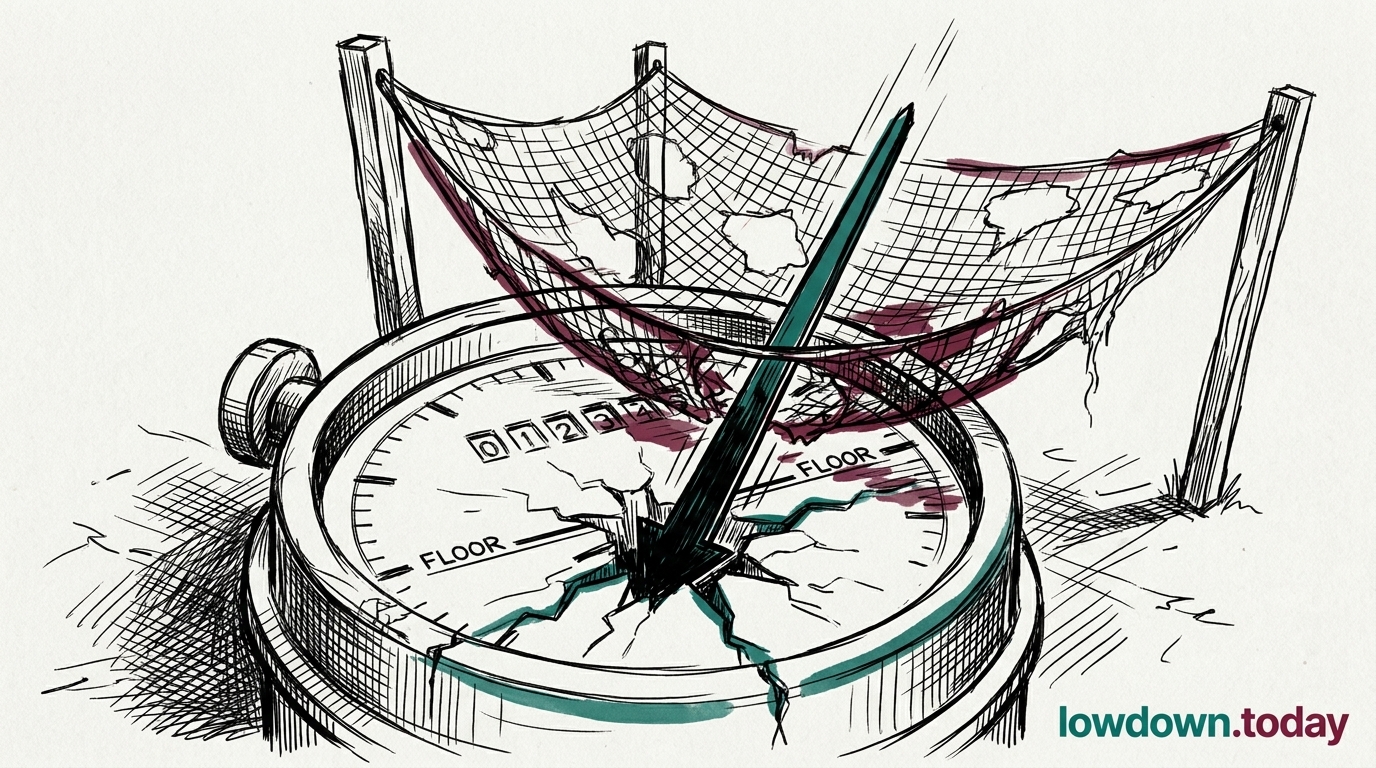
France cleared EUR 123.50/MWh on 30 June while Germany's all-thermal stack cleared far above it, leaving a France-Germany day-ahead spread of EUR 71.50 with Germany the dearer leg 1. Going into the heat, desks had watched whether river-temperature curtailment of French nuclear would flip that spread and make France the expensive side. It held the other way.

France runs Europe's largest nuclear fleet, which usually keeps its wholesale power below Germany's gas-and-coal pricing. Heat threatened that edge: warm rivers limit the cooling water reactors can return, forcing operators to throttle. Even so, EUR 71.50 sits below the series records of EUR 93.68 on 3 June and EUR 96.20 on 8 June , so the gap widened without breaking new ground.

France stayed cheaper even as EDF (Électricité de France, the state nuclear utility) deepened curtailments to 12% of the fleet on river-cooling limits, taking Bugey 3 (910 MW) offline and throttling Golfech and Nogent 2 . The floor held because curtailment removes volume, not the low-cost baseload that sets the French price. The trend that reset France as the cheaper leg on 22 June carried through ; the spread inverts only when curtailment strips out enough baseload to push gas to the margin in France too, which 12% of the fleet did not reach.


Deep Analysis

In plain English

France generates most of its electricity from nuclear power stations. These stations cool their reactors by drawing water from rivers like the Garonne, Seine, and Loire. French environmental law prevents the stations from warming those rivers above 28 degrees Celsius (the river discharge limit), so when a river gets that hot in summer, the station must reduce or stop output to prevent overheating the water. On 30 June, EDF, the French state energy company, cut output at three reactors that had reached this river-temperature limit: Bugey 3 on the Rhone (offline at 910 megawatts), Golfech on the Garonne, and Nogent on the Seine (both throttled). That removed 12% of France's total nuclear output. But because the remaining 88% of France's nuclear fleet was still operating cheaply, France's electricity price of EUR 123.50 per megawatt-hour stayed well below Germany's EUR 195, which was set by expensive gas power plants filling the gap left by almost-zero wind. The EUR 71.50 price difference means French industrial buyers paid about a third of what German buyers paid that day.

First Reported In

Update #22 · Germany refills as the autumn cliff nears

Montel News· 30 Jun 2026
Read original
Different Perspectives
Spain's LNG terminal operators
Spain's 9,145 GWh terminal inventory is the largest single stock in the EU LNG network, an option value that can reroute cargoes wherever the winter strip pays best rather than a cavern gas obligation tied to a fixed date. That flexibility matters more as Germany's cavern shortfall pushes more of the winter security question onto import infrastructure.
European Commission
European Commission
Brussels holds the bloc to 90% on a flexible window while Germany, holding roughly a quarter of EU storage capacity, tracks toward missing its own lower 80% figure by 21 points. A national shortfall this size in the anchor market matters more to bloc security than the flexible timetable alone can absorb.
French power exporters and CRE
French day-ahead rose in step with Germany but by less, reopening a EUR 7-17 premium that makes northward export flows commercially attractive again after the EUR 43.09 discount evaporated in days. CRE separately authorised RTE and Enedis to buy flexibility locally, betting the coming winter's binding constraint is grid congestion rather than a shortage of firm capacity.
TTF trading desk
TTF trading desk
A visible national shortfall like Germany's 21-point gap is a directional signal, not noise, for a desk holding the summer-winter spread. TTF's flat EUR 58-60 range through this week's German price swings says the market has not yet chosen to reprice refill risk into the front of the curve.
German cavern and CCGT operators
German caverns kept buying prompt gas at TTF near EUR 58-60 through the inversion; the wind collapse to 2.4 GW then flipped the spark spread to plus EUR 29 and put turbines back in the same queue. Every day turbines win that bid, injection at a third of the 877 GWh/day pace needed falls further behind.
Slovakia
Slovakia
Slovakia says it dropped its hold-out on the 21st sanctions package only after Ursula von der Leyen personally signed written gas-price and supply guarantees. The Council of the European Union's own 17,238-character release on the package names neither Slovakia nor any guarantee, leaving Bratislava's account unconfirmed by the institutional record.



