Skip to content
You can now search across every topic, entity and event.What's new
European Energy Markets
15JUN

Bergermeer carries Dutch injection load alone

3 min read
12:23UTC

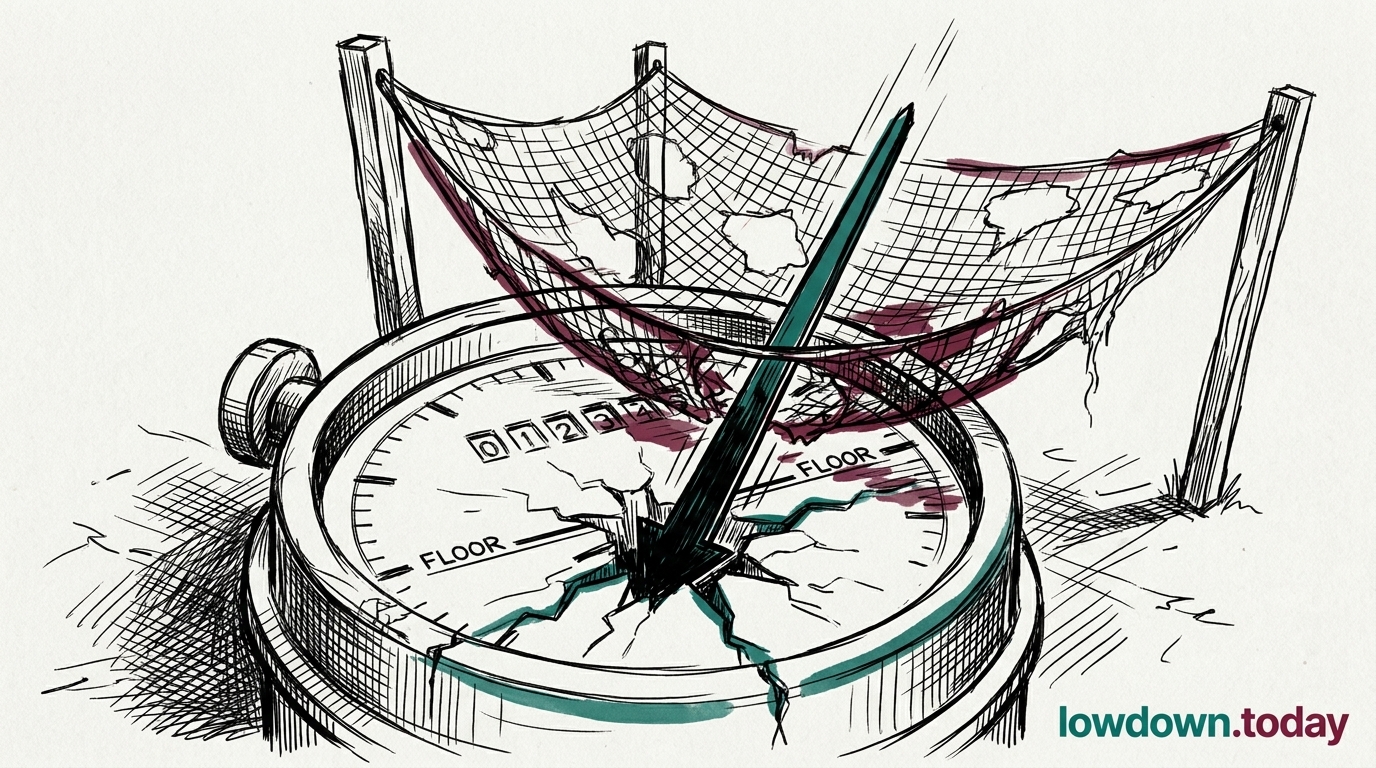
GasTerra depleted Norg (59 TWh) and Grijpskerk (24 TWh) ahead of the NAM handover on 1 April, leaving both at zero carry-in. Bergermeer now carries the full weight of Dutch injection.

EconomicDeveloping
Key takeaway

Norg and Grijpskerk start the season at zero; Bergermeer alone carries the EUR 233m EBN state mandate.

GasTerra depleted Norg (59 TWh of working volume) and Grijpskerk (24 TWh) ahead of the NAM (Nederlandse Aardolie Maatschappij) handover on 1 April, leaving both facilities at structural zero carry-in for the season. Combined with the 8.95% Netherlands fill recorded on 25 April , this leaves Bergermeer carrying the full weight of Dutch injection against the EBN (Energie Beheer Nederland) EUR 233 million state mandate 1.

The GTS (Gasunie Transport Services) 2026/27 security-of-supply target sets a 115 TWh combined fill target across the three facilities. With Norg and Grijpskerk starting empty and Bergermeer the only injection vehicle with active state budget behind it, the Dutch contribution to the EU aggregate pace skews binary on whether EBN can ramp through May and June. Facility-level injection rates are not in the AGSI+ public feed, so the next Dutch-specific data point arrives only indirectly via the bloc-wide print.

The operating consequence is that one facility now carries a system risk that was previously distributed across three. Bergermeer is a depleted reservoir on the conventional Dutch model, and ramping a single asset against a 115 TWh target compresses the timeline for any technical issue across its compression train or wells. The GasTerra-to-NAM handover dynamic that produced the zero carry-in was a contractual tidy-up rather than a market-driven depletion, which is what makes the resulting concentration of injection risk a structural feature of the season rather than a passing data print.


Deep Analysis

In plain English

The Netherlands has three underground gas storage sites: Norg, Grijpskerk and Bergermeer. Think of them as three separate tanks that collectively ensure Dutch homes and businesses have enough gas for winter. Before a planned handover of two of those facilities to a different company on 1 April, the previous operator drew them down to completely empty. So now the Netherlands is heading into summer with only one tank working, Bergermeer, to fill all three tanks' worth of capacity by November. The Dutch government has set aside 233 million euros to fund this injection, but everything now depends on one facility performing without any technical problems all summer.

Deep Analysis
Root Causes

GasTerra's depletion of Norg and Grijpskerk to zero before the NAM handover reflects a contractual rather than commercial logic. GasTerra was unwinding its own balance-sheet exposure to storage assets as part of the broader Dutch government gas-market restructuring following the Groningen phase-out. The timing and depth of the depletion were dictated by the handover agreement terms, not by injection-season planning.

The result is a structural concentration that the storage architecture was not designed to sustain. The Dutch system was built with three facilities specifically to provide redundancy: Norg as the high-deliverability peaker, Grijpskerk as the seasonal buffer, Bergermeer as the commercial merchant facility with state-backstop. Running Bergermeer alone against a 115 TWh target removes all three redundancy layers simultaneously.

What could happen next?
  • Risk

    A compression or well failure at Bergermeer during peak injection removes all Dutch contribution to EU aggregate pace, there is no Norg or Grijpskerk buffer, and directly widens the gap from the 0.257 pp/day required floor.

    Medium term · 0.68
  • Consequence

    EBN's price-insensitive EUR 233m state mandate at Bergermeer creates a structural bid in the TTF spot market through September; traders short summer TTF face a state buyer who will not yield on price.

    Short term · 0.74
  • Risk

    GTS's 115 TWh combined fill target across three facilities now falls entirely on one, Bergermeer's 4.9 bcm working volume, with no published modelling of what happens if the post-2024 compression upgrade encounters sustained high-injection failure.

    Medium term · 0.6
First Reported In

Update #7 · Storage pace 0.21 vs 0.257; floor not yet met

Gasunie Transport Services· 4 May 2026
Read original
Different Perspectives
Equinor
Equinor
Equinor stacked a 13-16 June planned maintenance window on Hammerfest LNG directly atop the unresolved compressor fault running since 22 April, creating two simultaneous live stoppages at 4.3 mtpa capacity for the first time. The 10 July return target carries overrun risk: the same compressor class slipped 24 days in the 2025 maintenance cycle.
EDF and French nuclear-anchored power buyers
EDF's fleet repriced French July contracts roughly 10% in two days on cooling-water curtailment risk, flipping the FR-DE spread to France EUR 1.6 above Germany after a EUR 96.20 record in the other direction a week earlier. Industrial buyers long France against short Germany face EUR 97.7/MWh of spread swing in seven calendar days.
Hungary and Slovakia supply-security ministries
Hungary's Tisza government has reframed Russian gas dependency as a systemic risk, removing Budapest as a co-plaintiff in the CJEU challenge; MVM's 3.5 bcm long-term TurkStream contract remains exempt to September 2027, so Budapest's near-term supply is intact. Slovakia under Fico presses its QMV challenge alone and faces a 3-4 bcm/year short-term supply gap with no contracted LNG alternative.
LNG spot traders and cargo routers
At JKM-TTF of USD 5.26/MMBtu, every uncommitted Atlantic cargo loading in late June routes east; the arb sits roughly twice the OIES-assessed diversion threshold of USD 2.50-3.00/MMBtu after freight. European storage terminals are the losing bid in the cargo auction until TTF recovers or JKM eases.
European Commission / ACER
The Commission structured Regulation 2026/261 as a QMV trade measure to resist Article 194 unanimity challenges; the six-origin prior-authorisation waiver acknowledges that LNG capacity cannot substitute pipeline gas within the legislative window. ACER's cross-border enforcement powers activate in H2 2026, but jurisdiction over the Kipi entry point is legally contested.
German CCGT capacity planners
Capacity planners at Uniper and RWE face the StromVKG Wirtschaftsausschuss scrutiny as the decisive near-term fork: if the Greens' hydrogen-conversion amendment passes, the September 2026 auction becomes unbiddable on technology risk grounds and the capacity-payment fix delays into winter. Plants that have run at -EUR 44 spark spread for weeks cannot commercially sustain extended shut-in.



