Skip to content
Briefings are running a touch slower this week while we rebuild the foundations.See roadmap
European Energy Markets
4JUN

May heatwave squeezes injection to 0.3 pp/day

3 min read
10:45UTC

A blocking high pushed record May temperatures across Europe from 24-28 May, with 35.1C at Kew Gardens and 28.8C in Ireland, squeezing storage injection to just 0.3 percentage points per day as cooling demand competed with gas-fired generation.

EconomicDeveloping
Key takeaway

The heatwave tightened the margin without breaking it; a June repeat at higher baselines would tip the trajectory into deficit.

Record May temperatures swept Europe from 24-28 May. The UK recorded 35.1C at Kew Gardens on Monday 26 May (a May record), Paris sat 14C above seasonal normal, and Ireland logged 28.8C at Clonmel and Killarney (a national May record). The blocking high held for five days, compressing the window for overnight cooling and sustaining daytime electricity demand across the continent.

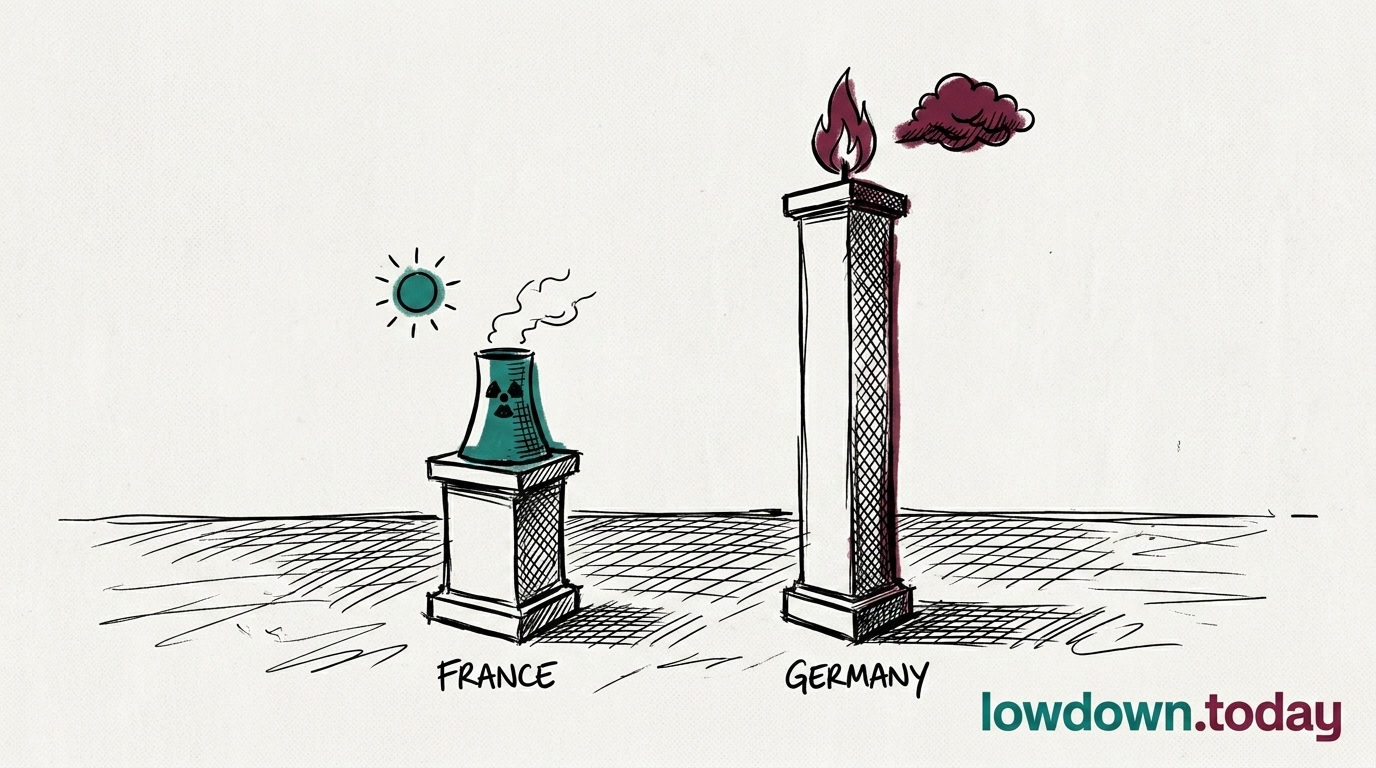
The energy market consequence is a competition for gas-fired generation between cooling demand and storage injection. Storage injection on 28 May showed only a 0.3 percentage-point daily gain. French nuclear export capacity, which has been suppressing the FR-DE spread all year on EDF's 350-370 TWh full-year guidance , faced a domestic cooling load precisely when German importers needed cross-border flows most. The spread doubled to EUR 46.58 on 21 May , and the heatwave pushed domestic French demand further into nuclear capacity that would otherwise have crossed the interconnector.

The 0.3 pp daily gain did not break the trajectory. The 45 GWh/day margin survived the May event. The forward risk is a June repeat: at higher baseline temperatures, with Norwegian supply still constrained by the Troll outage residual and Hammerfest offline since 22 April, the buffer disappears into cooling demand before the injection season's strongest months arrive.


Deep Analysis

In plain English

When it gets very hot across Europe, millions of people turn on air conditioning for the first time. That air conditioning is mainly powered by electricity, and a lot of European electricity comes from gas-fired power stations. The problem is that gas-fired power stations and gas storage injection both need gas , and right now there is not enough to do both at once without falling behind on the winter filling target. The record May temperatures in the UK and Ireland were part of a Europe-wide heat event that forced Germany to run expensive gas peaking plants to keep the lights on, rather than injecting that gas into underground storage for winter.

Deep Analysis
Root Causes

The competition between cooling demand and storage injection is structural in gas-dependent grids: gas-fired peakers are the marginal technology that responds to both functions simultaneously. When temperatures rise above 28°C, residential and commercial air-conditioning load adds approximately 0.8-1.2 GW per degree in France and Germany combined, drawing on the same gas-fired generation fleet that would otherwise run below its marginal cost to compress gas into storage.

The FR-DE day-ahead spread doubling to EUR 46.58/MWh on 21 May shows that French nuclear surplus, which normally suppresses Continental clearing, was fully absorbed by domestic cooling load, leaving Germany to clear at EUR 106.35/MWh on gas peakers.

What could happen next?
  • Risk

    A June heat event at higher baseline temperatures than May would push daily storage gains below 0.2 pp for multiple consecutive days, compounding the Troll A supply deficit into a trajectory break that would require emergency regulatory intervention.

  • Consequence

    Flamanville-3's September overhaul removes 1.6 GW from the French nuclear fleet precisely when heating-season demand begins, reversing the FR-DE spread dynamic and turning France from a net exporter to a net importer during autumn market tightness.

First Reported In

Update #13 · Storage on track by 45 GWh; one outage away

Trading Economics / ICE· 29 May 2026
Read original
Different Perspectives
TTF traders / Amsterdam hub desks
TTF broke its 38-session EUR 46-47 band on 2 June to EUR 48.9 on stalled Iran diplomacy and an unconfirmed Troll A restart; Dutch EBN mandates carry storage trajectory while commercial injection books nothing. The 17 June pipeline expiry is the next binary level: Central European hub premium above EUR 2/MWh widens sharply on any physical step-down.
Red Electrica / Spanish grid operators
Spain logged 397 negative-price hours in Q1 2026, eight times the 48 hours of Q1 2025, documenting midday solar surplus now embedding structurally into Continental pricing. Spain is four to six quarters ahead of France and Germany on the solar-penetration curve, making it the clearest forward indicator of where Continental midday clearing is heading.
Equinor
Equinor
Equinor issued no Troll A restart notice through 4 June despite extending the combined outage to 31 May, keeping up to 51 mcm/day of Norwegian supply offline alongside Hammerfest LNG dark since 22 April. The company's silence follows its 2025 Hammerfest pattern, which ran 24 days past target, and each day without a notice sustains the TTF supply premium.
European Commission / GMTF
SWD(2026)147 found EU gas spot and derivatives markets functioning well on 2 June, recommending MiFID-REMIT legislative alignment rather than emergency intervention. The GMTF verdict addressed derivatives-market integrity, not the physical injection mechanism FNB Gas declared broken five days earlier: the Commission's immediate next step is a legislative proposal, not an emergency storage order.
FNB Gas / Bundesnetzagentur
FNB Gas declared the storage-refill mechanism broken on 27 May after zero bookings in January 2026 auctions, and German day-ahead cleared EUR 102.64 on 3 June on a CCGT stack set by TTF near EUR 49 plus EUA near EUR 78. Winter storage fill now depends on state mandates with no commercial self-correction.
EDF / French government
EDF held full-year nuclear guidance at 350-370 TWh after April output of 29.3 TWh, anchoring the surplus that collapsed French day-ahead to EUR 8.96 on 3 June and passed that price to VNU industrials. Flamanville-3's September overhaul removes 1.6 GW at heating-season onset, reversing the nuclear surplus that made VNU pricing competitive.
