Skip to content
Briefings are running a touch slower this week while we rebuild the foundations.See roadmap
Drones: Industry & Defence
13APR

EHEL laser contest slips to Q4 FY26

2 min read
13:26UTC

The Army's EHEL competition winner selection has slipped from Q2 to Q4 FY26, delaying directed-energy counter-drone fielding as kinetic intercept costs mount.

TechnologyDeveloping
Key takeaway

EHEL delay extends dependence on high-cost kinetic interceptors as Gulf attrition accelerates.

The US Army's EHEL (High Energy Laser) competition winner is now expected no earlier than Q4 FY26, a two-quarter delay from the Q2 FY26 timeline reported in Update #4. AeroVironment is preparing an entrant, adding competitive pressure to what had been a narrow field.

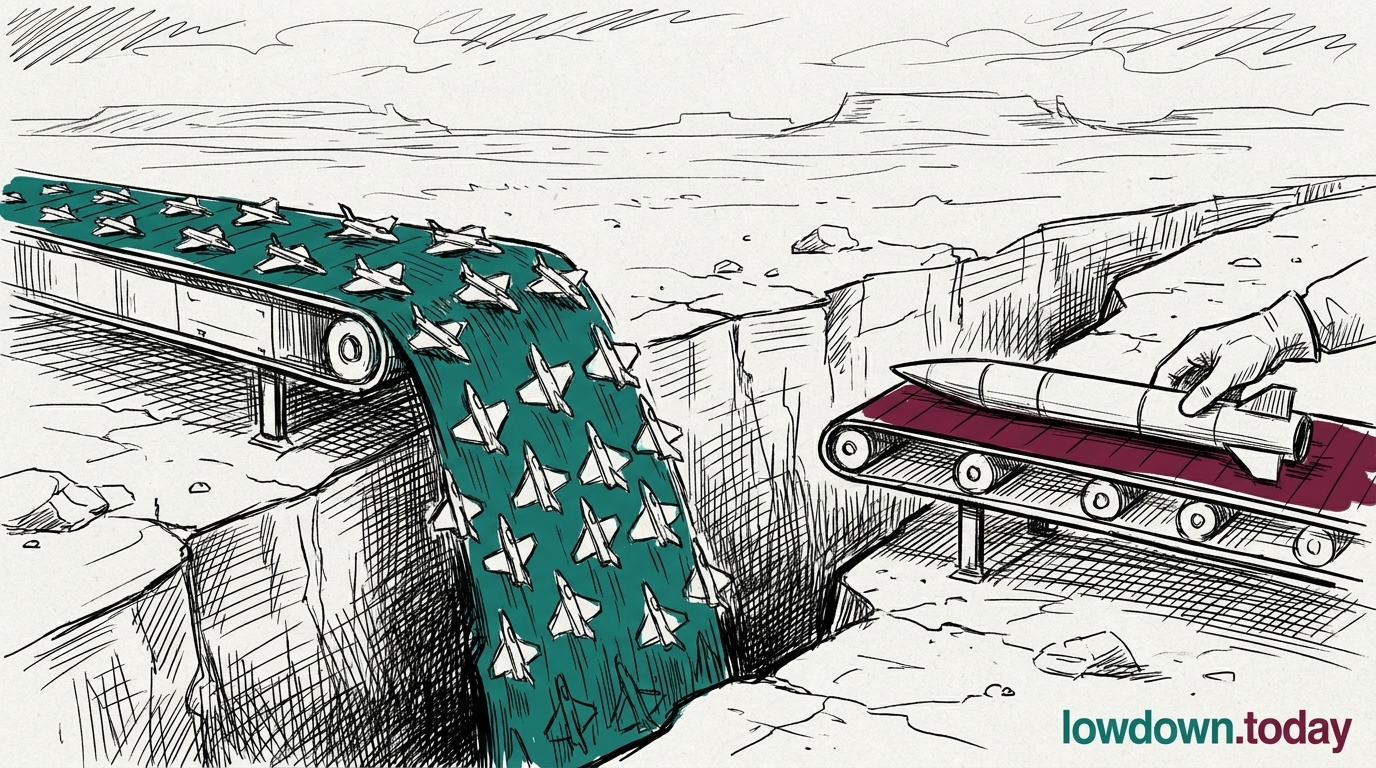
The slip carries operational weight. Every month that EHEL selection is delayed extends dependence on kinetic interceptors whose cost-per-engagement is structurally unsustainable against Iranian drone swarms. LOCUST X3 demonstrated a $5 per engagement cost against Group 1 to Group 3 drones ; a PAC-3 MSE round costs millions. Gulf attrition rates are consuming these expensive interceptors faster than industry can produce them.

AeroVironment's entry into both the EHEL directed-energy competition and the Lethality Prize kinetic ecosystem (see Event 13) is a portfolio hedge. The company's $135 million in recent Army contracts established both a production baseline and a cost benchmark that EHEL candidates will be measured against. Qualifying on both fronts would give AeroVironment coverage across the kinetic and directed-energy counter-drone markets simultaneously.

For programme managers, the Q4 FY26 timeline creates a six-month window during which fielding expectations must be revised against actual Gulf consumption rates. The demand signal is not waiting for the competition to conclude.

Deep Analysis

In plain English

The US Army was developing a powerful laser weapon called EHEL designed to shoot down drones cheaply. A laser costs roughly $5 per shot; current missile interceptors cost millions. The Army expected to pick a winner from competing companies by the middle of this year, but that decision has now been pushed to at least October 2026. Every month of delay means the Army stays dependent on expensive missiles to shoot down cheap drones. In the Gulf, this cost difference adds up quickly when you are intercepting hundreds of drones per day. A company called AeroVironment is now entering the competition, which may be one reason the timeline shifted.

What could happen next?
  • Risk

    A further slip from Q4 FY26 into FY27 would extend kinetic-only counter-drone dependence through an additional budget cycle, creating pressure to fund more kinetic interceptor production rather than waiting for directed-energy solutions.

  • Opportunity

    AeroVironment's dual positioning in both the EHEL directed-energy competition and the Lethality Prize kinetic ecosystem means it can capture revenue regardless of which intercept technology dominates the next procurement cycle.

First Reported In

Update #5 · Gulf drone war rewrites procurement

Defence Online· 13 Apr 2026
Read original
Different Perspectives
Chinese drone manufacturers (DJI, Autel)
Autel's Ralls Corp Fifth Amendment filing and DJI's Ninth Circuit quantification of USD 1.56 billion in 2026 losses are parallel constitutional attacks on a classified-evidence exclusion mechanism; neither company can contest the intelligence allegations directly, so both are betting on due-process doctrine to reopen the FCC authorisation route.
Ukraine (SSEC export regulator)
Baltic states bought Lithuanian Merops and Swedish LVKV 90 stopgaps while Ukraine's cheapest combat-proven interceptors at USD 2,100 to USD 2,500 per unit remain legally blocked under EU conflict-aggravation rules; Perennial Autonomy, built on Ukrainian combat data, can now sell via Munich while direct Ukrainian sales to the same buyers remain prohibited.
Helsing
Helsing
HX-2 combat-proven status, a EUR 1.46 billion German framework, an $18 billion valuation, and the OHB space JV together constitute the first credible European counterweight to Anduril's US stack. The critical test is whether European procurement offices can maintain sovereign AI discipline under operational urgency, or default to the US integration speed that drove the Netherlands Lattice decision.
Anduril Industries
Anduril Industries
A USD 61 billion valuation on USD 2.2 billion revenue prices in the assumption that Lattice becomes the default Western counter-drone software layer. The Netherlands adoption and Project NYX inclusion suggest the architecture bet is converting; the S-1 filing window opens when quarterly growth sustains the 27x multiple.
European Union
European Union
The EUR 115 million AGILE programme was designed before Baltic states began emergency national purchases worth ten times the total EU budget; calling for coordination on 26 May after each country had signed contracts is not a procurement policy, it is a statement of concern with no enforcement teeth.
UK Ministry of Defence
Britain has committed GBP 752 million to Ukraine drones, GBP 115 million to Hormuz, APKWS to Gulf combat, and three concurrent procurement programmes, all driven by the same operational pressure. Project NYX and Corvus together set the British Army's drone architecture through 2036; the autumn down-select will reveal whether Washington or London holds the architectural preference.
