Skip to content
Briefings are running a touch slower this week while we rebuild the foundations.See roadmap
Drones: Industry & Defence
30MAR

Shield AI acquires Aechelon for autonomy

3 min read
20:09UTC

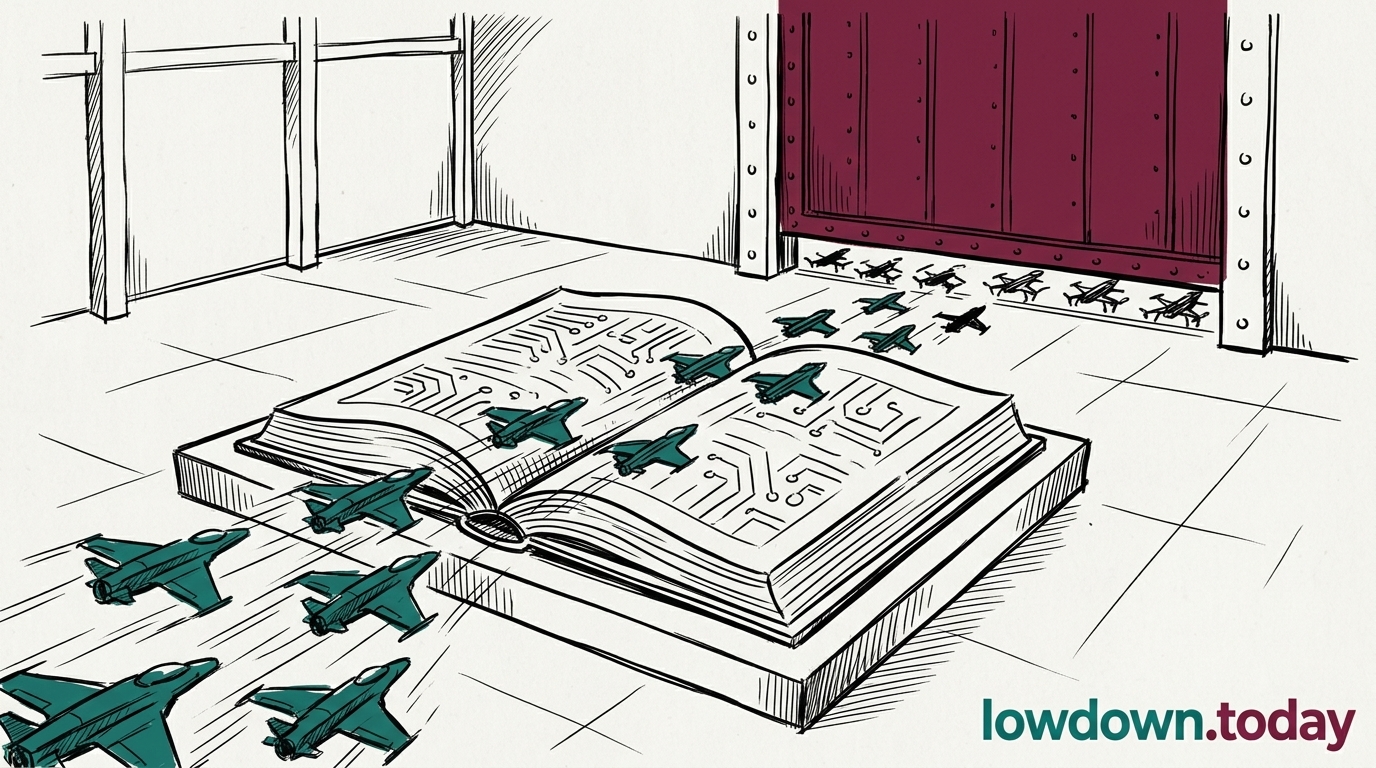
Shield AI acquired physics-based simulation company Aechelon Technology using Series G proceeds, aiming to train its Hivemind autonomous flight model on synthetic sensor data.

TechnologyDeveloping
Key takeaway

Shield AI bets on simulation-trained autonomy software while Anduril bets on manufacturing speed.

Shield AI acquired Aechelon Technology, a simulation company specialising in physics-accurate sensor models, using proceeds from its $2bn Series G raise at a $12.7bn valuation. Part of the raise is also earmarked for X-BAT, Shield AI's next-generation combat aircraft beyond V-BAT.

Aechelon builds physics-based replicas of how radar, cameras, and infrared sensors behave in real-world conditions. Synthetic training data from this type of environment is qualitatively different from game-engine renders; the hypothesis is that a drone trained on Aechelon's models will transfer reliably to edge cases in contested electromagnetic environments. The operational importance of this capability was validated when V-BAT completed Arctic trials and became the first NATO-operational autonomous aircraft .

The strategic contrast with Anduril is clean. Anduril is racing to build manufacturing infrastructure: factories, exclusive procurement positions, and workforce scale. Shield AI is betting that autonomy software, trained on synthetic data at a pace physical testing cannot match, will prove the decisive advantage when both companies compete for the next-generation autonomous combat aircraft requirement. X-BAT is being designed to compete directly against Fury for programmes beyond current CCA contracts.

For investors, the Aechelon acquisition signals that the drone industry's competitive axis is splitting: production speed on one side, autonomy depth on the other. Both strategies assume the market will be large enough to reward a winner; the Gulf conflict is making that assumption look conservative.

Deep Analysis

In plain English

Shield AI makes software that lets military drones fly themselves, including in places where GPS does not work. They bought a company called Aechelon that creates extremely realistic virtual simulations of how radar and cameras behave in the real world. The idea is that you can train your autonomous drone AI millions of times in a virtual world without risking real hardware, and then trust it to work in the real world because the simulation was realistic enough. This is the same principle Tesla uses to train its self-driving software: vast amounts of virtual driving before any real-world miles. The question is whether the simulation is realistic enough that the AI actually learns the right lessons.

What could happen next?
  • Opportunity

    Physics-based synthetic training data could compress X-BAT's development timeline from six to eight years to three to four, allowing Shield AI to compete for next-generation autonomous combat aircraft contracts sooner than physical development timelines would allow.

  • Risk

    Accelerating autonomous weapon decision-making capability through simulation training, in the absence of binding NATO rules of engagement for machine-initiated action, creates liability and accountability gaps that no existing legal framework addresses.

First Reported In

Update #5 · Gulf drone war rewrites procurement

Shield AI· 13 Apr 2026
Read original
Different Perspectives
Denmark (host nation)
Denmark accepted Fire Point's Skrydstrup plant after committing to bilateral defence co-production at the B9 Nordic summit in May; the facility sits beside a Danish F-35 base, sharing security perimeters. NATO has published no legal guidance on whether hosting Ukrainian weapons production converts Denmark into a co-belligerent, leaving the host-state obligation unresolved.
Russian Ministry of Defence
Russia's 117% YoY drone-output rise in April, accelerating from a 68% full-year 2025 baseline, validates the FPV mass-production doctrine and hands Moscow a cleaner targeting argument for the Skrydstrup plant than any hidden production line offered; a Ukrainian weapons facility on NATO sovereign territory is a legitimate military target under the laws of armed conflict.
Baltic NATO states (Latvia, Estonia, Lithuania)
Latvia deployed mobile drone-intercept teams on 29 May using domestic Origin Robotics and Eraser interceptors, the first kinetic Baltic border response to Russia's 117% output surge. The Baltic states are the primary target market for Ukraine's ten EU export offices, giving them direct commercial access to combat-tested interceptors their own manufacturers have not yet matched.
Pentagon / Joint Interagency Task Force 401
Two Ukrainian entrants in Drone Dominance Phase 2 and Red Cat's SEC-filed STE partnership bring combat-iterated Ukrainian designs into US procurement without triggering Foreign Military Sale approvals; the programme's performance-scoring methodology does not require US-origin hardware. Northrop holding the Common UAS Payload standard means a heritage prime captures interface revenue regardless of which startup airframe wins.
Ukrainian defence industry (Fire Point / Spetstechnoexport)
Fire Point's Skrydstrup construction start and Spetstechnoexport's Red Cat partnership execute Zelensky's 13 May Bucharest proposal: converting wartime production surplus into a state export apparatus, independent of US approval chains. For Ukraine, embedded manufacturing on NATO soil protects propellant supply from Russian strikes while generating hard currency the war effort needs.
Chinese drone manufacturers (DJI, Autel)
Autel's Ralls Corp Fifth Amendment filing and DJI's Ninth Circuit quantification of USD 1.56 billion in 2026 losses are parallel constitutional attacks on a classified-evidence exclusion mechanism; neither company can contest the intelligence allegations directly, so both are betting on due-process doctrine to reopen the FCC authorisation route.
