Skip to content
You can now search across every topic, entity and event.What's new
Drones: Industry & Defence
19MAR

China files 4x more counter-UAS patents

3 min read
08:30UTC

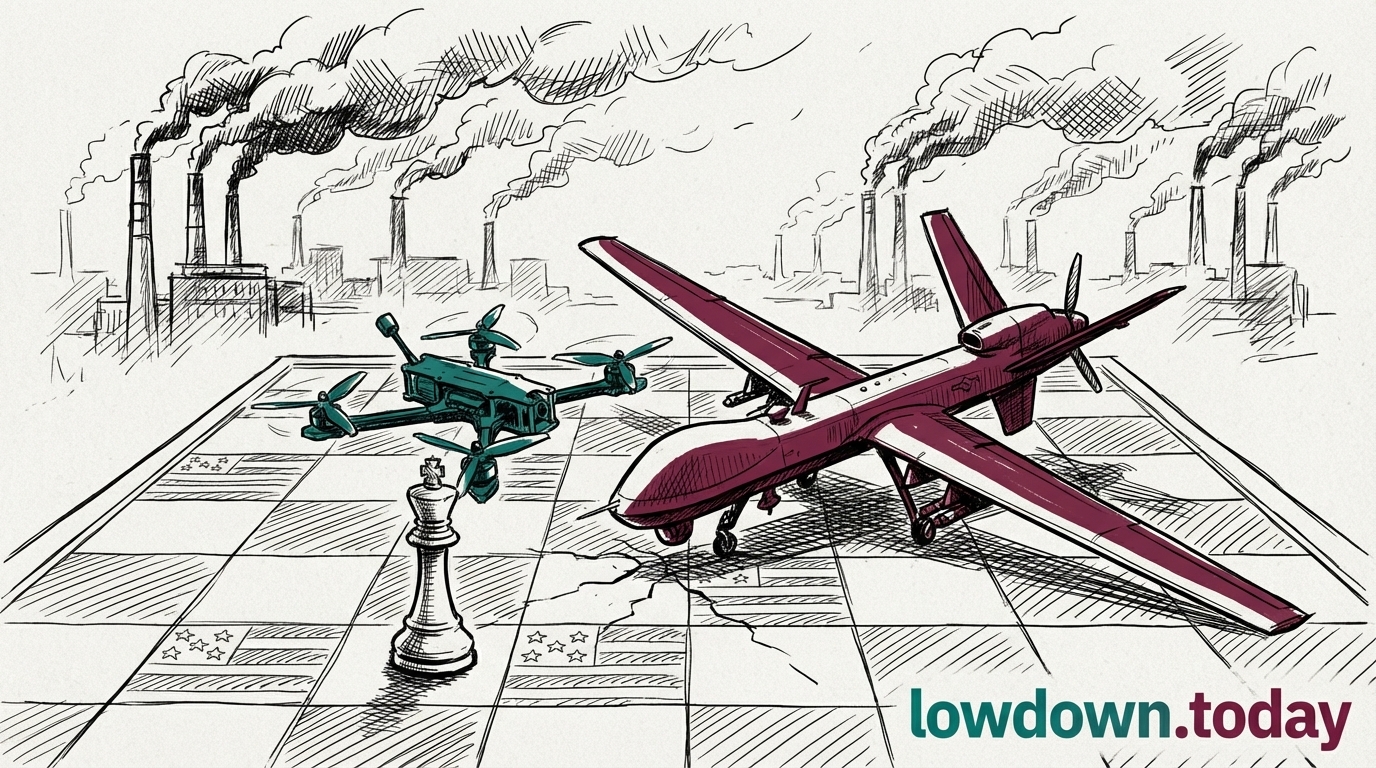
Global counter-UAS patent filings jumped 27% in a year, with China filing 82 applications to America's 22 — but patent volume and deployed capability are different measures.

TechnologyDeveloping
Key takeaway

China's 4:1 counter-UAS patent lead mirrors its 5G strategy — IP dominance follows hardware bans rather than preceding them.

1 China filed 82 of those applications against 22 for the United States. Signal interference patents led at 49 filings, followed by laser systems at 39 and microwave directed-energy at 24.

The growth in directed-energy filings carries specific industrial implications. RF jamming — the current workhorse of counter-drone defence — struggles against fibre-optic-guided drones and is ineffective against pre-programmed autonomous navigation. The concentration of patent activity in laser and microwave systems suggests both Chinese and Western developers are engineering around those limitations. Patent applications are declarations of intent, not proofs of capability, but they indicate where R&D budgets are flowing.

2 DroneShield's own analysis estimates a total addressable market of $63 billion 3. Even the conservative figure implies sevenfold growth in a decade, driven by the same operational demand that produced the Merops deployment and Anduril's $20 billion enterprise contract.

China's patent lead does not equate to fielded dominance — the United States and its allies currently operate more counter-drone systems in active theatres. But IP leadership tends to precede manufacturing advantage by five to ten years. If the gap persists, the supply chain dependency that European and American procurement officials are working to unwind in drone platforms could replicate in counter-drone systems. The FCC's December 2025 ban on foreign-manufactured drones and components addresses the current dependency; it does nothing about the next one.

Deep Analysis

In plain English

Patents are legal ownership claims over new inventions. In counter-drone technology — systems that detect, jam, or destroy drones — China is filing patents at four times the rate of the United States. This matters because whoever holds the key patents in a $36 billion market can charge competitors licence fees, block rivals, or shape how the technology works globally. The US is spending heavily on counter-drone deployment now, but without filing the underlying IP, it may end up paying Chinese licence fees for the methods its own systems use — even while Chinese hardware is banned from US networks.

Deep Analysis
Synthesis

US counter-UAS deployment is outpacing IP protection. American firms are buying, deploying, and integrating counter-drone systems without securing the underlying methods. The FCC Covered List stops Chinese hardware entering US networks; it does not stop Chinese IP from travelling through licensing agreements to US-manufactured systems. The gap between US deployment spend and Chinese patent ownership is a structural vulnerability the current regulatory framework does not address — building market share on a foundation the US does not own.

Root Causes

China's Made in China 2025 strategy and civil-military fusion policy systematically incentivise patent filing across dual-use technologies — counter-UAS qualifies under both frameworks. State R&D funding through CETC, DJI, and affiliated institutes creates a filing pipeline that operates independently of commercial deployment timelines. US counter-UAS patent activity is concentrated in large defence primes with longer development cycles and less structural incentive to file defensively in early-stage technology categories before commercial viability is established.

Escalation

The shift in patent filings toward directed energy — lasers at 39 applications, microwave at 24 — signals that the technology frontier is moving beyond RF jamming, where China holds its current dominant position. This creates a 2–3 year window for US and allied firms to establish foundational IP in directed-energy counter-UAS before Chinese filers replicate their RF dominance in the next technology tier. The 27% annual growth rate in total filings indicates the race is accelerating, not plateauing.

What could happen next?
  • Risk

    US counter-UAS manufacturers face potential IP licensing exposure if Chinese patent holders pursue enforcement in third-country markets outside FCC Covered List jurisdiction.

    Medium term · Suggested
  • Opportunity

    The directed-energy patent sub-categories — laser and microwave — remain open for US and allied filing; this window may close within 2–3 years as Chinese filers shift focus from RF to directed energy.

    Short term · Assessed
  • Consequence

    China's IP position may create durable licensing leverage in Middle Eastern, African, and South Asian markets not subject to US export control regimes.

    Long term · Suggested
  • Meaning

    The gap between US deployment spend and Chinese patent ownership means America is building counter-UAS market share on a technological foundation it does not own.

    Long term · Assessed
First Reported In

Update #2 · UK startup tops Pentagon's drone gauntlet

Unmanned Airspace· 19 Mar 2026
Read original
Causes and effects
This Event
China files 4x more counter-UAS patents
China's 4:1 patent advantage in counter-drone technology could precede manufacturing dominance by five to ten years, while the counter-UAV market's projected growth from $4.93 billion to $36.42 billion by 2035 is drawing capital into production capacity and reshaping supply chain priorities across the sector.
Different Perspectives
Procurement sceptics
Two identically sized IDIQs to different primes within seven weeks, and a five-nation pact where one partner moves weeks ahead of the rest, could just as easily read as an industrial base still improvising vendor mix as a deliberate hedging doctrine. Neither ceiling appears sized against a validated requirement yet.
Chinese component suppliers
FCC and Pentagon-level restrictions on Chinese-origin airframes and motors have progressively excluded DJI-linked suppliers from federal counter-drone catalogues, narrowing the field JIATF-401 and Gauntlet II can buy from to a short list of certified domestic bidders. Beijing reads the exclusions as protectionism dressed as security policy.
Quantum Systems
Quantum Systems
Blackstone, Airbus, Advent and Noteus reportedly priced the Munich drone maker at $8 billion, more than double its prior mark, on the strength of 19,000 Ukraine missions rather than confirmed revenue. It is betting production capacity, not current sales, is what buyout capital is now paying for.
United Kingdom
United Kingdom
Britain released the first LEAP effector money three weeks after its defence secretary quit over the size of the drone budget, splitting £3.16 million across three small firms rather than one contractor. It expects the other four LEAP partners to follow its pace, not set their own.
JIATF-401
JIATF-401
The task force handed AeroVironment a $500 million counter-drone ceiling identical to Perennial Autonomy's from seven weeks earlier, while its own Gauntlet II red team prepares to attack the drones the winners of that sprint will build. It expects to keep several qualified suppliers warm rather than certify one.
DroneShield
DroneShield
DroneShield appointed retired Rear Admiral Lee Goddard as an independent director from 1 July, its second board move since founder Oleg Vornik's April exit. The ASIC probe into November's disclosures and share sales stays open, so the admiral steadies the story without closing the file.
