Skip to content
You can now search across every topic, entity and event.What's new
Drones: Industry & Defence
20AUG

Army hands Anduril sole-source ISR deal

2 min read
16:38UTC

The US Army awarded Anduril a $16.8 million sole-source contract for Ghost-X reconnaissance drones on 7 April; no other company bid.

TechnologyDeveloping
Key takeaway

Anduril holds sole-provider positions in three Pentagon drone programmes simultaneously.

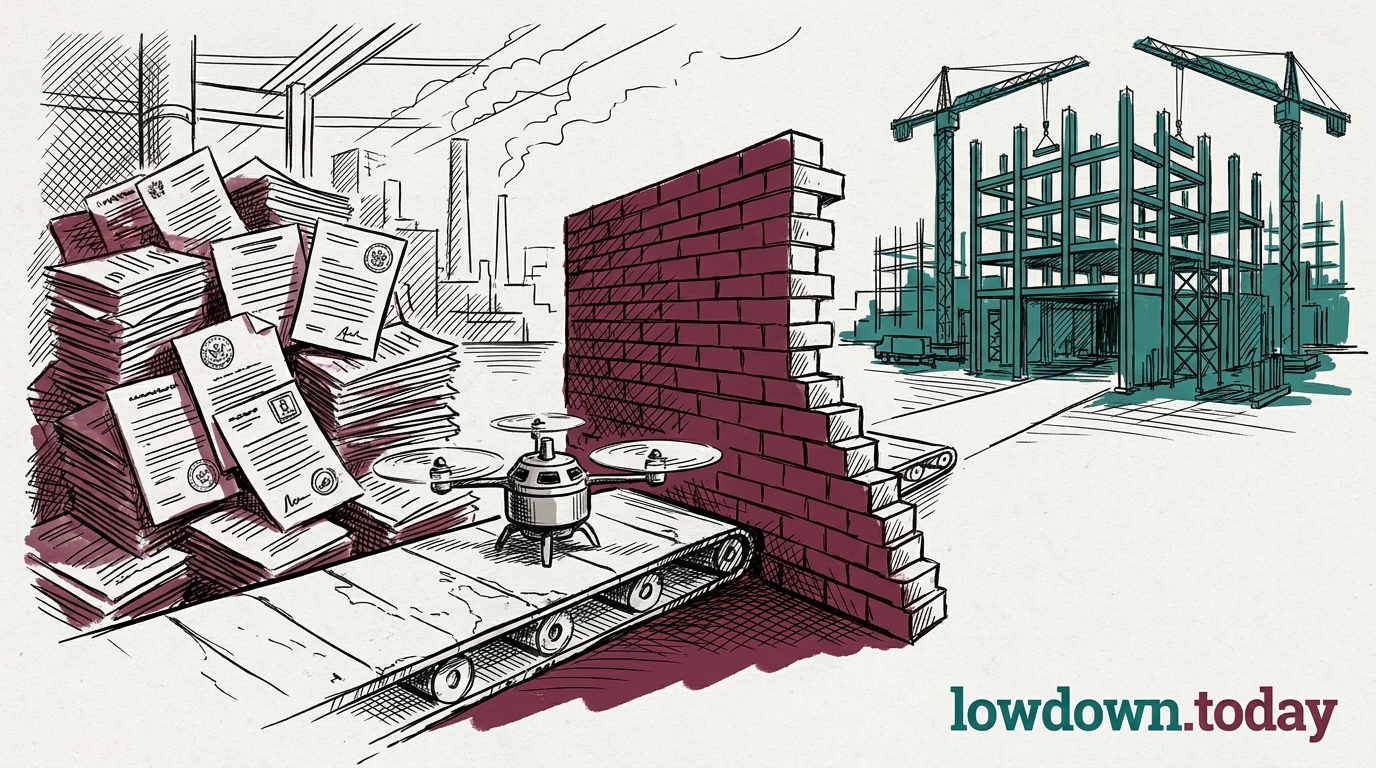
The US Army awarded Anduril a $16.8 million firm-fixed-price contract on 7 April for Ghost-X VTOL reconnaissance drones equipped with Trillium HD45LP sensors. Only one bid was received. The contract extends Anduril's monopoly pattern: the $20 billion Lattice enterprise vehicle consolidated counter-drone procurement, and the sole-source Ghost-X award now locks tactical ISR to the same vendor. The completion date is 1 May 2026.

A sole-source award on a tactical ISR requirement that multiple firms could theoretically fill indicates that the procurement structure has been shaped around the incumbent. Ghost-X was selected for the Army's company-level small UAS directed requirement in September 2024; this contract converts that selection into a production order without competitive pressure. The pattern mirrors the Lattice task order and its parent enterprise vehicle: each award is structured to prevent parallel competition.

Anduril now holds default procurement positions in three separate Pentagon programme offices simultaneously: counter-UAS command (Lattice), autonomous combat aircraft (Fury at Arsenal-1), and tactical ISR (Ghost-X). No single defence contractor has held monopoly positions across three drone programme categories before. The commercial consequence is that non-incumbent firms face a structural narrowing of addressable market that compounds with each contract cycle.

The broader question is whether this concentration is a wartime acceleration choice or a permanent structural shift. Competitive tendering was designed to prevent single-vendor dependency; its abandonment signals that speed-to-delivery has overtaken competition as the dominant procurement value.

Deep Analysis

In plain English

The US Army paid Anduril $16.8 million for reconnaissance drones that can hover and land vertically, like a helicopter. The unusual detail is that only Anduril bid for the contract; no other company submitted a competing offer. Sole-source contracts are legal and sometimes justified when speed matters most. The question defence watchers are asking is whether this is one of those cases or whether the competition was designed in a way that discouraged other companies from bidding.

What could happen next?
  • Consequence

    Anduril's simultaneous sole-source positions in counter-UAS command, autonomous combat aircraft, and tactical ISR create a concentration of defence drone procurement in a single private company with no parallel in post-Cold War US defence history.

  • Risk

    Structural dependency on a single privately-held contractor across three drone programme categories means that any financial, operational, or leadership crisis at Anduril propagates simultaneously into three critical Pentagon programme offices.

First Reported In

Update #5 · Gulf drone war rewrites procurement

Army Recognition· 13 Apr 2026
Read original
Different Perspectives
South Korea's Defense Acquisition Program Administration
DAPA folded drone and roadside-bomb jammers into an 18-year, KRW 3.448 trillion K2 tank upgrade approved 11 August, rather than fund counter-drone kit as its own programme. Seoul is treating the threat as permanent enough to write into a platform's lifecycle, not urgent enough to buy ahead of it.
NATO Support and Procurement Agency
NSPA named five pre-qualified counter-drone suppliers under new framework contracts on 27 July, giving allies a purchasing route with no published budget attached. A framework without committed money is an instrument waiting for a spending decision, not a guarantee one is coming.
Ukraine's Ministry of Defence
Ukraine's forces strike with more than 70 AI and computer-vision systems drawn from over 200 domestic producers, the ministry said on 18 August, a supplier base neither Washington's tariff fight nor Beijing's export licence touches. Kyiv is scaling capability faster than either government is writing rules for it.
A European drone-component manufacturer
A European manufacturer selling components into the United States faces the same 100 per cent tariff and 3 September deadline as any other foreign supplier, with the duty-free onshoring carve-out available only to firms building on American soil. That leaves it to absorb the cost, relocate assembly, or cede the US market rather than shop around a rival supply chain.
Chinese drone component exporters
Exporters now need a case-by-case licence for each US-bound dual-use shipment after MOFCOM's 5 August order, with no published review clock. The same week Shenzhen logged nearly 200,000 domestic logistics-drone sorties and Hunan reported record spraying coverage, a home market large enough to absorb what the licence regime slows from leaving the country.
US drone manufacturers
The onshoring carve-out protects Performance Drone Works' $820 million War Department loan, but the same 3 September deadline hits Red Cat Holdings and Unusual Machines, both filing over 500 per cent revenue growth on 6 August, on Chinese-sourced components with no qualified domestic substitute yet.
