Skip to content
You can now search across every topic, entity and event.What's new
Data Centres: Boom and Backlash
7JUL

Albany ties campuses to local payback

2 min read
09:27UTC

Hochul's executive order gave Empire State Development 60 days to write a Community Investment Framework, turning permit relief into a test of what campuses must return to host towns.

IndustryDeveloping
Key takeaway

New York is writing community-benefit terms into data-centre permitting before it lets any new campuses through.

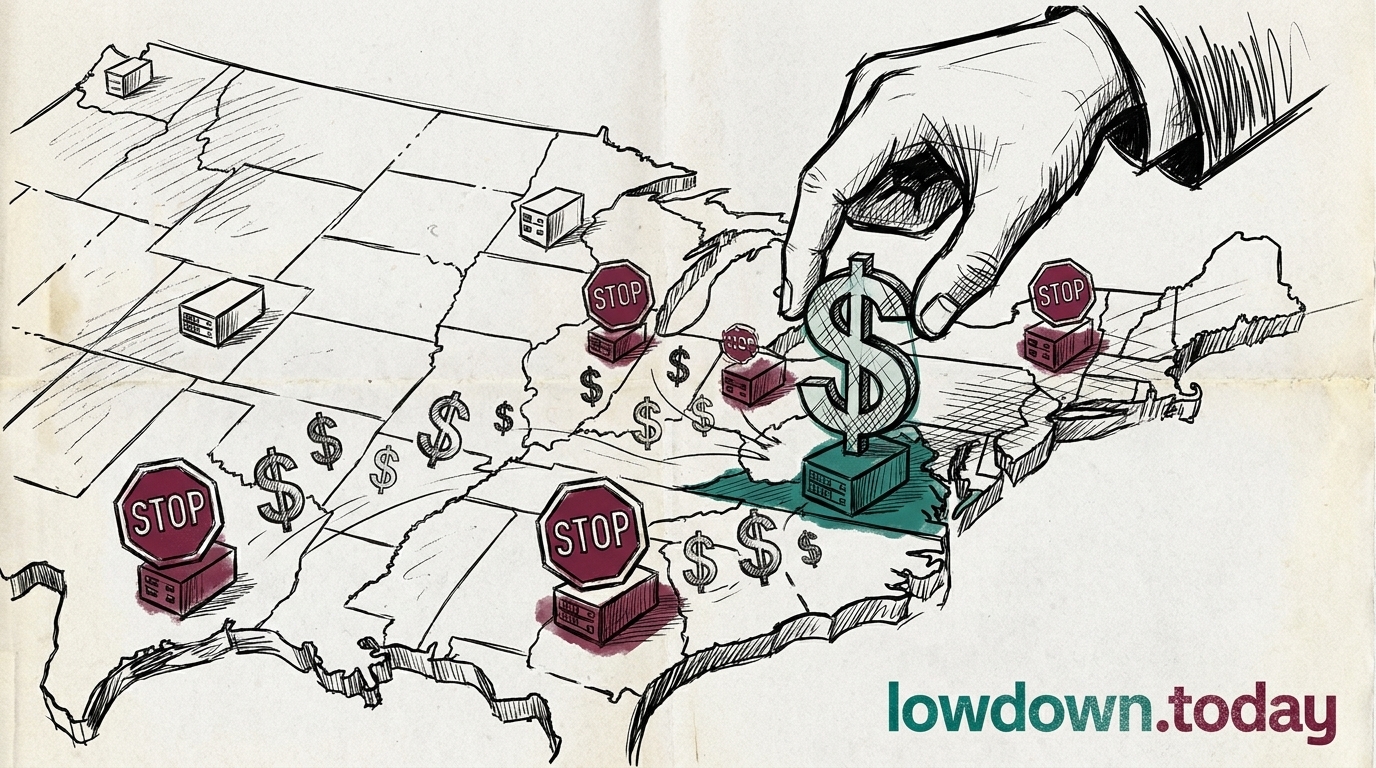
Empire State Development (ESD), New York's economic development agency, has 60 days from Hochul's 14 July executive order to publish a Community Investment Framework for hyperscale data centres. 1 The framework will set out what campuses must return to the towns that host them, from local hiring to grid and water contributions, before permitting resumes.

The 60-day clock does more than fill the freeze with paperwork. It fixes the terms of entry before the door reopens, so the first campuses through will face conditions written while no permits could move. Sequencing the framework ahead of any approval lets New York set the price of admission rather than negotiate it deal by deal.

A North Country lawmaker who urged Hochul to veto the freeze had framed it as lost upstate investment . The framework is the administration's answer to that charge: it defines community benefit as a condition of approval, not a voluntary sweetener a developer can offer or withhold. Where Oregon's regulators chose to price the load and keep it building, New York is pricing the social contract instead, and holding the permits until the terms are set.

Whether the framework lands on time will signal how binding the freeze really is. A thin document inside 60 days would suggest the pause is mostly political cover; a detailed one would give the next round of applicants a fixed rulebook to build against.

Deep Analysis

In plain English

Alongside freezing new permits, Hochul's order gives a different state agency, Empire State Development, 60 days to publish rules on what a data-centre company must offer the local community, such as jobs or infrastructure spending, before its project can move forward once the freeze ends. This does not create a new government body. Empire State Development already decides which companies get New York's tax breaks; the new framework folds community benefits into that same process rather than starting a separate one.

Deep Analysis
Root Causes

Empire State Development, not the Department of Environmental Conservation, was named to write the investment framework because ESD already administers New York's Excelsior Jobs Program and other site-location incentives; folding community payback into the same agency that already negotiates tax credits keeps the benefit-sharing terms inside the existing incentive-approval process rather than creating a new regulatory body.

The 60-day deadline sits inside the one-year freeze rather than after it, so the framework's terms will exist before any developer can test them against an actual permit decision. Whether ESD's terms end up binding on individual project approvals, or merely advisory, is not specified in the order.

What could happen next?
  • Opportunity

    ESD's framework could become a template other states copy for tying incentive approval directly to community-benefit terms.

First Reported In

Update #10 · New York freezes data centres by decree

New York Governor's Office· 15 Jul 2026
Read original
Causes and effects
This Event
Albany ties campuses to local payback
New York is drafting the price of admission for data centres before it reopens the permit door.
Different Perspectives
Global hyperscale operators
Operators are still filing gigawatt-scale campuses and Meta is proceeding with its $10bn Lebanon, Indiana site despite the county-level bans nearby, betting Q2 capex outruns the patchwork of restrictions. Industry framing casts New York's freeze, Oregon's surcharge and Indiana's bans as taxes and levies that push build-out toward faster-permitting jurisdictions such as India and the Gulf.
EirGrid
EirGrid
EirGrid set a 900 MW instantaneous demand-loss ceiling because a single voltage dip can trip many data centres onto backup power at once, risking imbalance above 1,150 MW. It wrote the limit into a standing procedure rather than waiting for an emergency to force one.
US host communities and ratepayers
Prince William residents backed the 8-0 denial of Dulles South over the Occoquan watershed, drinking water for eight million people, while Oregon's approved tariff cuts residential bills 1.3% by charging large loads 29% more. Their position: consent and cost-attribution belong in law, not left to a developer's or a utility's discretion.
Hassan Allam Digital Infrastructure
Hassan Allam Digital Infrastructure, an Egyptian conglomerate rather than a foreign hyperscaler, reportedly secured a domestic hyperscale licence with a $400m first phase, per single-source reporting still to be verified. It reads as home-grown sovereign compute ambition, building national capacity rather than importing a US or Gulf operator's campus.
Damac Digital
Damac Digital
Damac Digital keeps building toward roughly 6,000 megawatts of hyperscale capacity across 13 countries while Virginia taxes power and New York weighs a freeze. Every dollar or month of delay a US state adds is capacity a Gulf developer can site somewhere with faster permitting and no equivalent levy.
Acequia communities, Santa Fe County
Santa Fe County commissioners voted unanimously on 2 July to freeze any data centre over one megawatt, citing the acequia irrigation commons that has shared scarce water since Spanish colonial rule. They expect the low threshold to draw the same Fifth Amendment challenge RCM Hill brought against Hill County, Texas.

