Skip to content
Welcome, thoughtbot's Giant Robots listeners!Start here
Data Centres: Boom and Backlash
26NOV

Mills vetoes Maine moratorium; House override fails

3 min read
18:00UTC

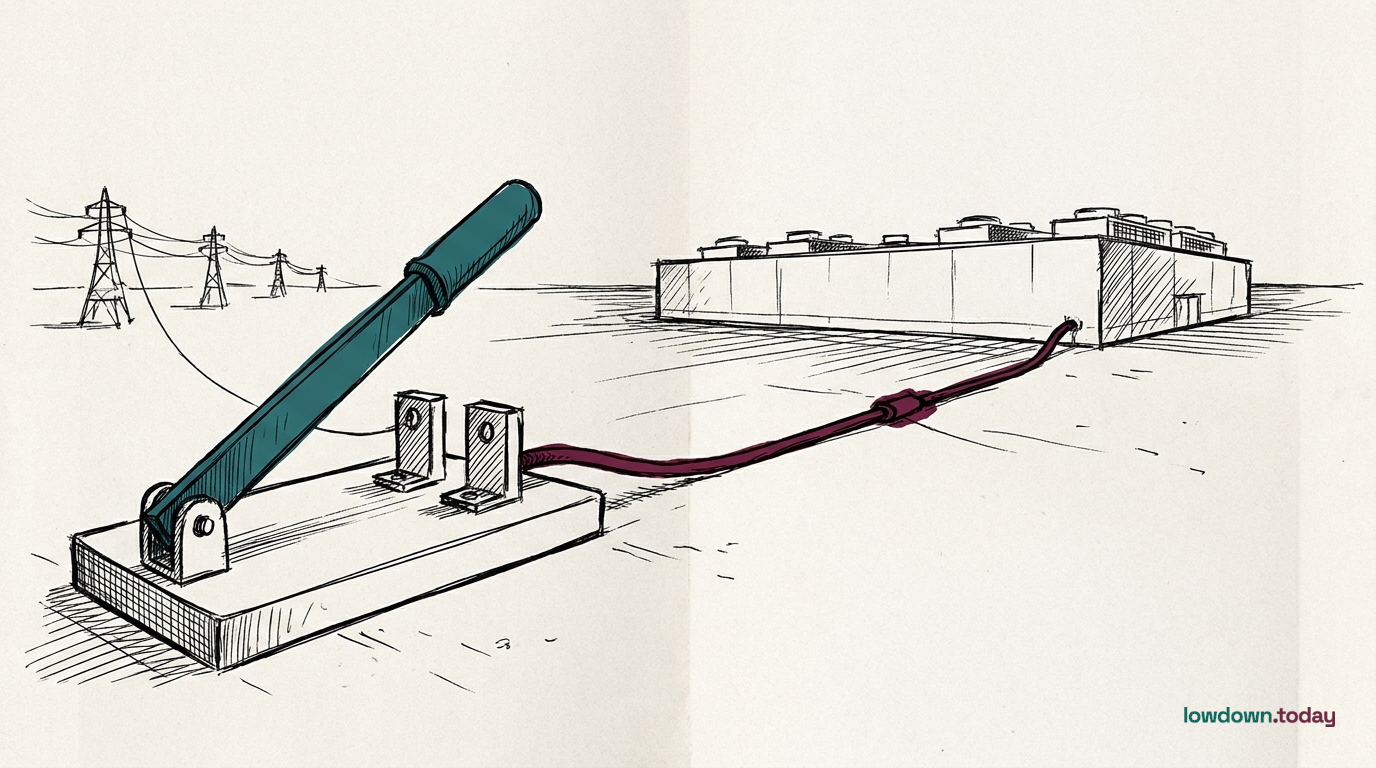
Governor Janet Mills vetoed Maine LD 307 on 24 April; the House sustained the veto 72-65 five days later, then Mills signed an executive order creating an advisory council instead.

IndustryDeveloping
Key takeaway

Mills's veto closed the state-legislature route and pushed the consent fight one tier down.

Governor Janet Mills vetoed Maine LD 307 on 24 April 2026, killing what the state legislature had passed a fortnight earlier as the first US statewide data-centre moratorium. The Maine House voted 72-65 on 29 April to override the veto, short of the two-thirds threshold needed. Hours later, Mills signed an executive order creating the Maine Data Center Advisory Council in place of the moratorium her own party had drafted.

Mills said she would have signed the bill had it carved out the $550 million Androscoggin Mill redevelopment in Jay, an 800-job construction project on a derelict pulp-mill brownfield site. The carve-out was rejected by the bill's sponsors, who treated it as the thin end of a wedge that would gut the moratorium for any project labelled economic development. The veto turned that argument into a counter-factual.

The pattern this exposes is one Good Jobs First has been tracking through 2026: state-level moratorium bills meet executive resistance because governors weigh community concerns against economic-development logic and almost always come down on the side of construction jobs. City councils, utility boards, and zoning judges face no comparable counter-pressure. Within a single calendar week of the override failure, three Northern Virginia jurisdictions, one Pacific Northwest city, one Ohio town, and one Michigan utility authority all moved against new data-centre capacity while Augusta, Maine could not. Maine's veto did not stall the moratorium movement; it pushed it to a tier the executive veto does not reach, where bans are faster, narrower, and harder to challenge than their statewide cousins.


Deep Analysis

In plain English

Maine's legislature passed a law in April that would have put a temporary stop on new large data centres in the state while officials worked out better rules for them. Governor Janet Mills rejected the law (this is called a veto), and the legislature tried to override her but fell seven votes short. Her reason: a $550 million plan to turn an old paper mill in the town of Jay into a data centre would probably have been blocked, and she did not want to lose that investment. She created an advisory group instead, but it has no power to stop any projects. The episode shows a recurring pattern across the US: state legislatures can pass moratorium laws, but governors tend to side with the economic argument.

Deep Analysis
Root Causes

The veto reflects a structural asymmetry in how governors calculate moratorium risk. The Androscoggin Mill in Jay, Maine, is a 550,000 square-foot former paper mill that had been vacant since 2020; a data centre developer had tabled a $550 million redevelopment commitment.

Mills framed the veto as protecting that specific deal, not as opposing moratorium policy in principle. That framing reveals the core structural problem: a moratorium's costs are immediate and named (one project, one employer, one town), while its benefits are diffuse and probabilistic (grid stability, community amenity, water security across future projects).

The 72-65 override vote is also structurally significant. A two-thirds majority requires coalition discipline that moratorium supporters did not achieve, partly because Maine's rural caucus contains legislators whose districts depend on the exact economic diversification that data centres nominally represent. The state legislature arithmetic on these bills consistently produces narrow majorities that fall short of override-proof margins.

What could happen next?
  • Precedent

    The Androscoggin Mill veto creates a replicable developer playbook: anchor a moratorium debate to a named investment large enough to force a gubernatorial economic calculation, making the governor the effective permit authority rather than the legislature.

  • Consequence

    The advisory council model Mills adopted may spread to other states facing moratorium bills, substituting toothless review bodies for enforceable freezes and extending the planning-rules gap that moratorium legislation was designed to close.

First Reported In

Update #2 · Maine veto, Seattle freeze, $725bn capex

Maine Morning Star· 6 May 2026
Read original →
Different Perspectives
MUFG
MUFG
Mitsubishi UFJ (MUFG) and Morgan Stanley are preparing to sell a loan of about $4.5bn secured on the GPUs CoreWeave runs for Meta in Dalton, Georgia, with price talk of 7% to 7.5%, Bloomberg reported. Meta's contract is expected to win the loan investment-grade ratings, though CoreWeave is rated below investment grade and the loan has not priced.
CX Tech
CX Tech
CX Tech's £16.5bn, 1,000 MW plan for the former Chapelcross nuclear site has drawn more than 10,000 representations, the most Dumfries and Galloway's planners have received, BBC News reported. The company says the scheme could support up to 750 construction jobs and about 540 permanent posts; comments close on 29 November.
Nate Glubish, Alberta's technology and innovation minister
Glubish tabled Bill 42 on 18 November to ban power plants and data centres on Class 1 and 2 farmland and within 600 m of homes, a day after the regulator approved a 1,494 MW plant that fails both tests. The bill exempts projects already approved or under review, so the Indus plant stands.
NEXTDC's chairman and chief executive
After a second pay strike and a defeated spill on 20 November, NEXTDC's leaders said they are exploring a joint venture for the S4 Sydney campus and do not expect to raise shareholder capital for contracted capacity. They raised FY27 underlying EBITDA guidance to A$260m-A$275m, still excluding about A$140m tied to Melbourne's stalled M3 site.
Friends of the Irish Environment, Friends of the Earth Ireland and ClientEarth
The three groups argued in the High Court on 18 November that the CRU's data-centre connection framework breaches the 2015 Climate Act by ignoring carbon budgets, which the CRU denies. Judge Micheal O'Connell reserved judgment with no date, so the framework stands meanwhile.
South Korean data-centre industry groups
Industry groups told Etnews on 13 November that tougher grid scoring for one sector alone is unfair, three days before the climate and energy ministry raised the capital-region pass mark to 75 from 70. Pending applications are judged on the new bar; the pilot assessed 28 capital-region projects worth 1.9 GW.

Written with AI from Lowdown's published reporting. Not individually reviewed by an editor. Editorial standards.