Skip to content
Welcome, thoughtbot's Giant Robots listeners!Start here
Data Centres: Boom and Backlash
26NOV

Brazil ties tax break to water cap

3 min read
18:00UTC

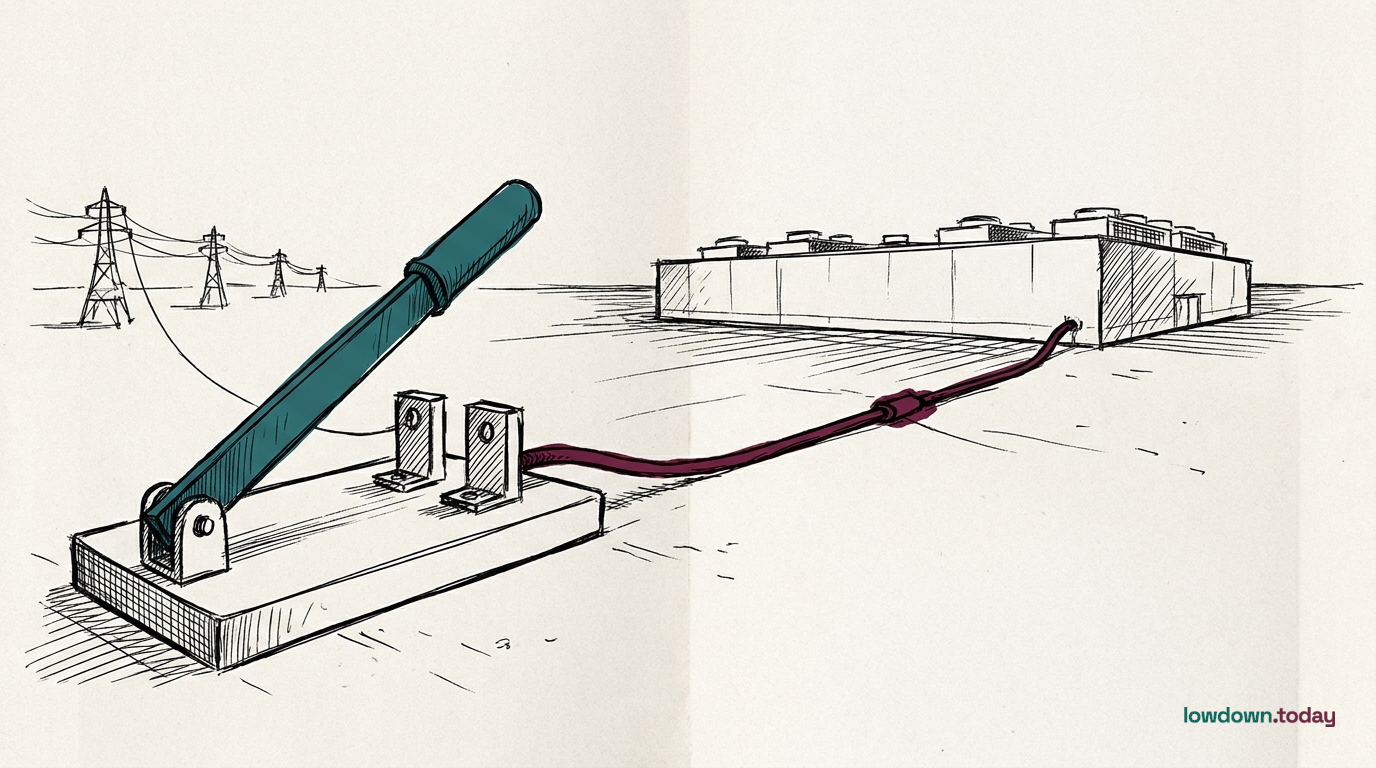
Brazil's Senate passed PL 278/2026 on 1 September, capping water use at 0.05 litres per kilowatt-hour. Miss the cap in any single year and the tax break goes.

IndustryDeveloping
Key takeaway

Brazil's tax break demands 0.05 litres per kWh, verified annually, which rules out evaporative cooling.

Brazil's Senado Federal, the country's upper house, approved PL 278/2026 on 1 September without changes of merit, sending it to President Luiz Inacio Lula da Silva for signature rather than back to the Chamber of Deputies⁠1. The bill creates Redata, what Brazil's legislation calls a special taxation regime for data-centre services. It suspends Import Tax, PIS/Cofins and PIS/Cofins-Importation, the federal contributions charged on gross revenue and on imports, along with IPI, the federal tax on industrialised products.

Five conditions ride on the benefit. The one that bites is written as water use efficiency, or WUE, the litres a facility consumes for each kilowatt-hour of computing energy, capped at 0.05 litres per kWh and verified annually. An operator must also draw its power from renewable or low-emission sources, direct at least 10% of actual processing and storage supply to the domestic market, invest in Brazil the equivalent of 2% of the value of products bought under the benefit, and publish an annual sustainability report on the installations⁠2.

A ceiling that low rules out evaporative cooling, the method that sheds heat by letting water evaporate and which accounts for most data-centre water draw. What survives the test is closed-loop cooling, where the same coolant circulates and rejects its heat to air, or air cooling outright. Brasilia has written a design mandate and attached a tax break to it.

Two other jurisdictions attached conditions to data-centre support in the same month. Gujarat tied its subsidies to a green-power test, and Taiwan put a supply condition on its own large users. Redata goes further on one point: the test repeats every year and the benefit can be withdrawn, so a cooling design is not signed off once at approval but re-examined by the tax authority for the working life of the building. Government estimates and the Brazilian energy press give different totals for the tax forgone, on what appear to be different bases, so no headline value belongs in print. PL 278/2026 is passed, not law, and Lula has not yet signed it.


Deep Analysis

In plain English

Cooling a data centre usually means evaporating water, like a swamp cooler, which costs less to build but uses far more water than a closed-loop system that reuses the same water repeatedly. Brazil's new bill sets the water limit so low that evaporative cooling essentially will not qualify for the tax break. That pushes operators toward pricier, more water-efficient equipment if they want the tax relief.

Deep Analysis
Root Causes

Redata's water clause exists because Brazil's federal government wants the concession to buy a specific outcome beyond investment volume alone. A capacity incentive with no efficiency condition, the model most jurisdictions used through the 2010s, let operators bank the subsidy while choosing whichever cooling method was cheapest to build, typically evaporative.

Tying the benefit to an annually verified number removes that choice: the operator either designs for the number from day one or forfeits the concession retroactively, which shifts the compliance cost onto the operator's balance sheet rather than the tax authority's enforcement budget.

What could happen next?
  • Precedent

    A large emerging-market economy has written a numeric, annually re-verified environmental condition directly into a tax bill rather than into planning guidance, which other Latin American and African regulators drafting data-centre incentives may copy.

First Reported In

Update #14 · Brazil bill ties tax break to a water cap

Senado Noticias· 8 Sept 2026
Read original →
Different Perspectives
MUFG
MUFG
Mitsubishi UFJ (MUFG) and Morgan Stanley are preparing to sell a loan of about $4.5bn secured on the GPUs CoreWeave runs for Meta in Dalton, Georgia, with price talk of 7% to 7.5%, Bloomberg reported. Meta's contract is expected to win the loan investment-grade ratings, though CoreWeave is rated below investment grade and the loan has not priced.
CX Tech
CX Tech
CX Tech's £16.5bn, 1,000 MW plan for the former Chapelcross nuclear site has drawn more than 10,000 representations, the most Dumfries and Galloway's planners have received, BBC News reported. The company says the scheme could support up to 750 construction jobs and about 540 permanent posts; comments close on 29 November.
Nate Glubish, Alberta's technology and innovation minister
Glubish tabled Bill 42 on 18 November to ban power plants and data centres on Class 1 and 2 farmland and within 600 m of homes, a day after the regulator approved a 1,494 MW plant that fails both tests. The bill exempts projects already approved or under review, so the Indus plant stands.
NEXTDC's chairman and chief executive
After a second pay strike and a defeated spill on 20 November, NEXTDC's leaders said they are exploring a joint venture for the S4 Sydney campus and do not expect to raise shareholder capital for contracted capacity. They raised FY27 underlying EBITDA guidance to A$260m-A$275m, still excluding about A$140m tied to Melbourne's stalled M3 site.
Friends of the Irish Environment, Friends of the Earth Ireland and ClientEarth
The three groups argued in the High Court on 18 November that the CRU's data-centre connection framework breaches the 2015 Climate Act by ignoring carbon budgets, which the CRU denies. Judge Micheal O'Connell reserved judgment with no date, so the framework stands meanwhile.
South Korean data-centre industry groups
Industry groups told Etnews on 13 November that tougher grid scoring for one sector alone is unfair, three days before the climate and energy ministry raised the capital-region pass mark to 75 from 70. Pending applications are judged on the new bar; the pilot assessed 28 capital-region projects worth 1.9 GW.

Written with AI from Lowdown's published reporting. Not individually reviewed by an editor. Editorial standards.