Skip to content
Welcome, thoughtbot's Giant Robots listeners!Start here
Data Centres: Boom and Backlash
24SEP

Indiana freezes its 12th county on AI

3 min read
13:52UTC

Boone County voted unanimously on 15 June for a one-year data-centre pause, the 12th Indiana county to do so. No state bill passed; there is no single decision for an operator or governor to overturn.

IndustryDeveloping
Key takeaway

Twelve Indiana county freezes share no kill-switch, putting the pause beyond the reach of a single veto or lawsuit.

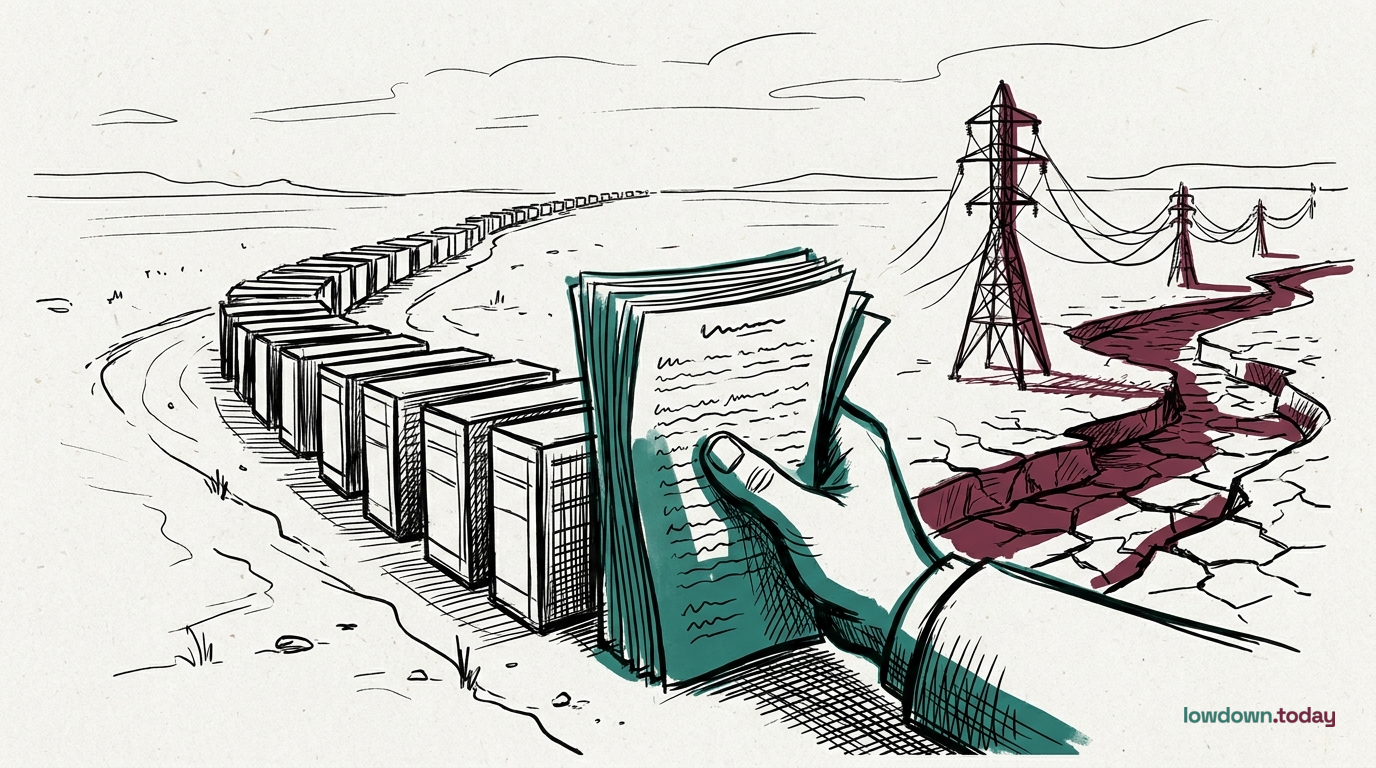
Boone County's commissioners voted unanimously on 15 June for a one-year pause on new data centres in unincorporated areas, running through 15 June 2027 while the county writes zoning rules⁠1. It is the 12th Indiana county to enact such a moratorium. No bill went through the statehouse and no governor signed anything, yet Indiana now carries functionally statewide coverage assembled one county at a time.

Maine tried the single statewide route, and Governor Janet Mills vetoed LD 307 before it took effect, with the House sustaining the veto 72 to 65. A veto kills one bill. Twelve county ordinances are twelve separate instruments, each defensible on local zoning-authority grounds, with no common target for a single lawsuit or executive strike. The cost to an operator is no longer lobbying one capitol but contesting a dozen county boards, which is the legal asymmetry that has made the freeze hard to undo. The wider US moratorium wave gave Indiana the template, with twelve states filing bills in April and five cities voting within a single week in May.

There is a carve-out, and operators have found it. Meta's existing campus sits in Lebanon's LEAP (Limitless Exploration Advanced Pace) innovation district, inside city limits by annexation, which exempts it from the county pause entirely. The breadth of the freeze and the narrowness of its exits now point developers toward the few annexed municipal districts where building can still proceed, concentrating build-out rather than stopping it.

Deep Analysis

In plain English

A county in Indiana called Boone County voted to pause all new data-centre building on 15 June 2026. It is the 12th county in Indiana to do this. The pauses last for one year while each county writes new planning rules for data centres. What makes this unusual is that nobody passed a law telling all Indiana counties to do this at the same time. Each county voted on its own. But because so many counties have done it independently, the effect is similar to a statewide ban, without anyone being able to overrule it from the top. Meta, the company that owns Facebook and Instagram, has a big data-centre campus nearby in a place called Lebanon. That campus sits inside a special economic zone that the city of Lebanon controls, not the county. So Meta's campus is not affected by the moratorium. In other US states, like Maine, a single law was passed and then vetoed by the governor, killing the whole effort at once. Indiana's approach of doing it county by county avoids that single point of failure.

Deep Analysis
Root Causes

Indiana's planning law assigns zoning authority to county commissioners for unincorporated areas, with no state-level override mechanism for single-use industrial categories. Data centres arrived in Indiana's agricultural counties faster than planning codes could be written to accommodate or restrict them, leaving commissioners with only two instruments: approve under existing agricultural-industrial zoning, or pause and write new rules.

The municipal-annexation carve-out for Meta's Lebanon LEAP campus reflects a second structural condition: Indiana's economic-development legislation was written to attract exactly the campuses that agricultural counties are now rejecting, creating a two-speed system where municipalities with annexation authority can pull sites inside their boundaries while counties in the same economic corridor vote to exclude new entrants.

The absence of a state moratorium bill means Indiana has no single-bill vulnerability of the kind that killed Maine's LD 307, but it also means there is no state mechanism to coordinate a coherent data-centre policy across the 12 counties, leaving each moratorium subject to its own legal challenge without a shared defence fund.

What could happen next?
  • Precedent

    Indiana's county-by-county accumulation model is now the most legally durable US moratorium pattern, because it has no single veto point. Other states where statewide bills have failed may replicate the Indiana approach.

  • Risk

    A Fifth Amendment taking suit against the weakest Indiana county, one with the thinnest legal resources and most explicit property-rights nexus, could collapse multiple county moratoriums simultaneously if courts apply the Hill County rescission precedent.

First Reported In

Update #7 · Virginia taxes the backup, not the draw

Indianapolis Business Journal· 17 Jun 2026
Read original →
Different Perspectives
Chilean data-centre developers
Seven projects, one linked to Google, asked SEA this month for rulings that they fall outside full environmental review; four declared diesel-storage volumes just under the review-triggering tonnage, mirroring the mechanism Alto Jahuel used in July. The clustering suggests the threshold is being engineered, not sized to need.
An Coimisiun Pleanala
Ireland's planning appeals body refused the €1.5bn Killala data centre on 17 September, overturning Mayo County Council's 2025 grant for lack of a fixed grid-connection agreement and no corporate renewable power-purchase agreement. The ruling makes matched-power evidence, not planning consent alone, the deciding factor.
Housing Assembly and Foxglove
The two groups' 6 August appeal, filed through the Legal Resources Centre, kept Cape Town's approval of Equinix's data centre suspended through this window over missing water, emissions, noise and diesel-generator data. Deputy Mayor Eddie Andrews confirmed on 20-21 September that the suspension holds.
Brazil (President Lula, signing Redata)
Lula signed Lei 15.504 on 15 September, creating the Redata tax programme and keeping the Senate's water cap with no veto, while Aneel authorised Scala's AI City to join the national grid from January 2028. Brazil is recruiting capacity other markets are now turning away.
Aragon regional government (Eva Valle)
Aragon's economy chief Eva Valle said on 11 September that Spain's draft decree, requiring 80% hourly-matched renewables via a 10-year power-purchase agreement, is unmeetable by any project and threatens Blackstone, Azora and Microsoft builds already under way. Aragon holds 3,600 MW of granted grid access against 108 MW built.
Texas Governor Greg Abbott
Abbott ordered TCEQ on 21 September to halt every pending data-centre permit until projects pay their own way and complete ERCOT and Texas Water Development Board audits. Texas built the country's most permissive data-centre market; freezing it signals even that market has hit its grid limit.

