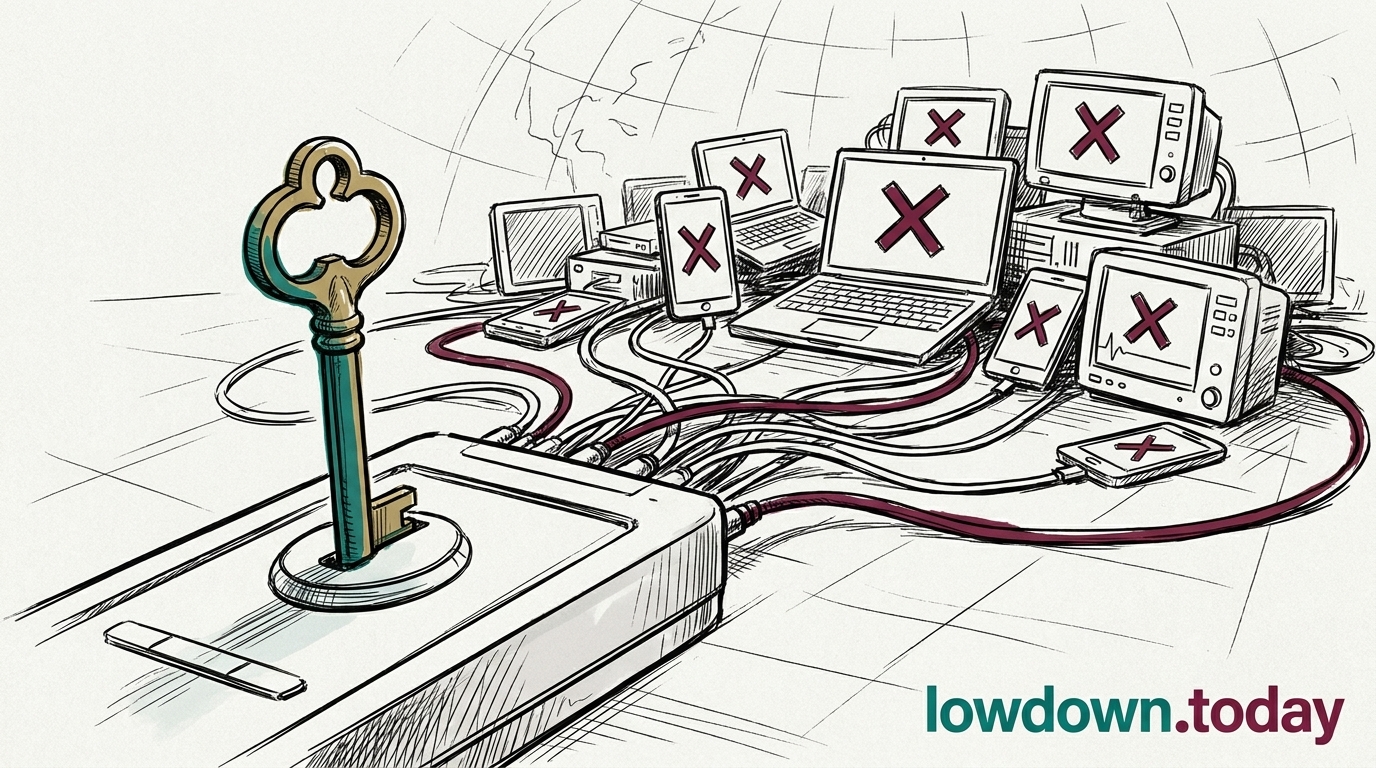
The US Federal Bureau of Investigation (FBI) and Michigan State Police seized cryptocurrency exchange and payment processor E-Note and charged Russian national Mykhalio Petrovich Chudnovets with conspiracy to launder more than $70 million in ransomware and account-takeover proceeds through E-Note since 2017 1. The German Federal Criminal Police (Bundeskriminalamt, BKA) and Finnish National Bureau of Investigation (Keskusrikospoliisi, KRP) cooperated on the infrastructure seizure. Account-takeover proceeds are the funds stolen from hijacked bank or crypto accounts; ransomware proceeds are the extortion payments victims send to recover encrypted files.
E-Note had operated openly for years despite visible ties to the ransomware ecosystem. Its role in the supply chain is the off-ramp: the service that converts bitcoin, monero or stablecoins paid by victims into cash, clean tokens or traditional fiat held in jurisdictions beyond Western reach. Take the off-ramp out and the attackers' business model runs into a working-capital problem. The operational interest for FBI Cyber in 2026 is the laundering rail rather than the operator, because there are far fewer cash-out services than there are ransomware affiliates, and each seizure reaches hundreds of downstream crimes.
A state police force co-leading a takedown alongside the Bureau and two European national police services is an operational template worth noting. Michigan State Police brought the local jurisdictional hook that the federal case needed; the BKA and KRP brought the overseas server infrastructure. For the cash-out services still running, the enforcement geography just widened.