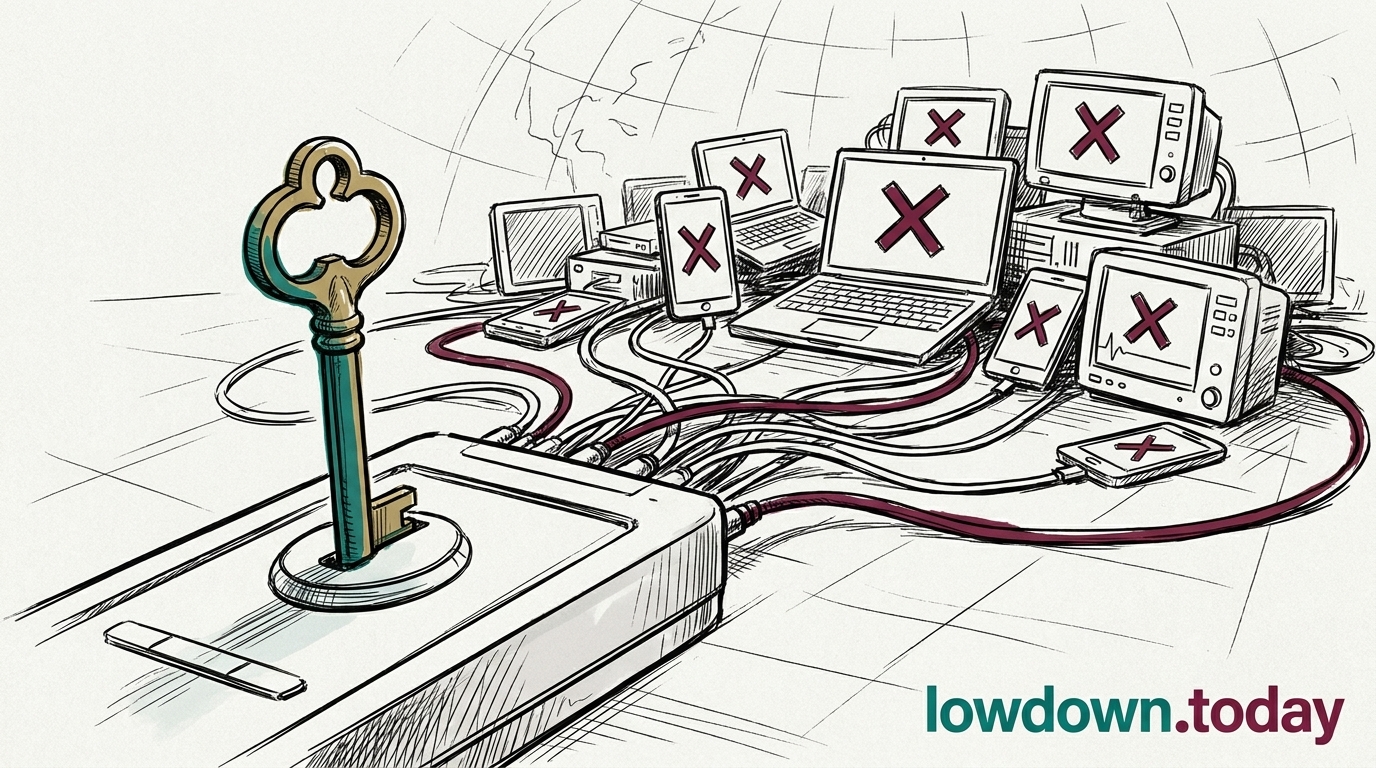
The Cybersecurity and Infrastructure Security Agency (CISA) added CVE-2009-0238, a seventeen-year-old Microsoft Office remote-code-execution vulnerability, to its Known Exploited Vulnerabilities (KEV) catalogue on 14 April 2026 after confirming active exploitation in the wild1. The bug was first patched in 2009 during the second Bush administration, before iPhones ran iOS 3. Attackers are mining old CVE databases for flaws that still work against legacy Office deployments, particularly in public-sector estates where migration lag is measured in decades rather than years.
The attack vector is macro-based. A Microsoft Office macro is a scripting command stored inside a document file; a malicious macro embedded in an Office document, delivered over email, runs attacker code on the target machine when opened. In modern Office installations the exploit is blocked by later patches and default macro restrictions. In unpatched legacy installations, still widespread in NHS trusts, council back-office systems and small public-sector departments, the chain completes often enough that the ransomware affiliates buying access have revived it.
For a Chief Information Officer in local government or a trust finance director, a CVE on the KEV catalogue is no longer a line item in the backlog. It is a federal compliance deadline in the United States and, through the Information Commissioner's Office (ICO)'s recent practice of treating NCSC guidance as enforceable data-protection baseline, a UK enforcement posture too. The public-sector legacy-Office problem has moved from technical debt to regulatory exposure.


