Skip to content
You can now search across every topic, entity and event.What's new
Cuba Dispatch
27APR

CADECA opens cash dollar remittance windows

3 min read
10:55UTC

Cuba's state exchange network announced on 7 April it would accept dollar remittances, chasing flows that have migrated to the informal banquero network.

PoliticsDeveloping
Key takeaway

Havana is dollarising remittances by necessity, not design, and the banqueros now have a state competitor.

On 7 April 2026 CADECA, Cuba's state exchange network, announced that its offices would begin accepting cash dollar remittances 1. Analysts at the Havana Consulting Group and the diaspora outlet CiberCuba attribute the move to an attempt by the Cuban state to recapture flows that have migrated to the informal "banquero" network, a web of more than 150 unlicensed hand-to-hand money-transfer operators serving Cuban households.

The underlying flows have collapsed on the formal side. Remittances are running 70 per cent below the 2019 baseline of roughly $3.7 billion, and more than 95 per cent of diaspora transfers now move through informal channels. Two specific shocks drove the collapse. Western Union reportedly suspended Cuba transfers in February 2025 after Orbit S.A., Cuba's designated remittance processor, entered the OFAC Cuba Restricted List. A further 1 per cent federal tax on cash remittances, legislated by the Trump administration, took effect on 1 January 2026. Against that backdrop, GAESA's formal remittance capture had already fallen to 4.13 per cent before the CADECA move.

What CADECA is offering is genuinely new. For most of the last decade Cuban retail banking has treated the peso as the only legitimate currency, with hard currency routed through the parallel MLC digital channel. Accepting cash dollars at state branches is a reversal of that policy, signalling that Havana values recaptured hard-currency flow above its previous dollarisation resistance. The test is short: the two to four weeks after 7 April should produce either an uptick in formal-channel volumes, visible in Havana Consulting Group or FIU estimates, or confirmation that the banquero network is now too embedded to displace. Either outcome is a material signal about the durability of Cuba's informal economy.

Deep Analysis

In plain English

Cuban families abroad; mainly in Florida; send money home, but the official transfer companies like Western Union stopped operating because Cuba's designated payment processor was blacklisted by the US. Now 95 percent of that money flows through informal couriers known as banqueros. Cuba has now told its state exchange offices to accept cash dollars directly. The government wants to recapture some of that money for itself. Whether Cubans will trust the state to give them a good rate; instead of using the informal couriers who have no exchange-rate politics; is the open question.

What could happen next?
  • Consequence

    The CADECA move is a structural reversal of the 2021 Tarea Ordenamiento monetary reform, signalling that the regime's hard-currency crisis is severe enough to override the ideological investment in peso-only retail.

    Immediate · 0.85
  • Risk

    If CADECA sets non-competitive exchange rates, the banquero network retains its advantage and the state captures only the most risk-averse fraction of informal flows; an insufficient volume to stabilise state hard-currency reserves.

    Short term · 0.75
  • Opportunity

    If the CADECA move is accompanied by peso devaluation toward the informal rate, it creates a genuine competitive channel; Havana Consulting Group estimates this could recover $500-700 million annually.

    Medium term · 0.5
First Reported In

Update #1 · Cuba carve-out survives Venezuela oil easing

CiberCuba / Havana Consulting Group· 15 Apr 2026
Read original
Causes and effects
This Event
CADECA opens cash dollar remittance windows
The move is a structural dollarisation concession by a government that has spent a decade restricting the dollar at retail.
Different Perspectives
Russia
Russia
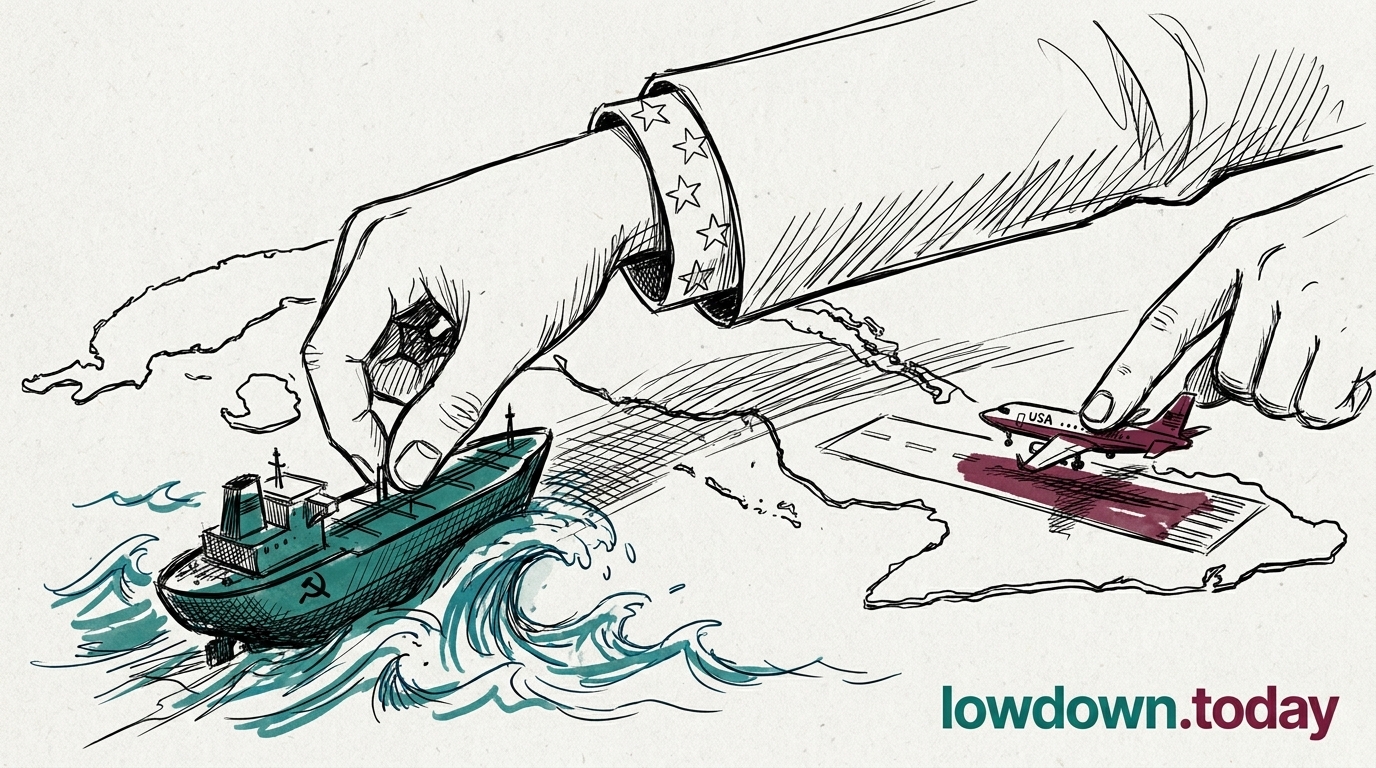
Moscow has sent Havana solidarity gestures, including birthday messages to Raúl Castro, but no tanker has reached Cuba since the Sovcomflot Universal diverted away in May, and none arrived this week either. Russia's backing remains rhetorical while the fuel gap CUPET's designation created stays unfilled from any state-to-state source.
Observatorio Cubano de Derechos Humanos (OCDH)
The Madrid-based monitor published its half-year count of 1,949 repressive actions on 7 July, 299 in June, the highest monthly total it has logged in 2026, with independent journalists the most-targeted group. OCDH's figures moved the debate from sanctions cadence to security-state conduct in the same week Havana wanted the argument to stay on sanctions.
European Union (Stavros Lambrinidis)
Lambrinidis told the UNGA the embargo harms ordinary Cubans, then criticised Havana's Ukraine-ceasefire vote and Russian military participation, announcing no new measures. The EU is managing two separate Cuba files, human rights and Cuba's Russia alignment, that have not yet merged into one policy with teeth.
United States (Mike Waltz / OFAC)
Ambassador Mike Waltz held up photographs of named Cuban political prisoners, including Otero Alcántara, telling the delegation "this is not Havana", while OFAC issued no new Cuba designation between 1 and 9 July. Washington is running the prisoner-naming track and the sanctions track separately, and a re-charged Otero Alcántara would give the naming track a fresh case to press.
Cuban Ministry of Foreign Affairs (MINREX)
MINREX rebutted Mike Waltz's prisoner photographs at the UNGA debate, saying Cuba has nothing resembling the repression imagery Washington displayed, while giving no public account of Otero Alcántara's whereabouts. Havana's embargo case depends on external sanctions as the sole cause of harm, which a domestically caused grid failure and an unexplained disappearance both complicate.
Russia and China
Russia and China
Moscow and Beijing offered rhetorical solidarity but no relief. No Russian tanker has reached Cuba since the Sovcomflot Universal diverted on 26 May, and China has moved no substitute cargo, leaving Havana's fuel siege unbroken by its strategic partners.

