Skip to content
You can now search across every topic, entity and event.What's new
Autonomous Systems: Land & Sea
11JUL

France charters hulls for mine drones

1 min read
10:27UTC

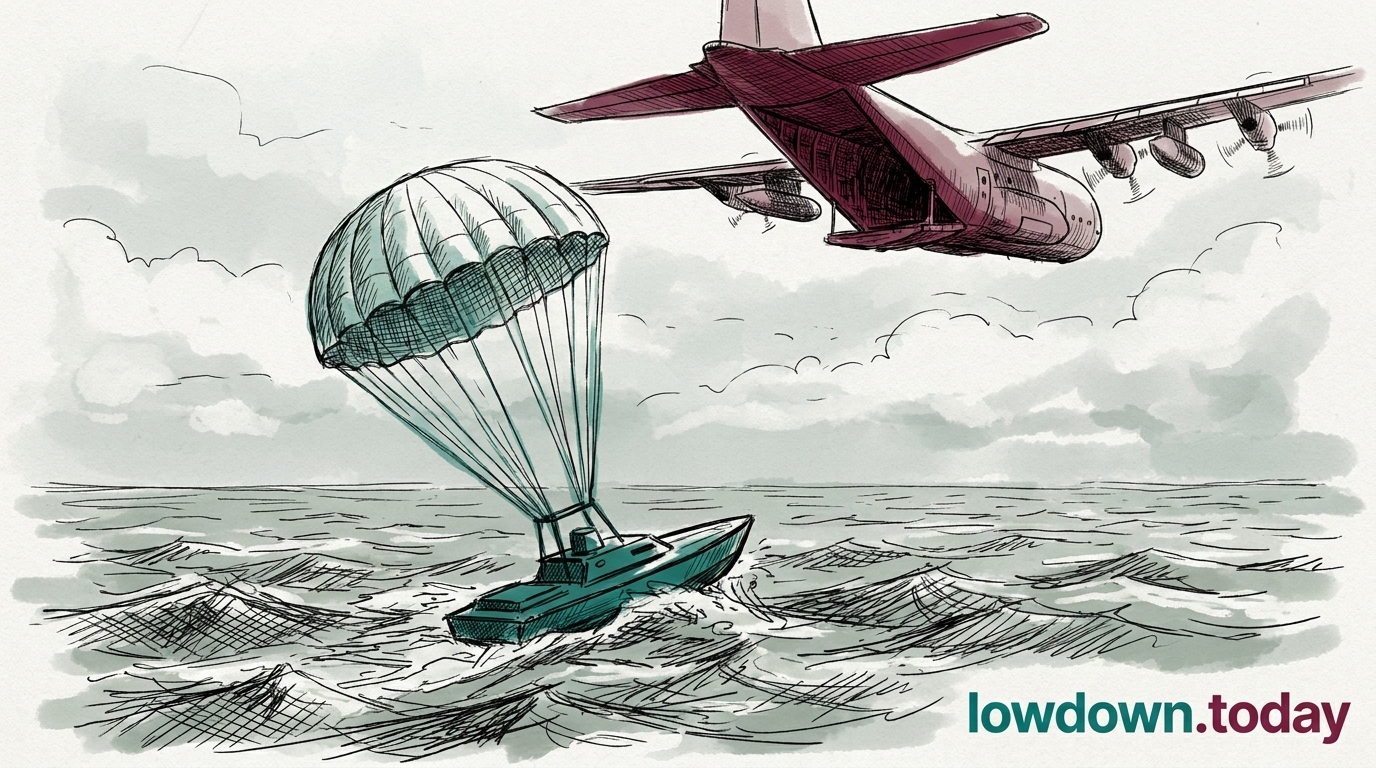
The Direction generale de l'armement ordered a dozen more surface and underwater drones on 21 July under the SLAM-F programme, and is chartering civilian ships to carry them rather than waiting for purpose-built hulls.

TechnologyDeveloping
Key takeaway

France ordered twelve more mine-warfare drones and leased civilian ships to carry them.

France's Direction generale de l'armement (DGA), the French defence procurement agency, ordered a dozen more surface and underwater drones on 21 July under the SLAM-F mine-warfare programme, and disclosed the order on 4 August 1. SLAM-F clears mines with uncrewed vehicles instead of sending a crewed minehunter into the field, which is the whole point of the programme: the machine goes where the sailors used to. Rather than wait for purpose-built motherships, the DGA is chartering civilian vessels to carry the drones out to their working areas.

Chartering puts the drones to sea on somebody else's ship, under a contract that ends. Commissioning a mothership instead would commit the navy to one hull design for thirty years, and nobody can yet say what mine warfare will demand in 2036. France keeps the vehicles, the sensors and the trained crews, and revisits the ship question every time a charter expires. The capability arrives on the timescale of a lease rather than of a shipbuilding programme.

The same instinct produced France's June purchase of Latvian BLAZE interceptors and an Airbus mission system, taken off the shelf rather than developed at home . Both decisions buy what exists now and leave the layer around it replaceable, which is the pattern running through European procurement this summer, applied here to the ship rather than to the payload.

A chartered hull carries the obvious weakness. It was not built for the work, and a merchant ship taken up from trade offers neither the protection nor the endurance of a warship. Clearing a shipping lane after a conflict, that hardly matters. Doing it while somebody is still shooting, it matters a great deal, and the charter model quietly assumes the first case rather than the second.

Deep Analysis

In plain English

France ordered 12 more uncrewed boats and underwater vehicles for clearing sea mines, part of a programme called SLAM-F. Rather than waiting years for the navy to build purpose-made ships to carry them, France is renting civilian ships to do the job for now.

What could happen next?
  • Meaning

    Chartering civilian hulls to carry mine-warfare drones lets France field the capability years before a purpose-built vessel would otherwise be ready.

First Reported In

Update #17 · Two walls close on the drone supply chain

Direction generale de l'armement· 20 Aug 2026
Read original
Causes and effects
This Event
France charters hulls for mine drones
France is buying the mine-clearing drones now and leaving the question of what carries them open.
Different Perspectives
Conservative opposition
The Conservative opposition called on the Government on 9 August to 'urgently audit' equipment for hidden Chinese components, after the Telegraph's K3 SCOUT report. No named MP has been quoted on the record; the call came at party level, alongside the Ministry of Defence's own 10 August statement that no data had been compromised.
Netherlands Ministry of Defence
The Netherlands Ministry of Defence authorised Dutch Naval Design on 4 August to design 12-metre anti-submarine warfare uncrewed vessels for the Dutch-Belgian frigate programme, and to buy an adapted Compact FLASH dipping sonar from Thales Underwater Systems France. The order commits money and a named supplier while Britain's own certification body remains at the market-engagement stage.
Kraken Technology Group
Kraken Technology Group is a UK maritime-defence company based in Portsmouth that builds the K3 SCOUT, and crossed a $1bn valuation in July on a single-sourced $175m raise. The camera components reached the fleet under a third party's written security assurance, which the Platform Authority, which does not yet exist, was never positioned to check.
Navy Commercial
Navy Commercial
Navy Commercial at Whale Island published two notices on 5 August: 074032-2026, asking industry how to build a Platform Authority to certify uncrewed vessels, and 074351-2026, a GBP10m multi-role USV testbed for the Defence Chief Technology Officer. Responses on the Platform Authority close 19 August, ten days after the cameras were found transmitting to China.
Ministry of Defence
Ministry of Defence
The Ministry of Defence said on 10 August that a routine cyber vulnerability assessment found the camera fault, and a thorough investigation found no evidence that MoD data or systems had been accessed, compromised or transmitted externally. It stripped the cameras of internet connectivity but did not say whether it acted against the supplier.
Thales
Thales
Thales converted its 6 July engaging accord with Exail into a definitive combination agreement on 30-31 July, but the tender offer for Exail's remaining shares now closes by early 2028, later than July's timetable implied. Thales integrates its new undersea prime while still bidding against Kongsberg and DRASS's 2027 target for the AUKUS Pillar II contest.